
R&D Impacts
Fiscal Year 2025
Where advanced research meets real-world impact
For decades, the Idaho National Laboratory has been the national center for advanced nuclear technology innovation. The lab is home to the nation’s premier nuclear energy research facilities, including the Advanced Test Reactor and the Materials and Fuels Complex, where scientists develop and test next-generation reactor fuels and materials under extreme conditions. INL supports efforts to modernize the U.S. nuclear fleet, develop advanced reactors and test hybrid systems that integrate nuclear with other energy sources.
The lab plays a critical role in strengthening cybersecurity, protecting critical infrastructure, and enhancing grid resilience by developing advanced tools and technologies to detect, prevent, and respond to cyber threats. INL works closely with government agencies, utilities, and private industry to secure industrial control systems, conduct vulnerability assessments, and simulate real-world cyberattacks in controlled environments. The lab leads national efforts to safeguard the digital backbone of the energy sector and ensure the reliability and security of the nation’s power grid in the face of evolving threats.
The lab also conducts cutting-edge research in critical materials, hydropower and bioenergy, hydrogen production, and advanced fuel technologies. INL’s advanced manufacturing capabilities include large-scale spark plasma sintering, while its high-performance computing resources support sophisticated modeling, simulation, machine learning and artificial intelligence initiatives.
Accomplishments and data are from fiscal year 2025.
Nuclear Energy
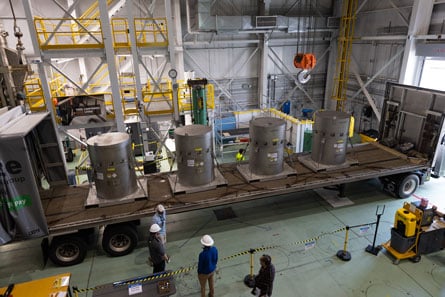
TRISO fuel delivery marks major progress for Project Pele
The first delivery of TRISO fuel to the Idaho National Laboratory’s Transient Reactor Test Facility marks a major step forward for Project Pele, a mobile microreactor prototype designed to provide resilient power for military operations. Led by the Department of War’s Strategic Capabilities Office in partnership with BWXT, the Department of Energy and INL, the project uses advanced fuel engineered to withstand extreme conditions. This achievement reflects years of investment in TRISO fuel qualification and underscores the power of collaboration in advancing next-generation nuclear energy solutions for national security.
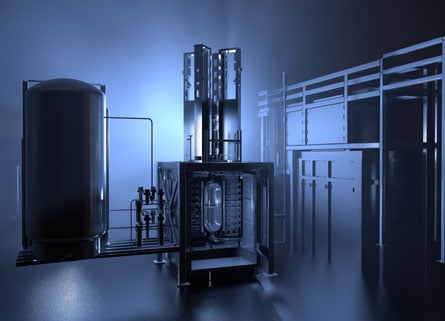
MCRE team reaches key fuel milestone
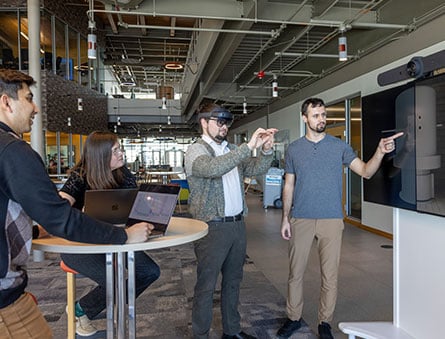
Partnering with Amazon to power nuclear AI innovation
INL is collaborating with Amazon Web Services (AWS) to develop artificial intelligence tools for nuclear energy projects. INL leads in the development of AI technologies that streamline the design, licensing and construction of nuclear facilities. By providing INL access to its AI models, graphical processing units, and specialized cloud services AWS is enabling “nuclear energy AI at scale,” said Chris Ritter, division director of Scientific Computing and AI at INL. The first project under this partnership will include INL leveraging AWS Compute and AI tools to develop a digital twin of a small modular reactor using near real-time data to enable advanced modeling and simulation.
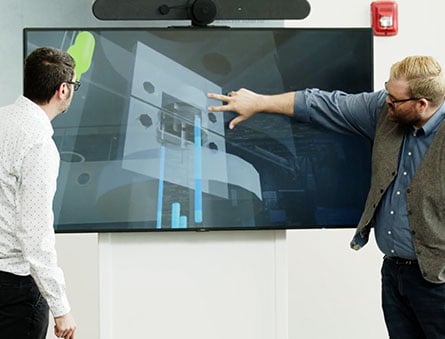
Streamlining nuclear licensing with Microsoft
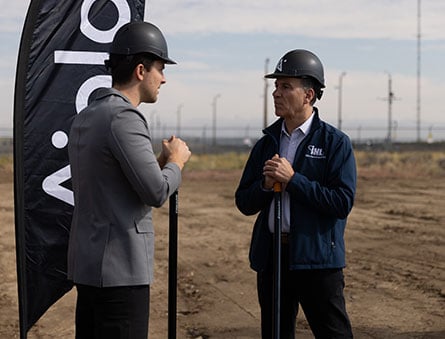
Aalo breaks ground on pilot reactor
Aalo broke ground on Aalo-X, the company’s first pilot plant, on land near INL. The Aalo-X is one of four reactor demonstration projects happening at INL. Aalo-X is a sodium-cooled microreactor, and the company plans to achieve criticality by July 4, 2026, a deadline established in an executive order signed by President Donald Trump. Aalo’s team has completed a comprehensive conceptual design review and received environmental approvals for their Idaho reactor demonstration project.
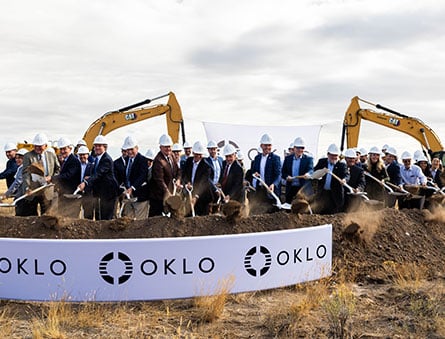
Oklo breaks ground on Aurora site
Oklo broke ground at INL for its first Aurora powerhouse, a sodium-cooled fast reactor based on the design of Experimental Breeder Reactor-II. The groundbreaking, just south of INL’s Materials and Fuels Complex, marked years of collaboration between the company, the lab and the Department of Energy. Oklo is also renovating a building at MFC into its Aurora Fuel Fabrication Facility (A3F), where the company expects to fabricate its initial core by mid-2026.
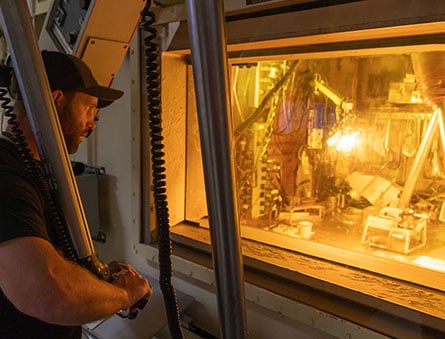
Validating a new era of nuclear fuel
When Mehul and Milan Shah, the father-and-son owners of Clean Core Thorium Energy, needed to validate their Advanced Nuclear Energy for Enriched Life (ANEEL) fuel, they turned to INL and its Advanced Test Reactor. ANEEL is a new nuclear fuel design for pressurized heavy water reactors that could reduce waste, enhance safety and lower costs. In spring 2024, engineers placed 216 ANEEL pellets in ATR’s core for irradiation and in 2025 the first batch was removed and taken to the Hot Fuel Examination Facility for post-irradiation examination. A second batch will follow in 2026.
Test marks milestone for MARVEL project
Real-time testing propels molten salt research
DOE taps INL to accelerate fusion fuel cycle research
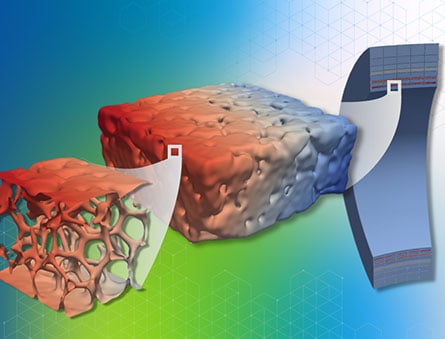
INL was named one of six Department of Energy Fusion Innovative Research Engine (FIRE) centers. These centers are focused on developing an operational fuel cycle within a decade, paving the way for commercial nuclear fusion plants. INL will lead the Accelerating Fusion Blanket Development through Nuclear Testing (BNT) center and contribute to two others. A fusion blanket creates new fuel for the fusion reactor, converts fusion power into heat for generating electricity and protects the reactor’s powerful magnets. The INL-led team will test portions of a blanket system in fission reactors to see how they perform in a nuclear environment.
Wall Street, Silicon Valley representatives visit INL
Conducting first high burnup fast reactor fuel test in 20+ years
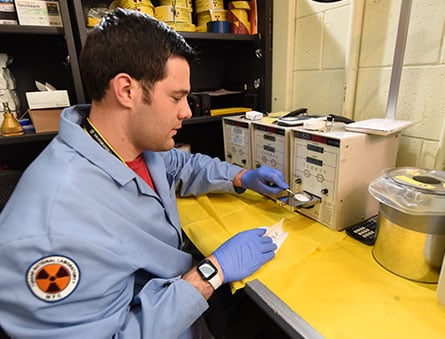
Balancing safety and science in radiation protection

Setting the nuclear AI standard with Atomic Canyon
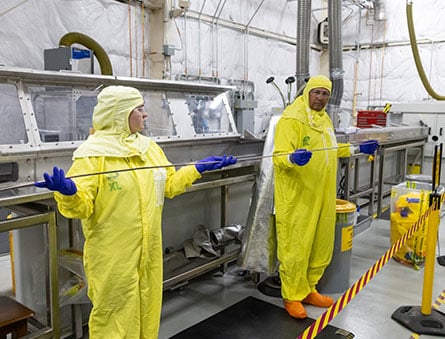
Demonstrating advanced fuel manufacturing
Materials and Fuels Complex engineers produced a long piece of enriched uranium clad in zirconium using co-extrusion technology in INL’s Experimental Fuels Facility. The work was done for Lightbridge, and the samples are a model for the alloy Lightbridge intends to use in its commercial fuel products, which are engineered to enhance the efficiency and performance of nuclear power reactors. Co-extrusion is a manufacturing process in which two or more different materials are simultaneously extruded through a single die to create a composite product with multiple layers. Engineers used the press at the Experimental Fuels Facility to co-extrude a thin cylindrical rod roughly 8 feet long, which will be cut into smaller sections and irradiated in INL’s Advanced Test Reactor.
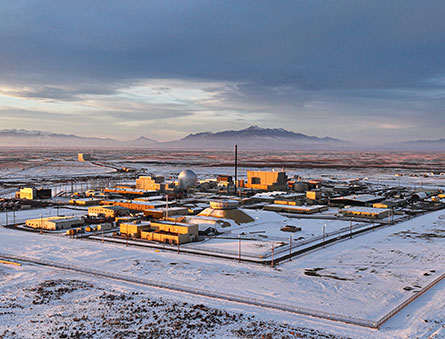
DOE, Idaho agree to targeted waiver to advance nuclear research
The state of Idaho and the Department of Energy signed a targeted waiver of the 1995 Idaho Settlement Agreement. The agreement established milestones to remove legacy waste at DOE’s INL Site while allowing nuclear energy research and development at the lab. The waiver allows critical research on a high burnup nuclear fuel cask from a commercial nuclear power plant, providing data to support extended storage of spent fuel at 54 nuclear power plants in 28 states. The waiver also permits INL to safely manage small amounts of spent nuclear fuel from domestic university reactors.
National & Homeland Security
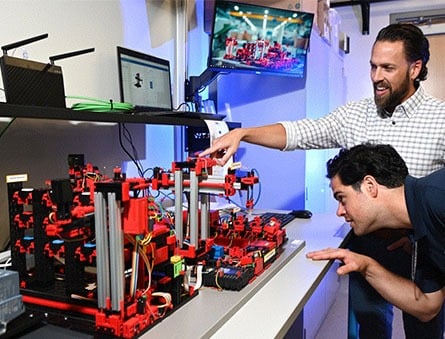
Cyber-informed engineering now a priority in Idaho water grants
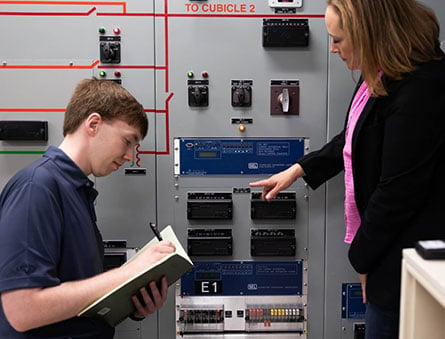
New initiative to strengthen AI-driven grid resilience
INL launched the Testing for AI Grid Resilience (TAIGR) initiative, a first-of-its-kind effort aimed at identifying and mitigating the risks of AI-enhanced grid management systems. Using historical data and control records, AI can help utilities manage and plan their operations, but there are risks, including plausible yet incorrect AI recommendations. TAIGR brings together industry stakeholders, operators, owners, suppliers, regulators and researchers to bridge the gaps between these communities and create a collaborative environment for addressing AI-related challenges specific to grid operations.
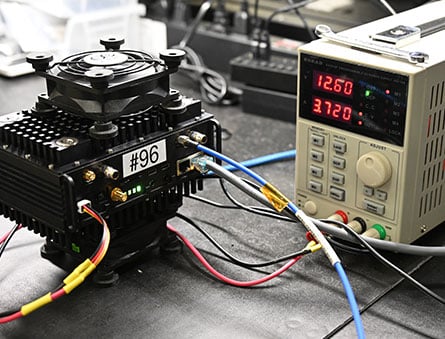
Solving the spectrum crunch with intelligent wireless tech
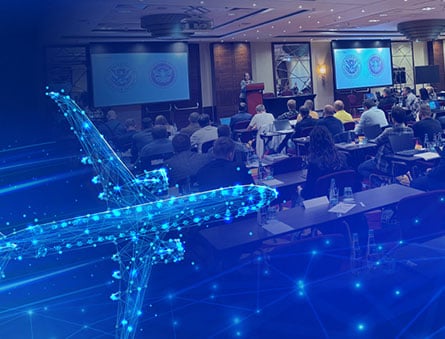
U.S. agencies and INL strengthen European aviation cyber defenses
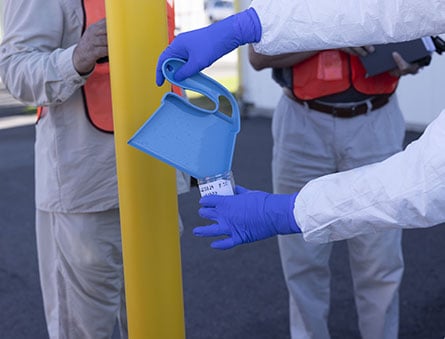
Ukrainian forces train at INL in nuclear forensics
New cybersecurity technology detects threats without disrupting network flow
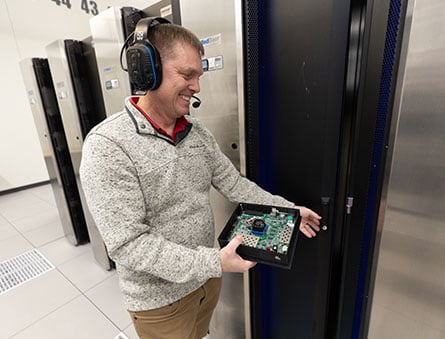
INL entered into a licensing arrangement with Sub Rosa Ventures of Cleveland, Ohio, to market the lab’s newest network anomaly detection technology —VigilantShield. Without disrupting network flow, VigilantShield examines cyber data packets on a network in real time, efficiently identifying and stopping viruses, malware and other malicious software from invading critical communication networks. The technology’s innovations include combining different machine learning techniques to best identify false alerts, and a programmable logic device that allows the hardware to run faster on very little power and at low cost.
Training the front line of cybersecurity defense
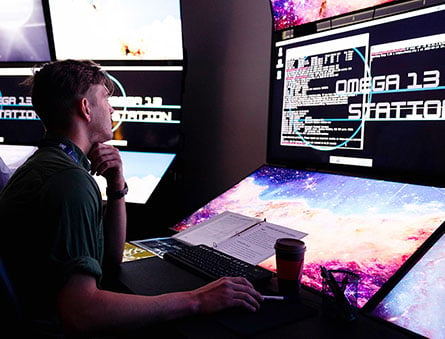
INL has taken a leading role training people to detect and respond to malicious cyberattacks against industrial control systems (ICS), like those used in manufacturing, power generation and water treatment operations. Working with the U.S. Cybersecurity and Infrastructure Security Agency, INL offers classroom training and a control systems environment. Participants test their mettle in “cyber escape rooms,” racing the clock to solve puzzles and protect their mock ICS. Since it held its first course in 2007, the INL Cyber Defense Education and Training team has hosted teams from Albania to the Philippines. During the 233rd ICS 301 training in May 2025, 43 students came from points as diverse as Texas, Washington, Lithuania and Israel.
Cyber-informed engineering earns enduring federal support
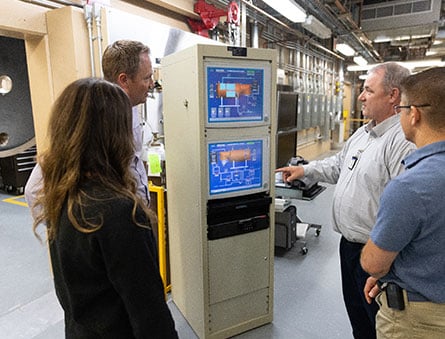
With cyberthreats against critical infrastructure growing, the Department of Energy’s Office of Cybersecurity, Energy Security and Emergency Response has recognized the INL-developed Consequence-driven Cyber-informed Engineering (CCE) methodology’s impact and supports it annually with federal funding. Since 2018, CCE has grown into a successful, multi-year program surpassing $40 million in federal funding. More importantly, researchers have conducted more than 35 comprehensive training and security engagements with top-tier U.S. utilities and defense installations, ensuring those services can withstand even the most forceful cyberattacks. CCE began as a Laboratory Directed Research and Development project in 2016 with $300,000 in seed funding from INL.
New device shields grid in earthquakes
TRIPWIRE wins 2024 R&D 100 Award
Energy & Environment
Fuel cell breakthrough makes hydrogen production more cost-effective
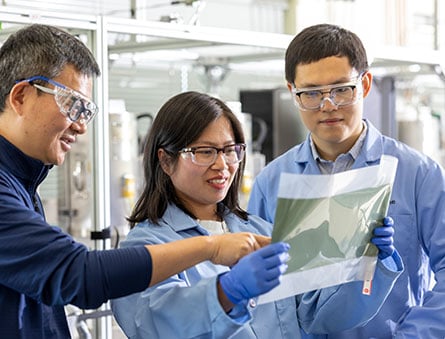
INL researchers Wei Tang, Wenjuan Bian and Dong Ding created a device that can convert electricity into hydrogen during periods of low electricity prices or turn stored hydrogen back into electricity when prices are high. The innovative design, also known as protonic ceramic fuel cell/protonic ceramic electrolysis cell (PCFC/PCEC), eliminates costly fuel circulation and hydrogen purification steps, making the cells efficient, durable and cost-effective. In addition to producing hydrogen, PCEC can serve as a platform for a wide range of applications for process-intensified chemical and fuel production, such as natural gas upgrading, carbon monoxide conversion and ammonia synthesis.
Transforming catalyst research for more efficient industrial processes
Supporting military resilience through water reclamation innovation
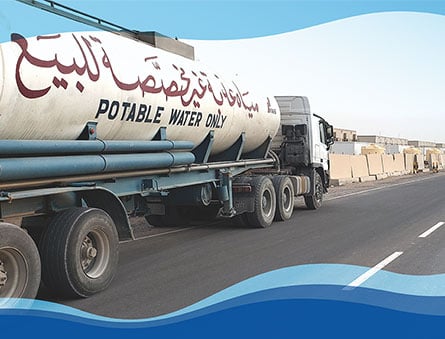
Tasked with performing an energy assessment at Camp Buehring, a U.S. military base in northern Kuwait, INL researchers Jeremiah Gilbert and Mike Shurtliff devised a portable water reclamation system to eliminate single usage and reduce the number of water truck trips needed in the desert. The two worked with Diversified Inc. of Idaho Falls to build a custom, transportable storage container to house the water reclamation system so that it could be delivered, easily connected and ready to operate. The project showed how INL implements solutions to support American military resilience and self-sufficiency goals worldwide.
New tool helps guide hydropower development
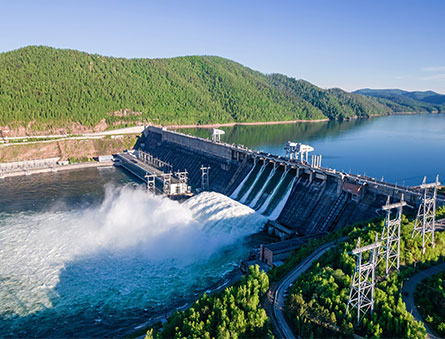
To help hydropower operators and developers make informed decisions, INL, with support from the U.S. Department of Energy’s Water Power Technologies Office, developed the Hydropower Technology Catalog. The online tool helps operators select the best technologies in the initial phases of developing or upgrading hydroelectric power systems, displaying turbine technologies in a format understandable for anyone from novices to professionals. The catalog features more than 100 turbine technologies, complete with descriptions, applications, performance metrics, costs and potential benefits, where available. To develop the catalog, INL researchers reviewed equipment manufacturer websites, interviewed technology providers, and synthesized published papers and reports.
Boosting hydropower value with hydrogen production
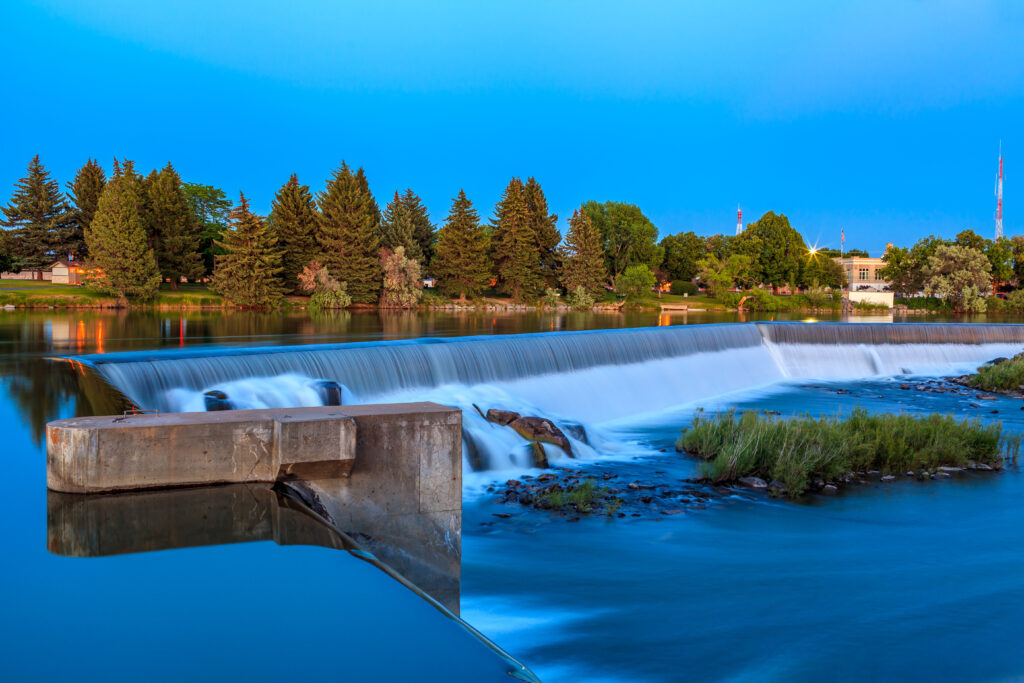
Hydropower is a reliable source of energy, but inconsistent waterflows and intermittent demand often challenge decision makers when it comes to budgeting and operations. INL and Pacific Northwest National Laboratory partnered with Idaho Power, which operates 17 hydroelectric projects, to analyze the economic and environmental impacts that could come from integrating hydrogen production with hydropower plants. Hydrogen production potentially increases revenue during low energy demand, and the oxygen byproduct can improve water quality. By producing hydrogen, Idaho Power could improve power production and open new sources of revenue.
Advancing manufacturing with continuous sintering
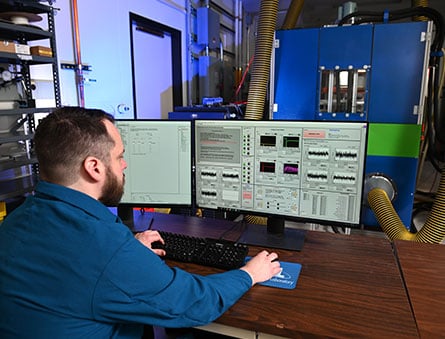
INL researchers moved the lab’s Electric Field Assisted Sintering (EFAS) capabilities forward by building and commissioning a new EFAS technology called Continuous Electric Field Assisted Sintering (CEFAS). All EFAS instruments, including CEFAS, rely on rapid joule heating, which sends electricity through two large metal presses on either side of the material. Sometimes the instruments rely on the material itself to fuse the particles of powdered metals, ceramics or a mixture of both. CEFAS differs from other EFAS instruments because it sinters materials continuously rather than in batches. This means CEFAS can increase part production by a hundredfold compared to batch EFAS.
CalderaCast aids utilities plan for EV charging demand
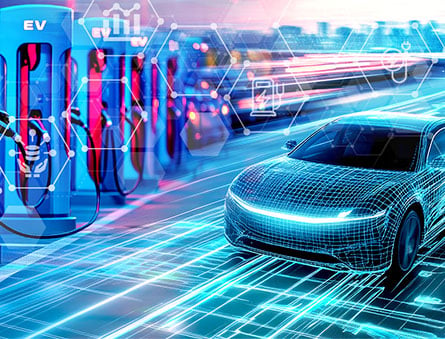
Uncertainties associated with the load characteristics of electric vehicle (EV) charging stations pose a challenge to grid operators, especially smaller utilities. To address this, INL researchers developed CalderaCast, a tool to aid utilities, state agencies, potential funding applicants, and other stakeholders plan and prepare for new EV charging stations. Publicly available at no charge, CalderaCast incorporates variables such as highway traffic volume along designated alternative fuel corridors, EV adoption rates and data on the charging characteristics of EVs to create probability functions for when charging is likely to occur. The tool then models these charge events to forecast electrical load.

ChargeX releases recommendations to strengthen EV charging reliability
It’s hard to find credible data on electric vehicle charging networks, which is why INL and the ChargeX Consortium have released a set of detailed recommendations that the EV industry can implement to gauge drivers’ experiences at public charging stations. ChargeX is a collaborative effort between Argonne National Laboratory, INL, National Renewable Energy Laboratory, electric vehicle charging industry experts, consumer advocates and other stakeholders. Its mission is to work together to measure and significantly improve public charging reliability and usability.
Research Excellence
INL technologies earn two R&D 100 Awards
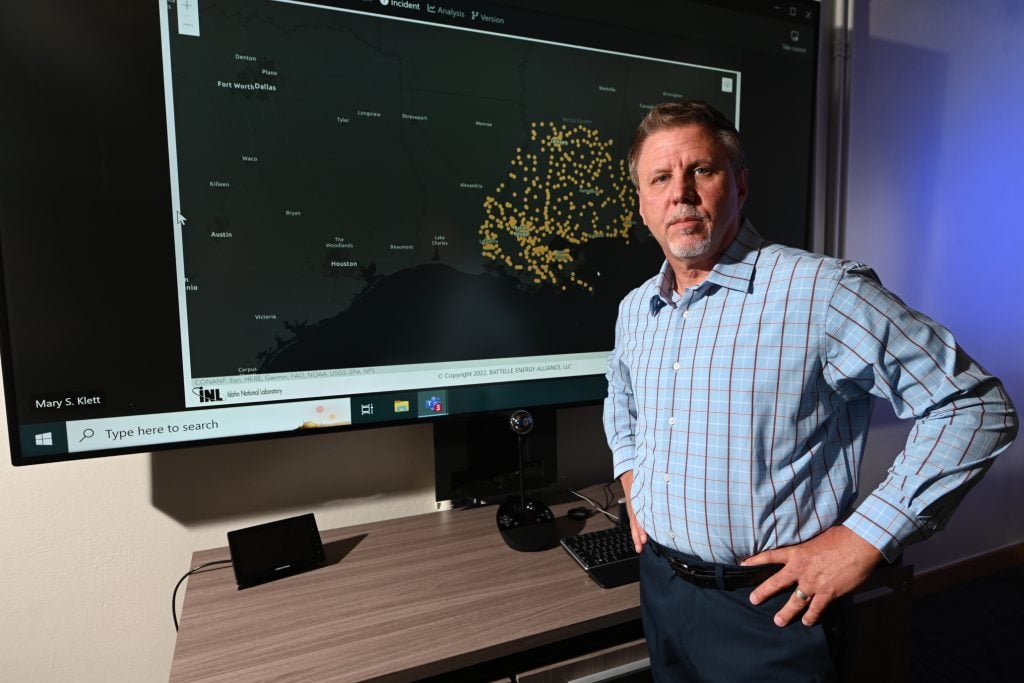
Two technologies developed at INL won 2025 R&D 100 Awards, sometimes referred to as the “Oscars of innovation.” Since they were established by R&D Magazine in 1963, the R&D 100 Awards have identified and celebrated the top technology products from the public and private sectors. It is the only competition that recognizes new commercial products, technologies and materials for their technological significance and potential impact. The U.S. Department of Energy’s national laboratories typically have dozens of finalists every year.
Strategic collaboration boosts research, education
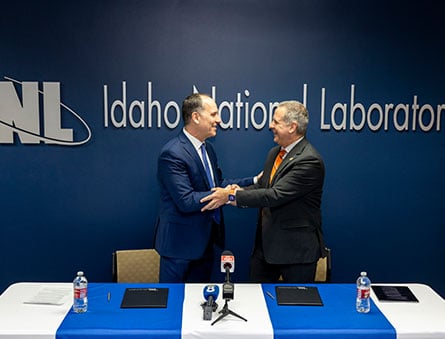
The Strategic Understanding for Premier Education and Research, or SUPER agreement, allows INL to explore deeper research collaborations and expand opportunities for students, faculty members and researchers at select universities.
The lab has memorandums of understanding with 12 universities to expand joint efforts in integrated energy research. These documents establish a framework for INL and the respective institutions to formalize the parties’ interest in developing and improving applied and advanced energy technologies and infrastructure.

Seven INL researchers win Presidential Early Career Awards
Seven INL researchers were among nearly 400 scientists and engineers named as recipients of the Presidential Early Career Award for Scientists and Engineers (PECASE). PECASE is the highest honor bestowed by the U.S. government on outstanding scientists and engineers early in their careers, recognizing their exceptional potential for leadership.
Research partnership: Bridging innovation through collaboration
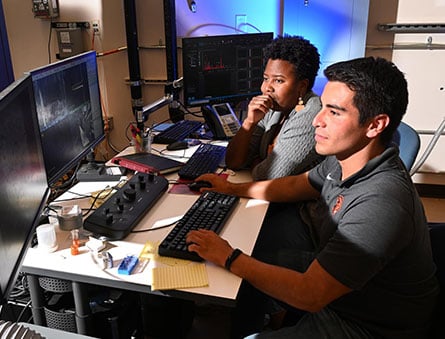
Collaboration between INL and universities are more than practical arrangements; they’re the backbone of innovation. These partnerships blend diverse perspectives to address global challenges like energy, climate change and health care. Joint appointments facilitate the exchange of ideas and resources that promote compelling research and accelerate scientific discoveries from theory to practical applications.
INL, Missouri S&T launch research partnership
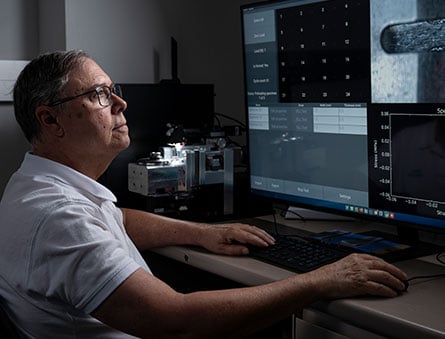
INL and Missouri University of Science and Technology have signed a new collaboration aimed at advancing research and educational opportunities. This partnership has been formalized through a memorandum of understanding highlighting their joint commitment to the Strategic Understanding for Premier Education and Research (SUPER) initiative to collaborate on various research and development projects of mutual interest. The agreement will provide expanded opportunities for students, faculty members and researchers from both institutions.
Previous R&D Impacts
Not finding what you are looking for? Please send your question to info@inl.gov.