(IDAHO FALLS, Idaho) – Five technologies developed by the Idaho National Laboratory have been named as winners for the 2026 R&D 100 Awards, sometimes referred to as the “Oscars of innovation.”
The R&D 100 Awards choose and celebrate the top 100 most technologically significant commercial products, materials and devices introduced globally each year from the public and private sectors. The awards were established in 1963 and are managed by R&D World. Dozens of finalists each year usually come from technologies developed at U.S. Department of Energy national laboratories.
“I am exceptionally proud of our R&D 100 winners and finalists,” said INL Laboratory Director John Wagner. “At INL, we are changing the world’s energy future. This recognition is evidence of the exceptional work and innovation of our researchers on science and technology solutions that positively impact the nation.”
The following winners from INL were announced Aug. 6 and will be recognized in November at a banquet in Scottsdale, Arizona:
AHA (principal investigator: Timothy Klett)
The All Hazards Analysis (AHA) tool employs machine learning and natural language processing to help analysts identify infrastructure interdependencies. By modeling how failures can propagate, it helps utilities and public entities plan for emergencies and mitigate their effects on essential services such as power, water and healthcare during crisis situations.

ViBRANT (principal investigators: Anthony Crawford)
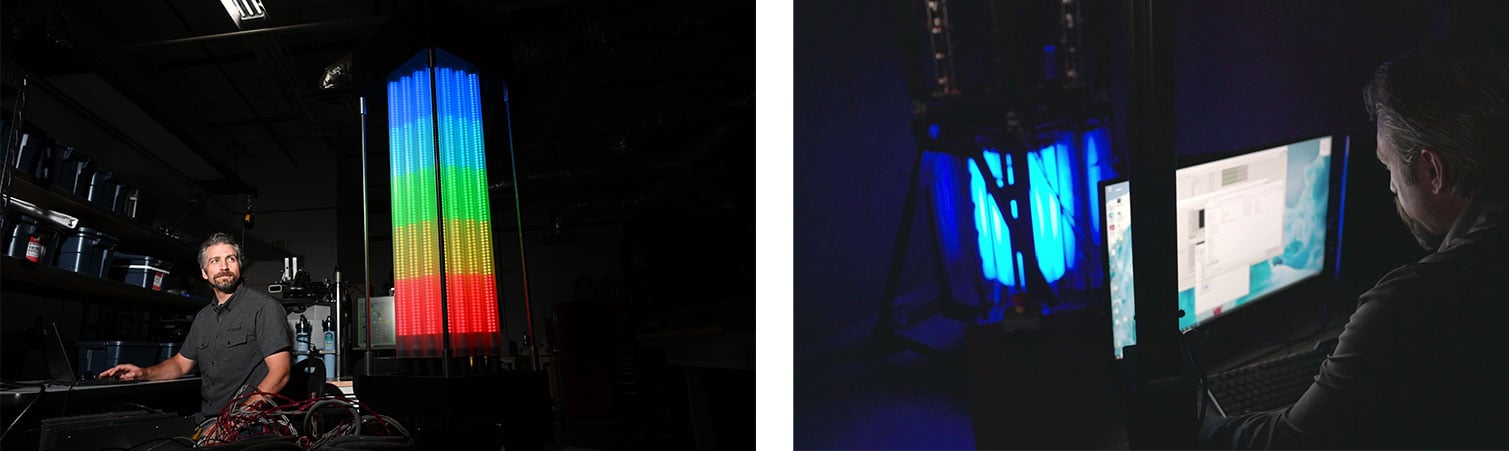
Visual Benign Reactor as Analog for Nuclear Testing (ViBRANT) is a surrogate nuclear reactor that replaces neutrons with photons to accelerate advanced reactor development. ViBRANT uses an LED-driven core, photodiodes, thermocouples and high-performance software interfaces to help mature advanced reactor instrumentation and control systems, validate models, and facilitate system integration prior to deployment in real-world reactor prototypes.
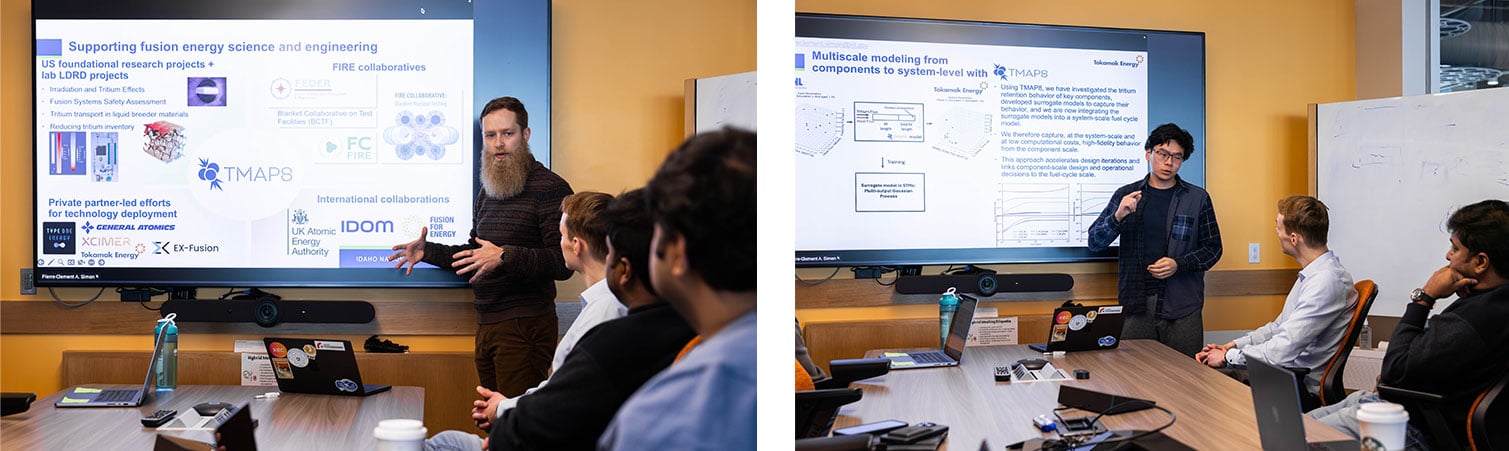
TMAP8 (principal investigator: Pierre-Clément Simon)
Tritium Migration Analysis Program, Version 8 (TMAP8) tackles fusion energy’s biggest hidden challenge: tritium management. It is the first open-source tritium modeling platform to meet the Nuclear Quality Assurance Level 1 industry standard. The tool combines regulatory rigor; multiscale, multiphysics simulation; and broad industry accessibility and applicability to accelerate safe, commercially viable fusion power.
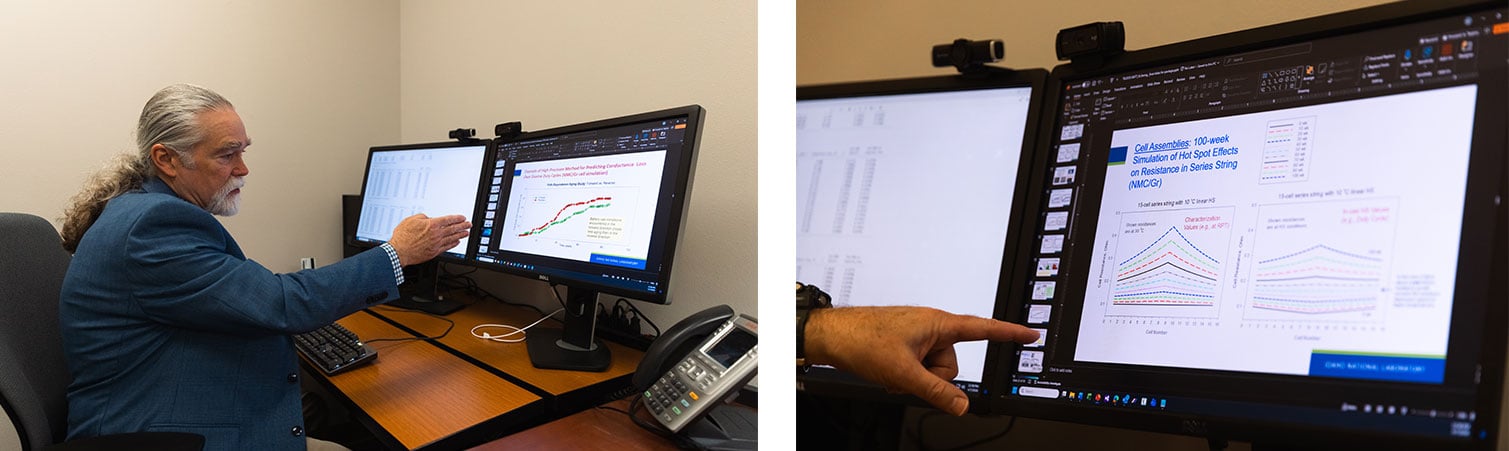
TELEIOS-BATT (principal investigator: Kevin Gering)
TELEIOS-BATT is an advanced suite of physics-based diagnostic and prognostic tools for batteries. It offers fast, accurate and efficient monitoring, simulation and prediction of battery health and aging, helping maximize safety, reliability and cost efficiency for modern battery-dependent industries.
REFLEX (INL contributors: Samuel Koomson, Wanhua Wang, Zeyu Zhao, Dong Ding)
Developed by the University of Pittsburgh, Idaho National Laboratory, and National Energy Technology Laboratory—Real-time Embedded Feedback and Layered Excitation (REFLEX) transforms passive electrochemical interconnects into intelligent, sensor-enabled components that provide real-time monitoring, active thermal control and digital-twin capabilities for next-generation fuel cells, electrolyzers and hydrogen energy systems.
INL also had one technology announced as a finalist:
FARM (INL contributors: Paul Talbot, Aaron Epiney)
Developed by Argonne National Laboratory and Idaho National Laboratory—Feasible Actuator Range Modifier (FARM) is a tool that helps power plants make better decisions about how to generate energy, ensuring they operate efficiently and avoid unnecessary wear and tear.
NEWS MEDIA CONTACTS:
Alicia Moulton, (208) 557-4909
Sarah Neumann, (208) 520-1651