Before they can generate energy-efficient fuel from organic and inorganic waste, biorefinery startup companies across the nation must deal with the challenge of biomass feedstock variability. The materials that make up biomass – which is anything either directly or indirectly derived from living material – come in all shapes and sizes. This feedstock variability presents challenges to both effective biorefinery operation and efficient conversion of biomass into biofuel and biochemicals.
Improving biofuel yields across the national biomanufacturing industry will help the United States become a dominant force in advanced manufacturing and provide alternative, efficient fuel for mass transportation. But this ambitious goal cannot be achieved without first understanding and addressing feedstock variability.
The Idaho National Laboratory, through work funded in the Feedstock-Conversion Interface Consortium by the Alternative Fuels and Feedstocks Office, formerly known as the Bioenergy Technologies Office, recently led a collaborative technoeconomic and life cycle analysis study providing insight into feedstock variability and how biorefineries can tackle this challenge to shorten the time for the refinery startup and maximize their fuel yield. The INL team worked closely with National Laboratory of the Rockies and Argonne National Laboratory on this analysis.
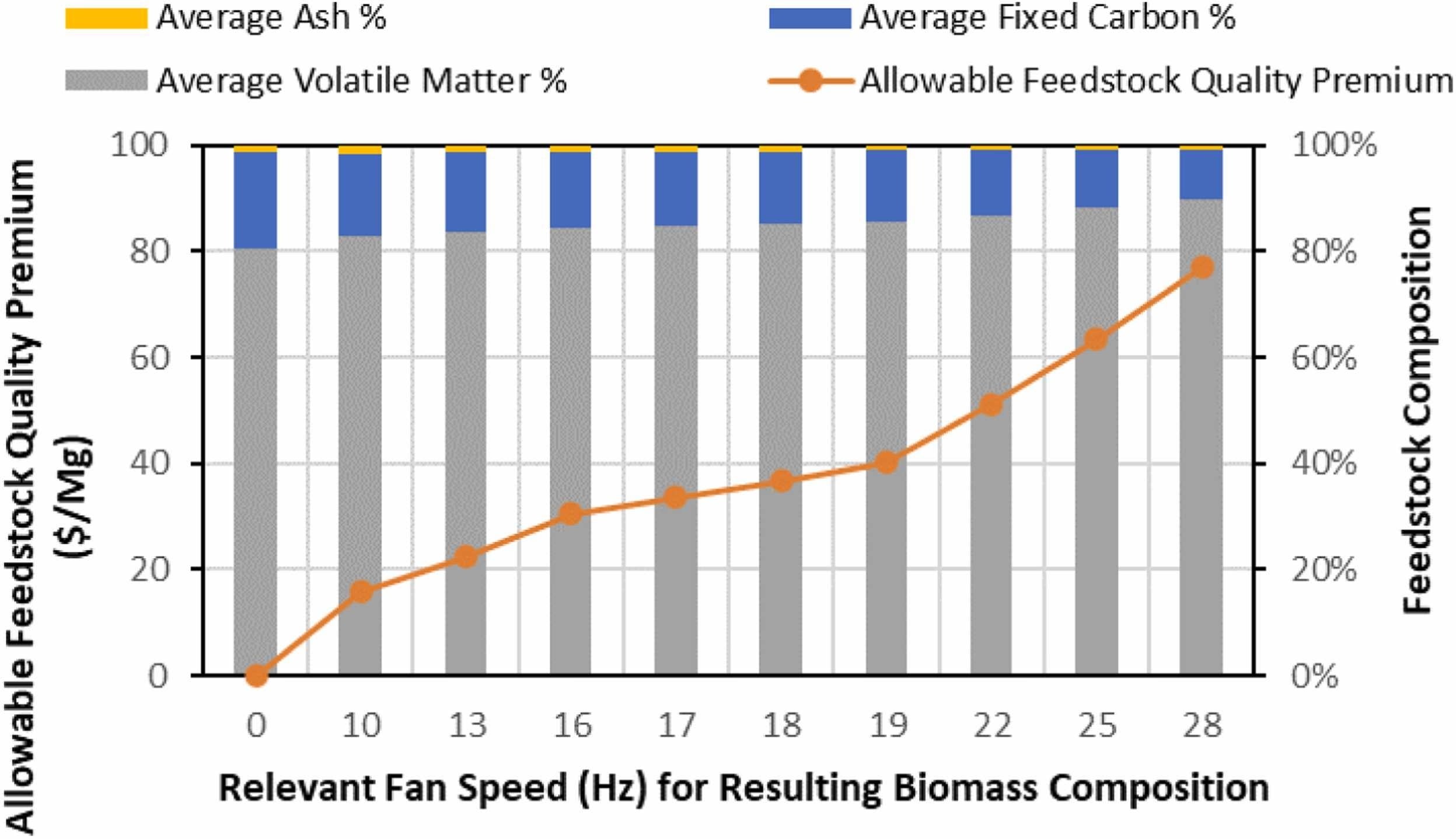
To understand and mitigate the negative impacts of biomass variability, the team first had to understand what caused the variability. In the case of woody biomass, the variability was caused by moisture, ash and volatile content, which directly impacts the amount of carbon that can be converted to fuels. Once they understood that, the team could explore the impacts of the different variabilities on the preprocessing system and how uniform samples needed to be for biorefineries to operate effectively.
Nth plant assumption
“Most economic analyses are performed according to the nth plant assumption, which lends to the results being easily understandable and comparable,” said Damon Hartley, an INL researcher who helped develop more dynamic models.
Imagine building a factory based on the idea that everything will run perfectly because the technology is mature and all problems have been solved. That’s the essence of the “nth plant assumption.” For biomass facilities, it assumes that every variable, like moisture, ash content, or feedstock quality, will behave at its average level. But in reality, those variables rarely line up neatly. Moisture might be high when ash is also high, or vice versa. Each factor acts independently, so the “perfect average” scenario almost never happens. Evaluating systems based on this assumption can lead to surprises and inefficiencies once the plant is operating.
When researchers model a system using just one “average” set of conditions, they miss the full range of what could happen. Feedstock, or the raw material going into a biorefinery, varies constantly. If models don’t account for that variability, biorefineries risk underestimating costs, overlooking bottlenecks and facing unexpected downtime. That’s where dynamic modeling comes in. Instead of assuming everything is average, dynamic models simulate thousands of scenarios, each with different combinations of variables. This gives engineers a much clearer picture of how the system will perform under real-world conditions.
National laboratory collaboration
The collaboration combined dynamic technoeconomic preprocessing models at INL, conversion technoeconomic models and analysis from the National Laboratory of the Rockies, and life cycle analysis by Argonne National Laboratory using their GREET model. These combined modeling approaches present the first simulation of the entire bioenergy industry supply chain from harvest and collection of the biomass resource through preprocessing, conversion and fuel use.
This modeling system can determine the extent and types of variability that are acceptable, showing how much can be changed without significantly impacting biomass throughput in the process. Hartley expects that industry partners can size this modeling approach to fit their needs. Based on their individual bottom lines, they can better understand the tradeoffs in terms of material, storage and refining equipment and use this knowledge to inform their best paths forward.
“It’s important that this has been a multi-laboratory collaboration because this project is one of the first of its kind,” said Hartley. “This is the first time we’ve simulated an entire bioenergy supply chain, and it offers our conversion partners an entirely novel modeling approach.”
Dynamic modeling doesn’t just reduce risk: it helps optimize the entire process. By running hundreds of thousands of simulations in minutes, engineers can identify weak points, test alternative setups and even predict how changes in material quality affect fuel costs. This approach saves time and money by avoiding costly redesigns after the plant is built. The study behind this work was the first in the national lab system to integrate dynamic modeling all the way through fuel conversion costs. That means investors and operators get a more complete economic picture, fewer surprises, and a system that’s better prepared for the real world.