The first thing people notice about Tanner Mauseth is his height. At 6 feet, 8 inches, he played Division I football for the University of Idaho while he majored in applied physics.
“I’ve always been a nerdy jock kind of kid,” he said.
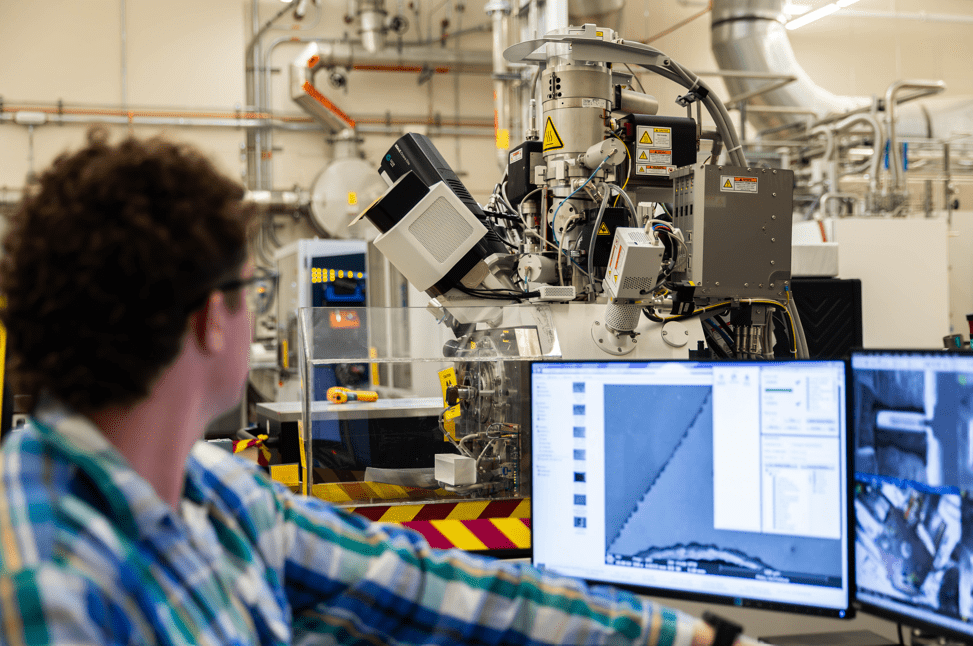
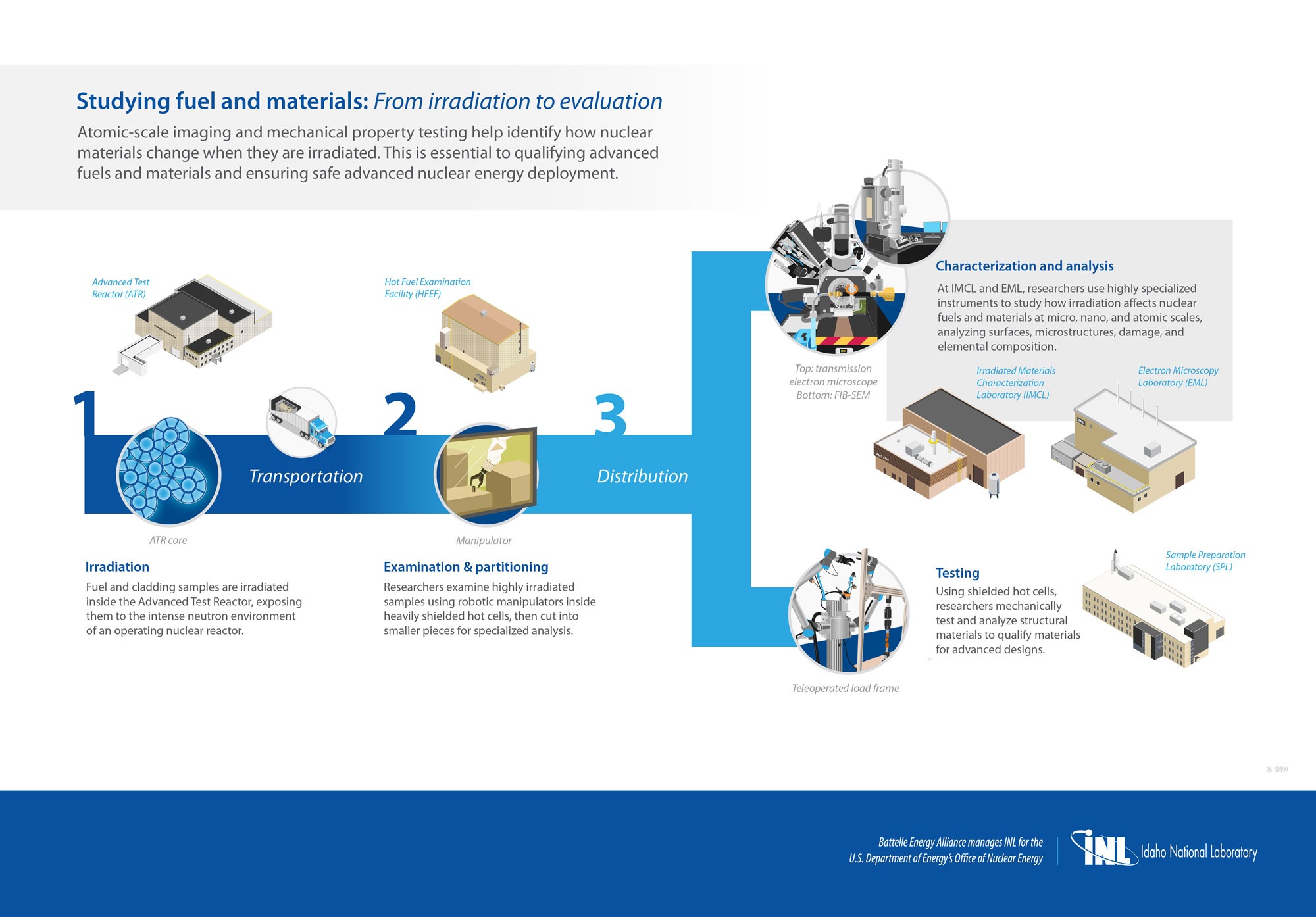
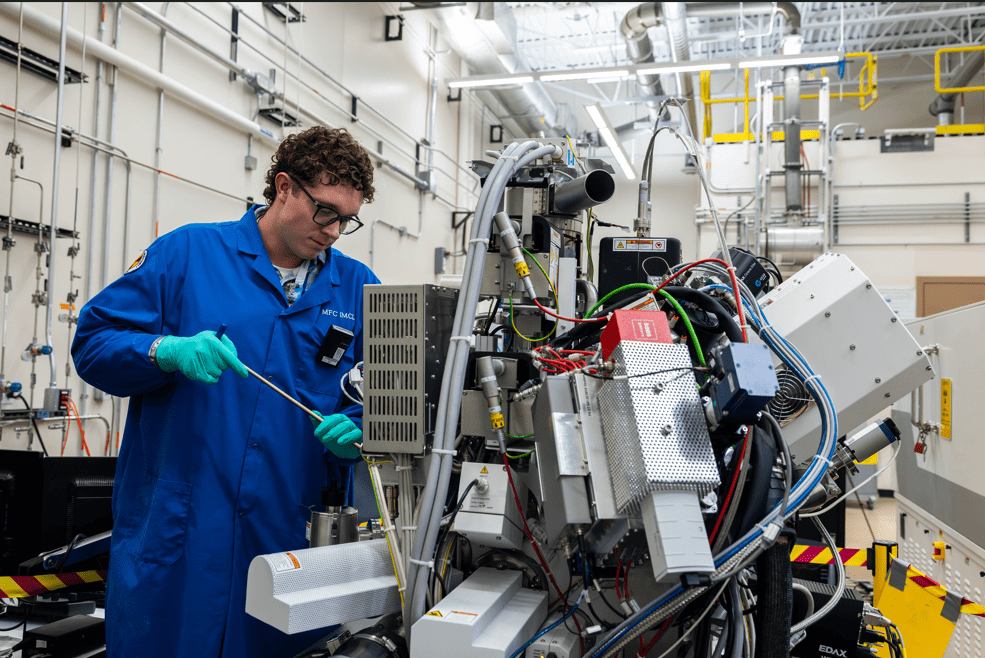
Today, with a doctorate in nuclear science and engineering under his belt, Mauseth is a post-irradiation examination (PIE) research scientist at the Idaho National Laboratory’s Irradiated Materials Characterization Laboratory (IMCL). One of the youngest members of the PIE team, he specializes in micromechanical testing of small, irradiated samples. The tools he gets to use — focused ion beams (FIB) and scanning electron microscopes (SEM) — are pretty cool, he said.
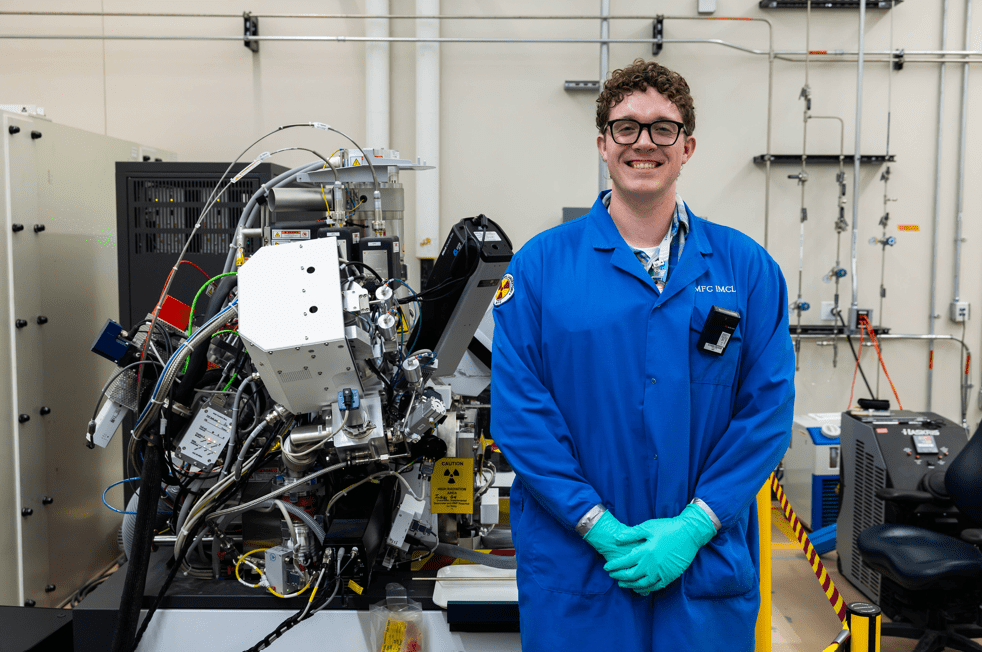
He calls the FIB-SEM Helios G5 UC focused ion dual beam his “Ferrari.” The instrument combines two powerful technologies: a focused ion beam that uses a gallium source to precisely mill and section samples at the nanoscale, and a scanning electron microscope capable of high-resolution imaging and analysis of sample surfaces. Researchers can also deploy a PI 88 picoindenter to perform micromechanical testing in situ while an SEM images the testing in real time. Together, researchers can examine the microstructure of materials, measure their mechanical properties and map the distribution of chemical elements, capabilities that are critical when characterizing highly irradiated nuclear samples.
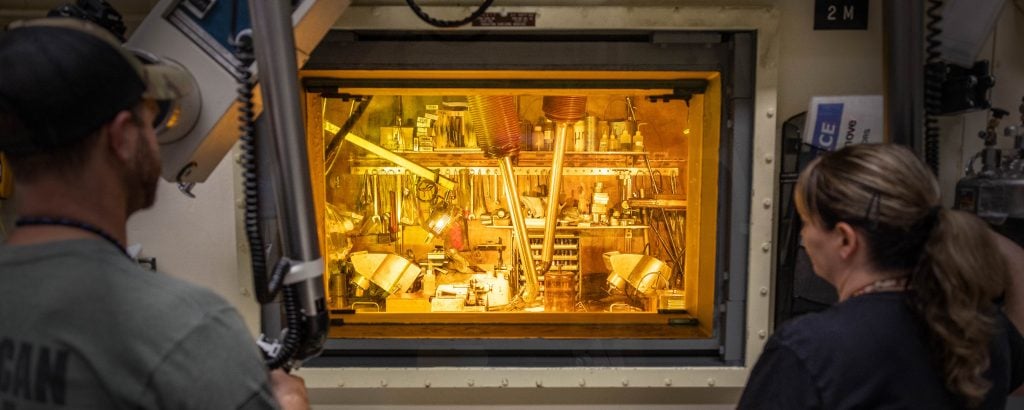
“We call IMCL the Super Bowl of science,” he said. “If it needs to be characterized, it goes through here. We will get it done — safely and correctly.”
Aptitude for STEM in school
Growing up, Mauseth was aware of INL through his family. His grandfather was a boiler room mechanic in the Navy before working at the Advanced Test Reactor for around 30 years. His father, Jason Mauseth, worked as a mechanical engineer in the INL Research Center before deciding to become a dentist.
Mauseth knew early in life that he was interested in math and science. “I was always at the top of my class in math and science,” he said. He won the Science Olympiad at Idaho State University (ISU) when he was in middle school. He reckons he was born with a good measure of natural ability, but doing well in STEM requires hard work as well.
After graduating from Idaho, he returned to Pocatello and decided to pursue his master’s. “I don’t know how he decided he wanted to pursue a degree in nuclear, but I’m glad he did,” said his adviser, Mary Lou Dunzik-Gougar, associate dean of ISU’s College of Science and Engineering.
Diving into research
About the time he arrived at ISU, Dunzik-Gougar had a grant from the U.S. Department of Energy to study the microtensile strength of the cladding layers in tristructural-isotropic (TRISO) fuel particles. There was one problem: one of the researchers who co-wrote the proposal with Dunzik-Gougar had already left ISU and the other was on his way out. Dunzik-Gougar asked Mauseth if he’d be willing to learn as much as he could from the second researcher.
“He just dove right in,” she said. “If it wasn’t for him and his enthusiasm, I don’t know where we would be. I didn’t have the bandwidth to learn what he learned to do. He saved that project. He was just nonstop engaged.”
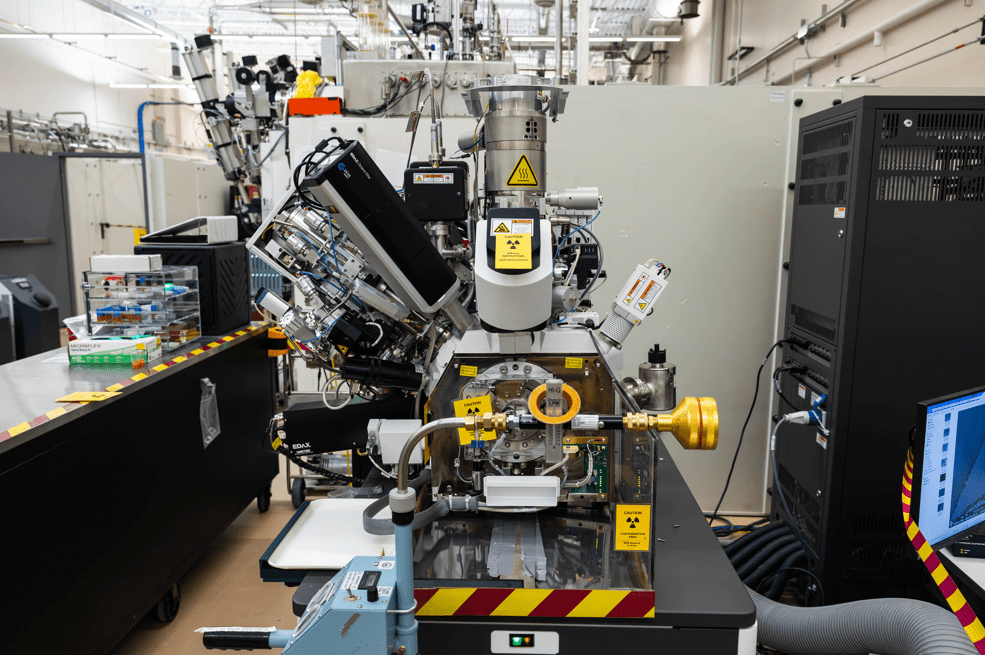
TRISO particles are very small, about the size of a poppy seed. Using the instruments at IMCL, Mauseth was able to cut tiny “dog bone” samples to test the tensile strength of the bonding between cladding layers. The work will contribute to the fuel’s development as well as licensing from the Nuclear Regulatory Commission.
A spark to pursue more
During his master’s work at ISU, Mauseth immersed himself in analyzing unirradiated TRISO particle samples with the FIB-SEM at the university “They (ISU) highly encourage you to get your master’s first, to figure out what you really want to do,” he said.
When Mauseth told Dunzik-Gougar he wanted to continue the TRISO particle work and pursue his Ph.D., “I literally did a happy dance,” Dunzik-Gougar said. Completion of the project required analysis of irradiated TRISO particle samples, which led to use of the equipment at IMCL.
When he received his doctorate in 2023, she had the honor of putting his hood on. “He had to squat down pretty low for me to hood him,” she said.
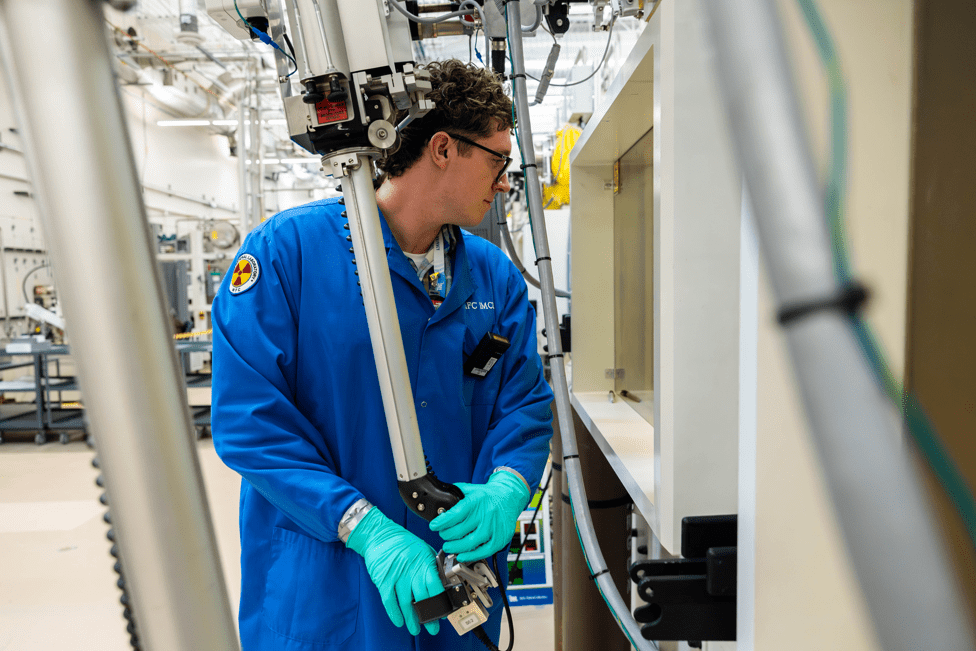
On the job at IMCL, Mauseth learned from his mentor Fei Teng, a staff scientist at INL. “He taught me everything I know,” he said.
Mauseth aspires to be a principal investigator, and one of the benefits of being so busy is that he gets credited as co-author on a lot of papers.
“It’s great training,” he said. “Leadership wants to see you producing your own work, and doing the work makes you a better (principal investigator) later.”
Dunzik-Gougar, a former president of the American Nuclear Society, said Mauseth has a great temperament for the job.
“He’s very mild-mannered,” she said. “As big as he is, he probably had to figure out how not to be intimidating to people. But his way is to talk about things, and you can see how his mind is working all the time.”
Supporting the next generation
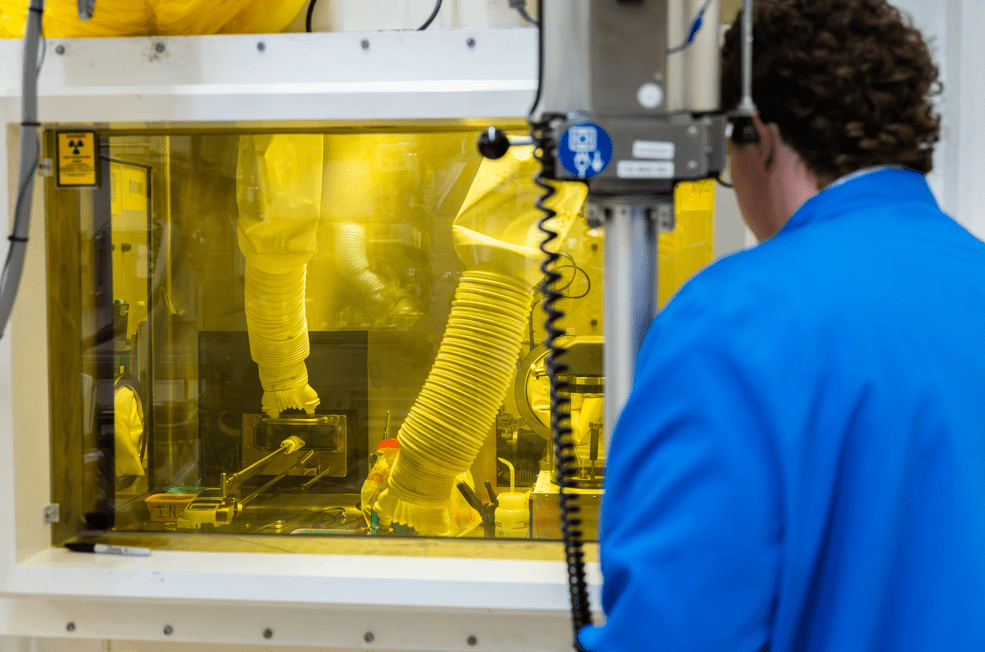
At 28, Mauseth is one of the younger researchers on the team. When he started, his workload was about 80% work in the lab and 20% writing, but today it’s more 50/50. Taking his cue from Teng, he has made a habit of sharing his knowledge with the lab’s interns since joining INL. “I just teach them what I know the best I can,” he said.
It is an exciting time to be involved in nuclear research. “You get to meet people from all over the world,” Mauseth said.
He plans to attend and present at the NuMat2026: The Nuclear Materials Conference in Halifax, Nova Scotia, in September. In the meantime, he keeps learning from a wide range of INL staff members. Since the start of the fiscal year, he has helped with six to eight rapid turnaround experiments for Nuclear Science User Facilities researchers.
“It’s a great partnership; principal investigators from other INL sites bring their ideas and proposals, and we have the capabilities to make it happen,” he said. “I could not have asked for a better position. There are amazing people at all different levels of the process.”