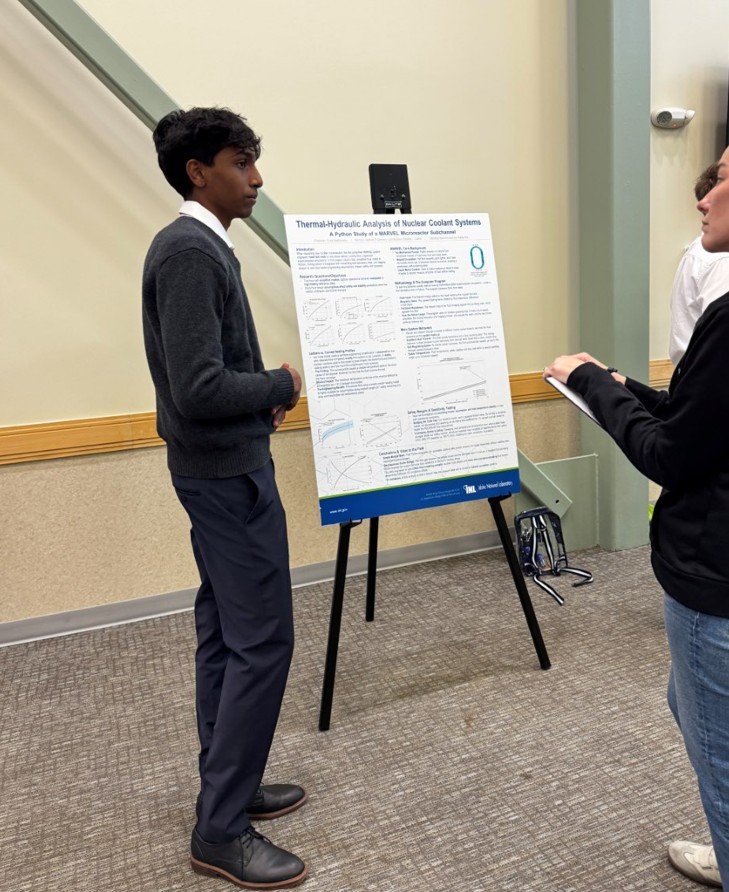
When Vivek Kodituwakku built a computer model to simulate coolant flowing through Idaho National Laboratory’s MARVEL microreactor, his results didn’t line up with the professional data engineers use.
Instead of assuming his model was wrong, Kodituwakku dug into reactor physics. He discovered that a common engineering shortcut, estimating friction inside the reactor’s plumbing, was causing the mismatch. By systematically testing different friction values, he found the one that brought his model into perfect agreement with the high‑fidelity data.
The result was an insight useful even to professional analysts. But Kodituwakku was not a graduate researcher or professional engineer — he is a student from Eastlake High School in Sammamish, Washington, conducting research through INL’s SparkLab fellowship.
Far more than an educational enrichment program, the SparkLab fellowship is a strategic workforce development pipeline that cultivates the next generation of leading research innovators. This structured program bridges secondary education and advanced STEM career pathways, creating a pipeline of talent ready to address the nation’s most pressing energy and security challenges.
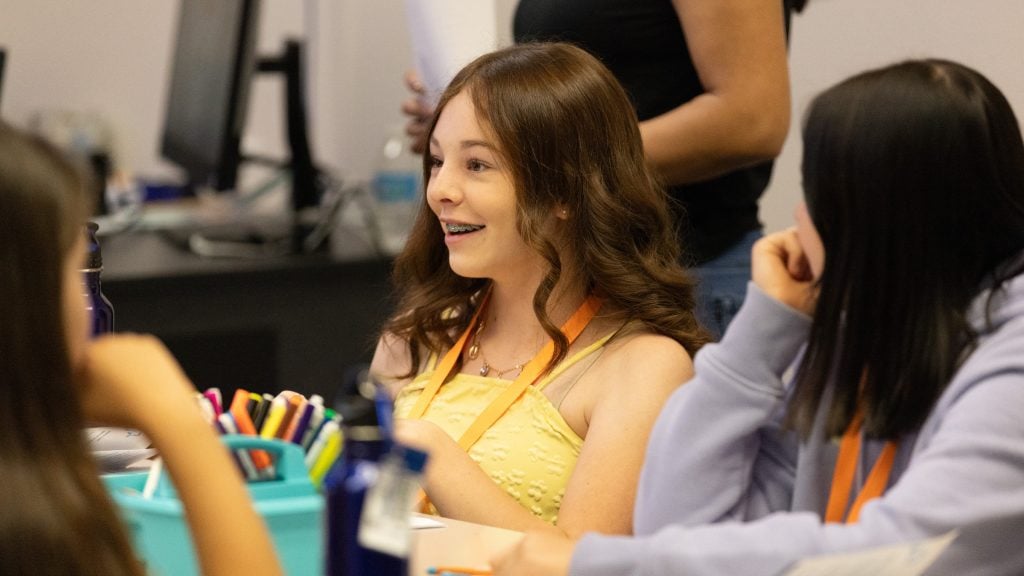
The three-month program follows a pod model, allowing students to collaborate with multiple mentors and peers, participate in scheduled mentoring sessions, and conduct independent research. During the program, students define research questions, select appropriate methods, analyze technical data and present evidence-based conclusions.
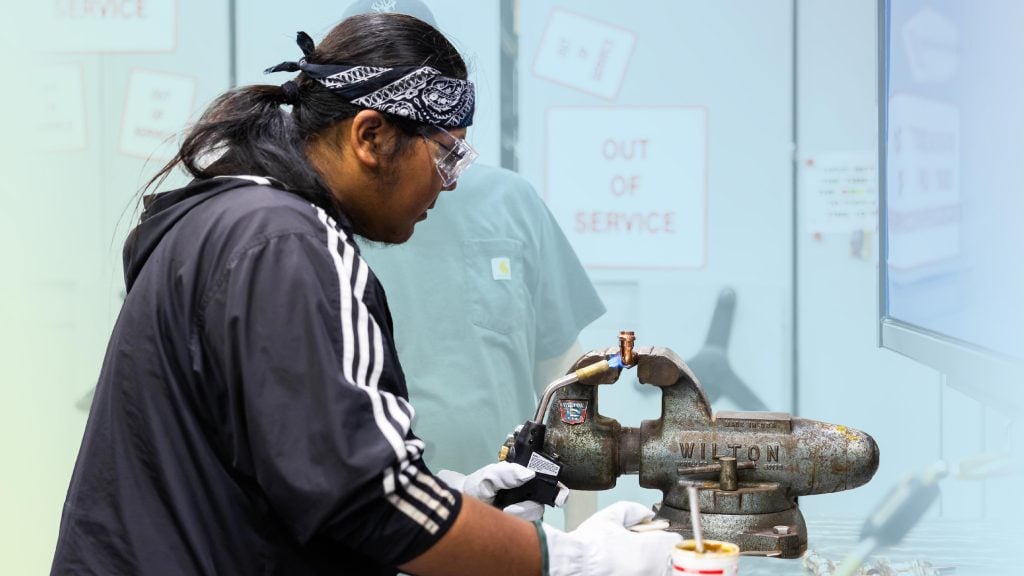
The experience provides an early introduction to the standards, tools and processes used in professional research environments.
Developing research skills
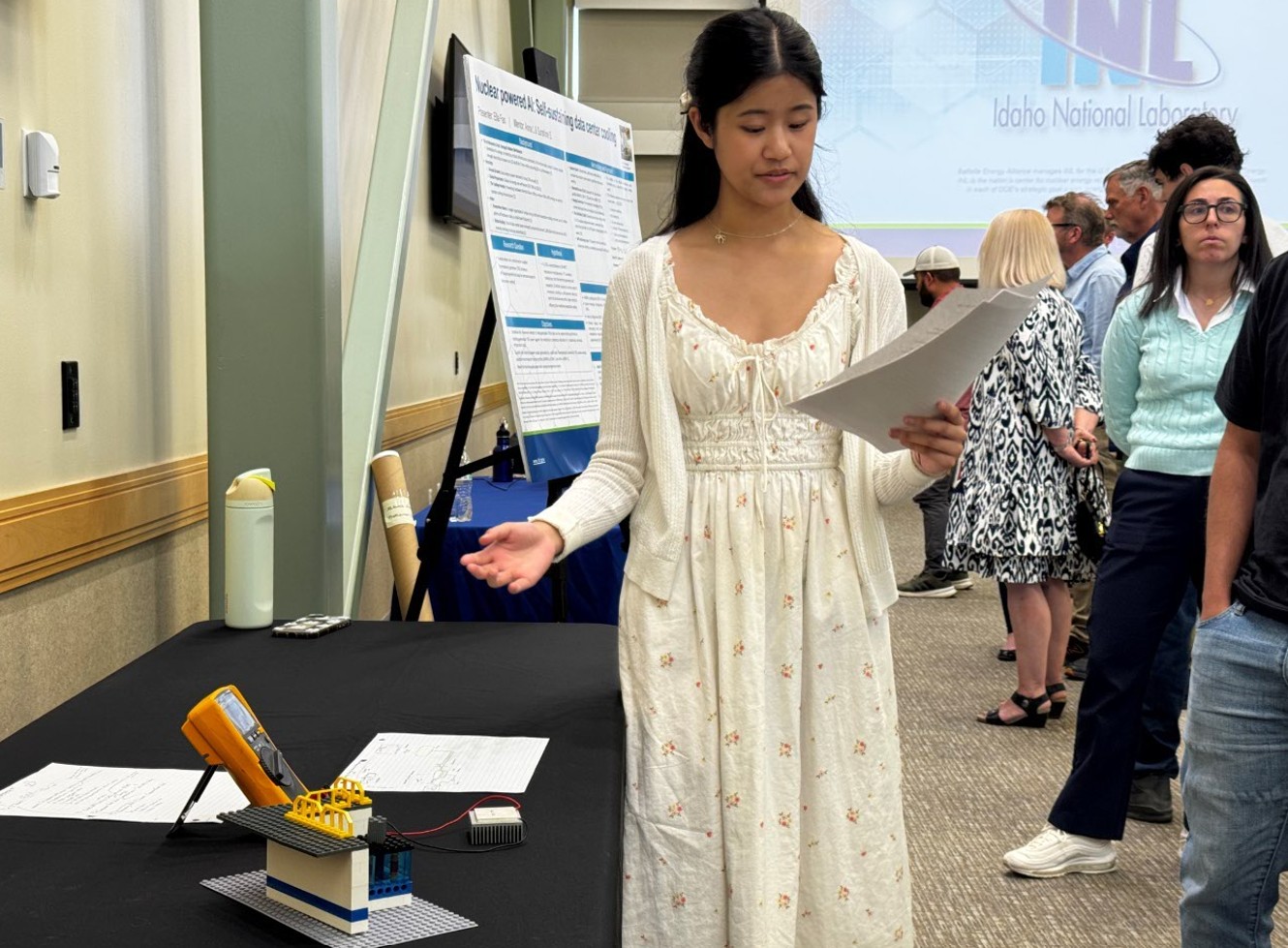
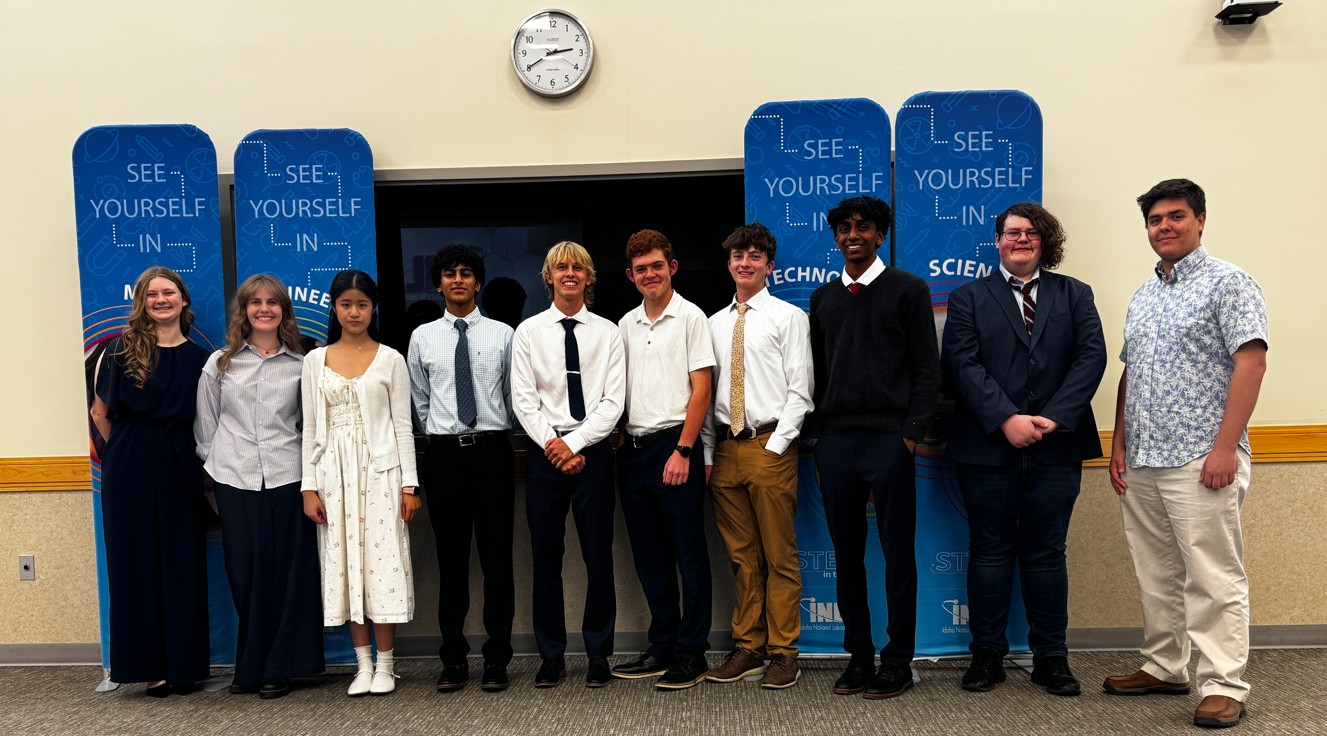
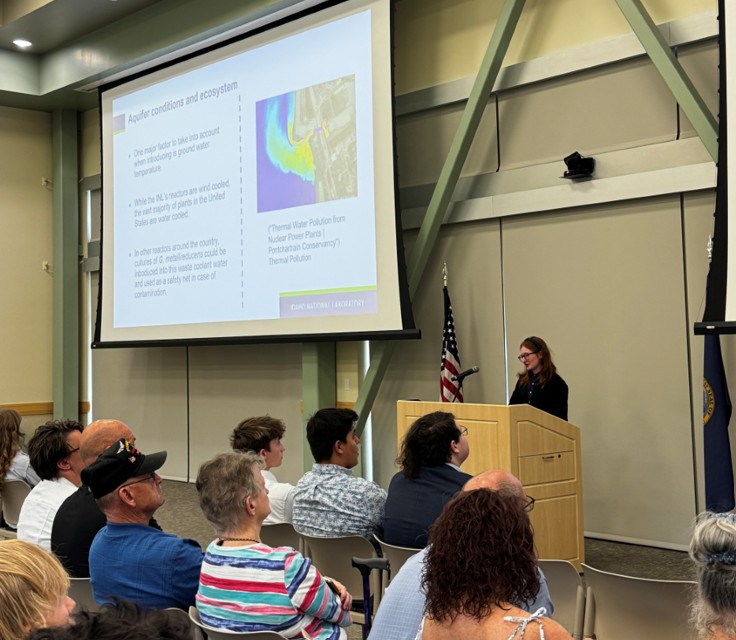
Introduced this summer, the 2026 SparkLab fellowship used a hybrid format. Eleven students participated in weekly virtual sessions, toured INL laboratories and presented their work during a final research showcase at INL’s Energy Innovation Laboratory.
At the showcase, participants presented their work to INL experts and answered questions about their methods, results and conclusions. Students earned scholarships based on the quality of their research and presentations.
“I was impressed with the commitment and excitement each student had toward their highly technical research topics,” said Anna Lanzillotta, engineer at INL and a SparkLab mentor. “It was amazing to see all that they accomplished with mentor support and the right resources.”
Applying research to complex energy challenges
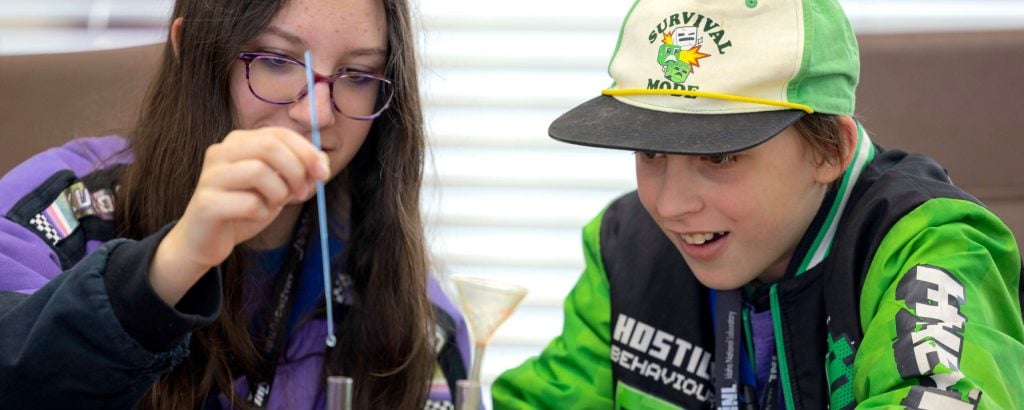
Participants completed projects focused on INL mission areas such as energy systems analysis, reactor physics and thermal hydraulics. Their work required them to use technical data, explore responsible use of AI in research, use computational tools and develop research methods.
Simon Reed, a student from Idaho Falls High School, compared three methods of producing hydrogen using nuclear energy: conventional electrolysis, high-temperature steam electrolysis and thermochemical water splitting. He evaluated each method based on cost, efficiency, environmental effects, safety, water use and compatibility with nuclear power generation.
The project introduced Reed to techno-economic analysis, a process researchers use to evaluate the potential performance and cost of emerging technologies. His analysis identified high-temperature steam electrolysis as the most practical near-term option.
Alexander Wilson, a student from Compass Academy, used the programming language Python to model a hexagonal reactor core containing fuel pins, cladding and coolant. His simulation evaluated neutron behavior, fission probability and heat distribution to determine whether the modeled geometry could support stable reactor operation.
His project connected nuclear physics concepts with research on advanced reactor designs, including reactors that use compact, hexagonal fuel assemblies.
Ginger Wood, a student from Compass Academy, explored the potential of introducing a microbe called Geobacter metallireducens into the Eastern Snake Plain Aquifer. Her research examined how bacteria could reduce concentrations of heavy metals and radioactive contaminants in groundwater.
Her project connected microbiology and environmental science with efforts to understand and mitigate groundwater contamination.
Together, the projects required students to interpret technical results, identify limitations and defend their conclusions with evidence. They also demonstrated how computational modeling and systems analysis contribute to the development and evaluation of energy technologies.
Building Idaho’s advanced STEM research workforce
By working alongside INL mentors, students gain firsthand insight into the education, collaboration and persistence required to pursue careers in STEM.
“SparkLab gives students an opportunity few high school students receive: the chance to tackle real research challenges alongside subject matter experts and transform their ideas into polished, meaningful projects,” said Cait McGraw, SparkLab program coordinator. “It’s exciting to watch students grow in confidence, embrace the research process and develop the skills and experience that can propel them into future STEM education and careers.”
These experiences can help students make informed decisions about college programs, technical fields and future careers. They also support INL’s long-term workforce development efforts by connecting Idaho students with research opportunities close to home.
“Idaho students have the talent and curiosity to succeed in these fields,” McGraw said. “By introducing them to advanced research early, we can help them see a future for themselves in STEM and prepare them for careers that will support Idaho’s communities and strengthen the nation’s energy and security workforce.”