The Army needs effective ways to train soldiers on everything from fixing diesel generators to eventually operating nuclear microreactors. Traditionally, that training relied on manuals and PowerPoint presentations. That works, but it leaves little room for hands-on practice before soldiers face the real equipment.
The Idaho National Laboratory is closing that gap with extended reality (XR) through a pilot project with the Army Prime Power School. The school trains soldiers to operate and maintain the Army’s power generation systems, including future nuclear and microreactor technology. INL hopes to discover whether XR headsets can give students a more realistic, efficient way to learn complex systems before they ever touch the physical equipment. XR combines virtual and augmented reality tools to create realistic, interactive training environments.
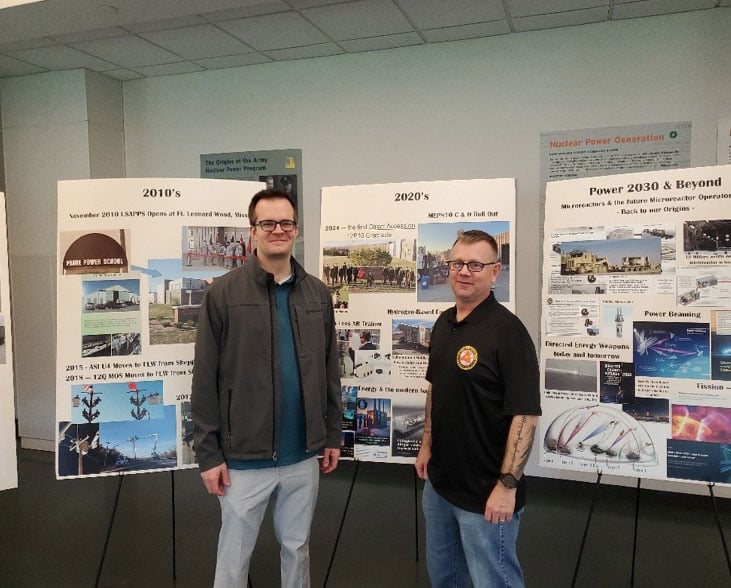
“This collaboration and pilot program will provide important data as we bring extended reality and digital twin technology into the classroom for the next generation of nuclear reactor operators,” said Porter Zohner, an INL modeling and simulation expert who worked on the project. “Training on these complex systems is only getting more important. We anticipate these technologies will provide a better training experience than relying solely on PowerPoint presentations and make the in-person training less costly.”
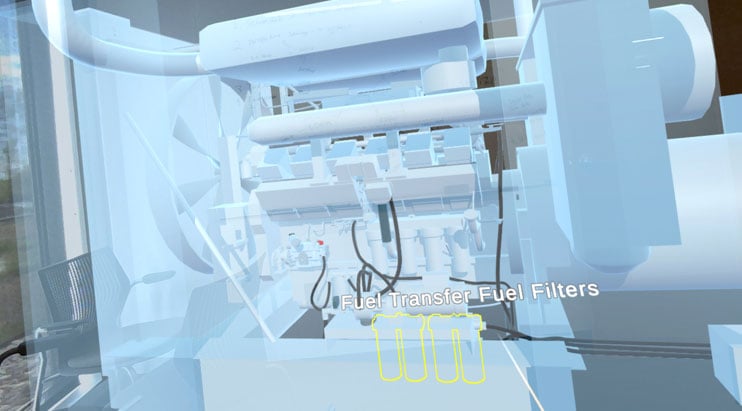
The first digital training was built around a diesel generator system — a universal learning requirement at the school. INL researchers built a custom digital representation of the generator from scratch. Interactive training modules walked students through how to read the generator’s system displays and diagnose problems. This training allowed students to practice troubleshooting procedures step by step. The hands-on, immersive environment let students learn and practice complex procedures in a completely secure environment, safely applying their coursework.
“This style of training is invaluable, especially in times of political uncertainty, which can lead to funding issues,” said instructor Staff Sgt. William Poseno. “Being able to perform the same training within a virtual environment that very closely emulates real operations, during times when physical resources cannot be procured, ensures we can continue the mission and training with little to no degradation or compromise to the curriculum.
The goal of the project was to showcase XR’s value in Army training. The pilot demonstrated how XR technology can bridge knowledge gaps. It also showed the technology’s potential as a cost-efficient method for training soldiers who operate the Army’s power generation equipment.
Cost-efficient, realistic training is particularly important as military forces look to incorporate small modular reactors or microreactors for their energy needs. These simulations better prepare students for real-world scenarios involving current and future energy systems.
“This is exactly how training should be today,” said PPS student Sgt. Jarek Mick. “We grew up with this kind of tech, so instead of staring at manuals and PowerPoint presentations, we’re virtually inside the engine. It makes learning these systems totally intuitive and, honestly, a lot of fun.”
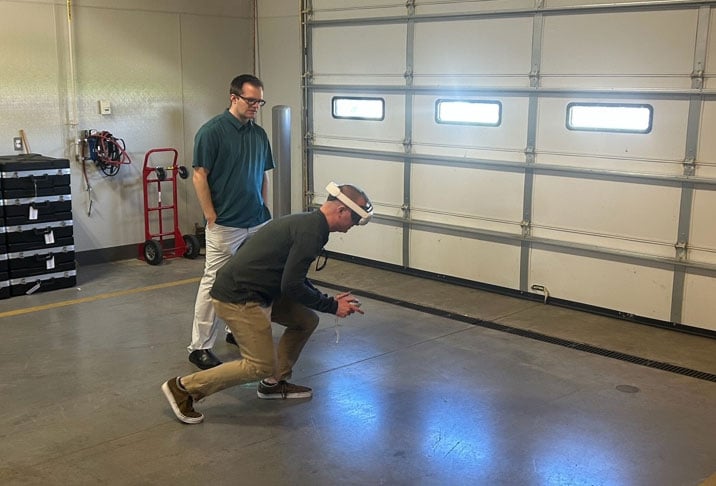
The collaboration between the Army and INL has opened new pathways for training innovation.
“Collaborating with INL on this project has been a seamless, outstanding partnership,” said senior instructor Sgt. 1st Class Chandler Giles. “They were able to take our initial thoughts and ideas, visualize them, and translate them into a highly effective XR training program for our students. Working hand in hand with INL has revolutionized how our operators train and interact with these critical engine systems.”