On any given fall Saturday, college football stadiums turn into small cities with populations of up to 110,000 people. Thousands of fans congregate in relatively small spaces, all with smartphones vying for their share of the wireless spectrum.
Behind the scenes, police, firefighters, paramedics, venue security and event operators need to move time-sensitive information through that same wireless spectrum without delay. The same challenge affects pro football, concerts and other mass gatherings — networks must adjust to the spectrum congestion that crowds create.
For most fans, a congested network means texts may not immediately go through, or social media feeds may not load properly. For emergency responders, a delayed connection can disrupt coordination and situational awareness, putting operations and sometimes lives at risk.
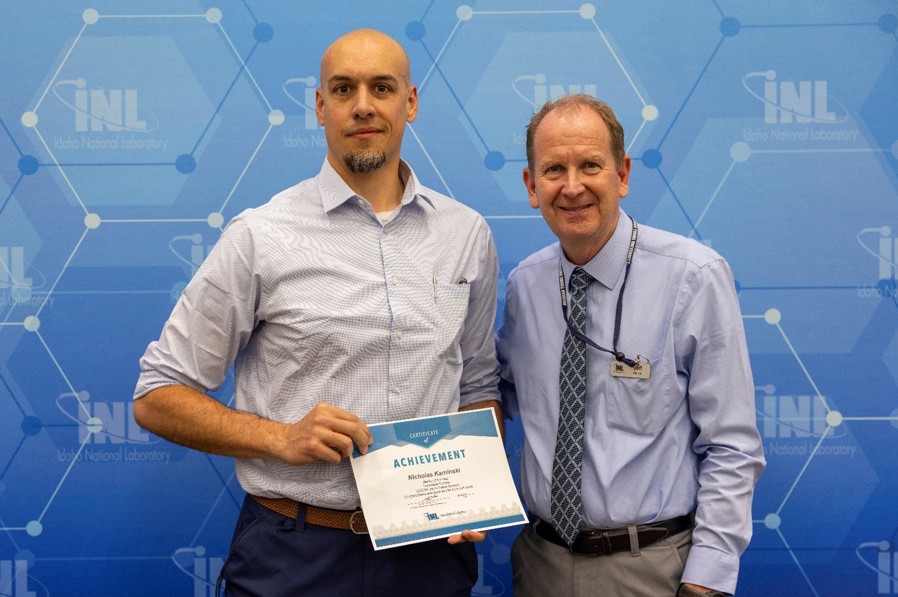
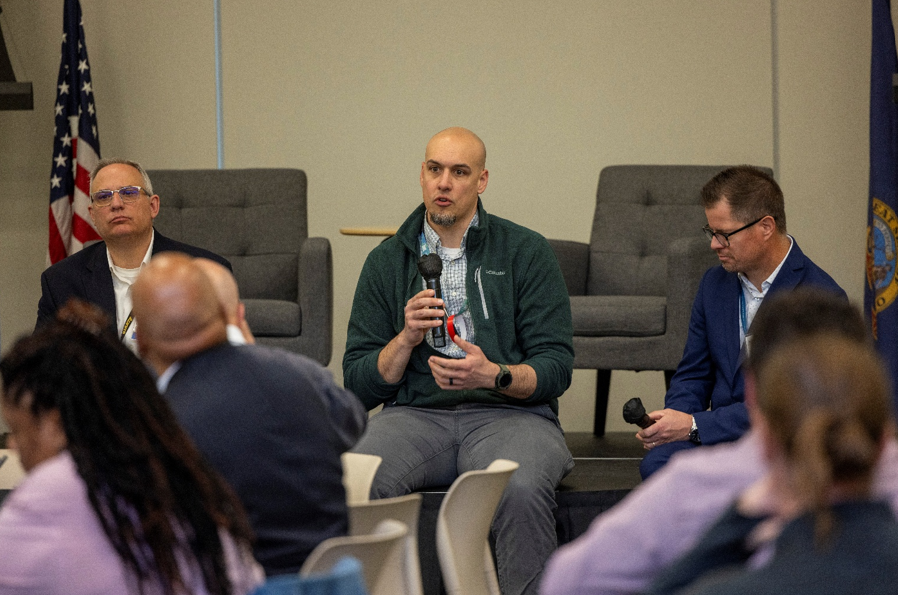
Nick Kaminski, a distinguished wireless communications researcher for the Idaho National Laboratory’s (INL) Wireless Communications Research division, develops wireless spectrum technologies that can adapt to unexpected conditions and continue supporting mission-critical communications.
When the playbook meets reality
In football, the playbook is only the beginning. Once the ball is snapped, players must read the defense and execute the play as the plan starts to deteriorate. A wireless communications network is similar in that it may perform well under controlled or ordinary conditions, but unexpected weather events, infrastructure failures or even malicious attacks can cause performance to deteriorate.
Kaminski understands both kinds of pressures.
He played Division I football as a center at Virginia Tech while balancing coursework in electrical engineering, computer engineering and economics.
“Football season feels like having a very bad headache,” Kaminski said. “Except you have that feeling over your entire body for nine months.”
Kaminski eventually stepped away from economics but left Virginia Tech with four degrees: one in computer engineering and three — a bachelor’s, master’s and doctorate — in electrical engineering. His Virginia Tech experience reinforced a lesson that now shapes his research at INL: Performance depends on preparation, adaptability and team members who understand how their roles fit together.
Kaminski was initially focused on robotics and artificial intelligence, at least until then Virginia Tech professor Charles Bostian encouraged him to try undergraduate wireless research.
“Why wireless?” Kaminski said. “I wanted to do cool AI stuff.”
Nevertheless, Bostian kept steering Kaminski toward wireless research, a doctoral program and a fellowship. It wasn’t long before the field won Kaminski over with the way it merges engineering and the physical world.
“You can design a transmitter, and you can design a receiver,” Kaminski said. “In between them is all the nonsense and chaos of the real world. How do you deal with that to make something useful?”
Years later, Bostian’s influence came full circle when Kaminski joined his former mentor as a co-author of “Cognitive Radio Engineering,” the final book of Bostian’s career
From analysis to action
After Virginia Tech and a postdoctoral appointment in Ireland, Kaminski joined the Institute for Defense Analyses. He valued the organization’s mission focus, but something was missing. He didn’t want to just study systems, he wanted to build and test them.
In late 2022 he began looking into INL at the insistence of a former colleague. At the lab, Kaminski found an unusual combination of integrated infrastructure and mission focus that could move promising technologies from theory through prototyping and realistic testing — and into the hands of the people who need them.
“No matter what you know about INL, you don’t know the whole picture,” Kaminski said. “The scope of work we do here is constantly surprising to everyone.”
Communications are invisible until they fail
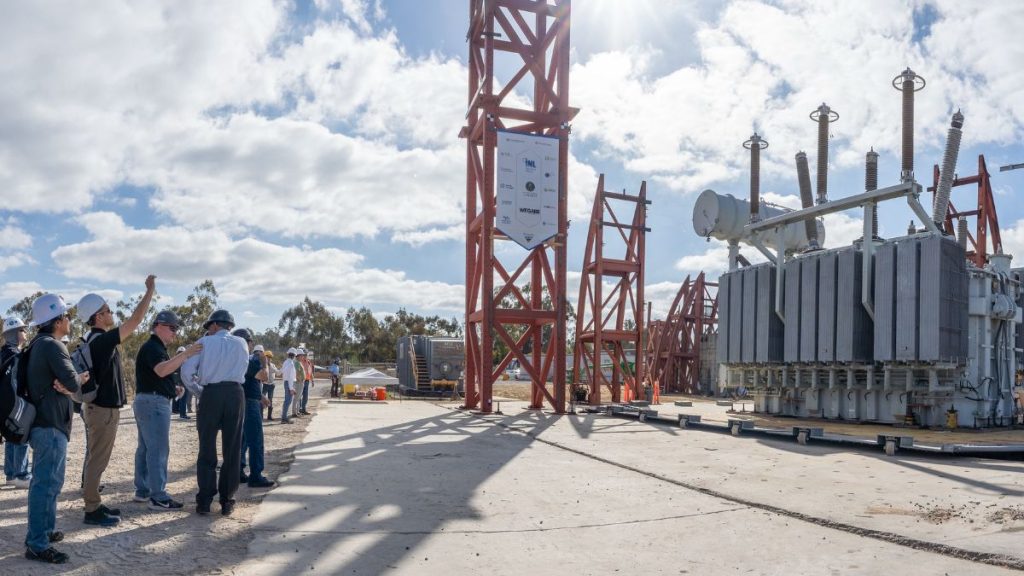
Across the 890-square-mile INL Site, wireless researchers work with cellular networks from 2G through 5G, satellite communications, fixed and mobile radios and telecommunications backhaul. They can introduce controlled interference, observe how networks respond and evaluate systems under realistic distances, power levels and even varying terrain.
What makes INL unusual isn’t simply its wireless capabilities. It’s that those capabilities exist alongside full-scale test ranges including power grids, airfields for uncrewed air systems, nuclear facilities and water infrastructure, allowing researchers to study wireless communications systems the way they behave in the real world.
Communications systems are the connective tissue of modern infrastructure. A delayed or disrupted message can affect an operator restoring power after a hurricane, emergency crews coordinating a response or public safety officials relying on critical communications in a packed stadium.
Communications are critical in high-consequence environments because decisions are only as good as the information available to make them.
AI and uncertainty
Perhaps an unexpected turn in wireless is that decisions are increasingly being made by machines.
AI, one of Kaminski’s earliest research interests, is becoming a bigger part of communications systems. Kaminski studies how engineers can use AI to make good decisions when datasets are limited, conditions are changing and multiple automated systems may be acting at once.
AI-native architectures, automated network management, spectrum management and interference mitigation are high-priority efforts for wireless research across the federal government. The National Institute of Standards and Technology and INL recently partnered to help meet the National Telecommunications and Information Administration’s needs in these areas. Through this and related work, INL is advancing these priorities while seeking to understand what AI-driven network decisions mean for grid operators, emergency responders, service members and public safety officials who rely on dependable network connections.
INL provides an environment that can test decisions and systems where the conditions are real, but before the stakes are. The laboratory brings together government, industry and academic partners to develop and evaluate technologies and produce credible data. Rather than competing with the wireless industry, Kaminski describes INL wireless research as a “force multiplier”.
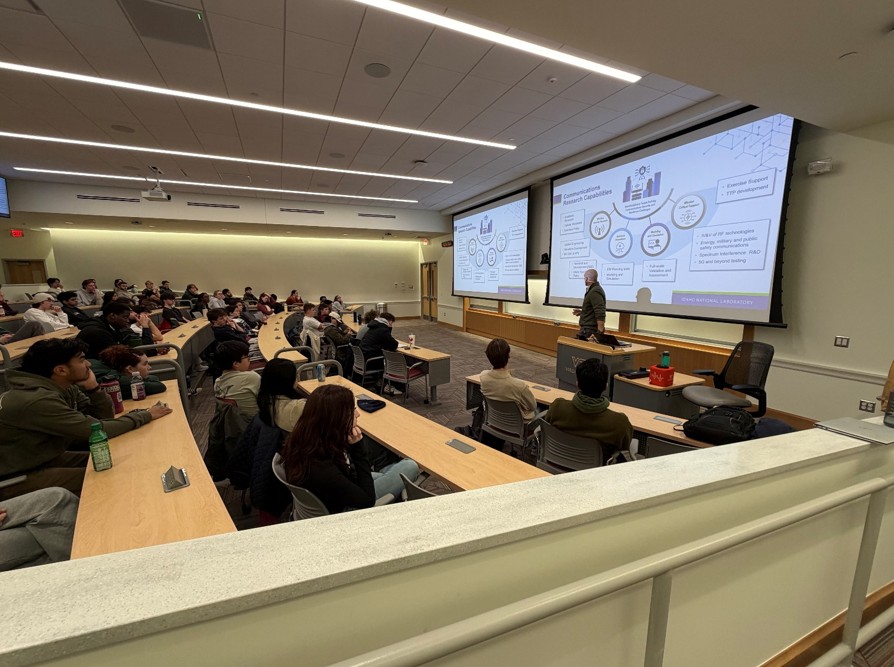
That force-multiplier role now extends back to Virginia Tech, where Kaminski is collaborating with faculty and students on wireless spectrum research and has returned to Blacksburg to share what he has learned.
“It’s personally fulfilling to see people go from students to faculty,” Kaminski said. “I also get to reconnect with people who were faculty when I was a student at Virginia Tech. Going back has reinforced how much they care about the mission and about building things. That’s rewarding.”
Beyond the game plan
In football, game day reveals what a team is actually prepared for once the clock starts and the play breaks down. Likewise, secure and resilient wireless communications systems need more than successful test runs in an isolated environment, or AI systems that are effective within scripted and expected scenarios.
INL has integrated capabilities and a customizable ecosystem that can produce real-world wireless unpredictability at scale — before the world depends on it.
“INL is a place that builds stuff,” Kaminski said. “It has real wireless networks, does real testing and has a strong focus on supporting national security and missions that matter. This is the perfect place for wireless spectrum research.”
Learn more about INL’s wireless research here.