As the nation’s nuclear energy laboratory, the Idaho National Laboratory (INL) has world-class capabilities for developing, fabricating, testing and analyzing nuclear fuel.
Those capabilities extend to the laboratory’s nonproliferation mission, which focuses on research to prevent, counter and respond to nuclear and radiological threats.
Now, INL has established a new capability that enhances its nuclear fuel research and national security missions with a mobile nuclear fuel chopping and decladding skid at the Moran facility at the laboratory’s desert Site.
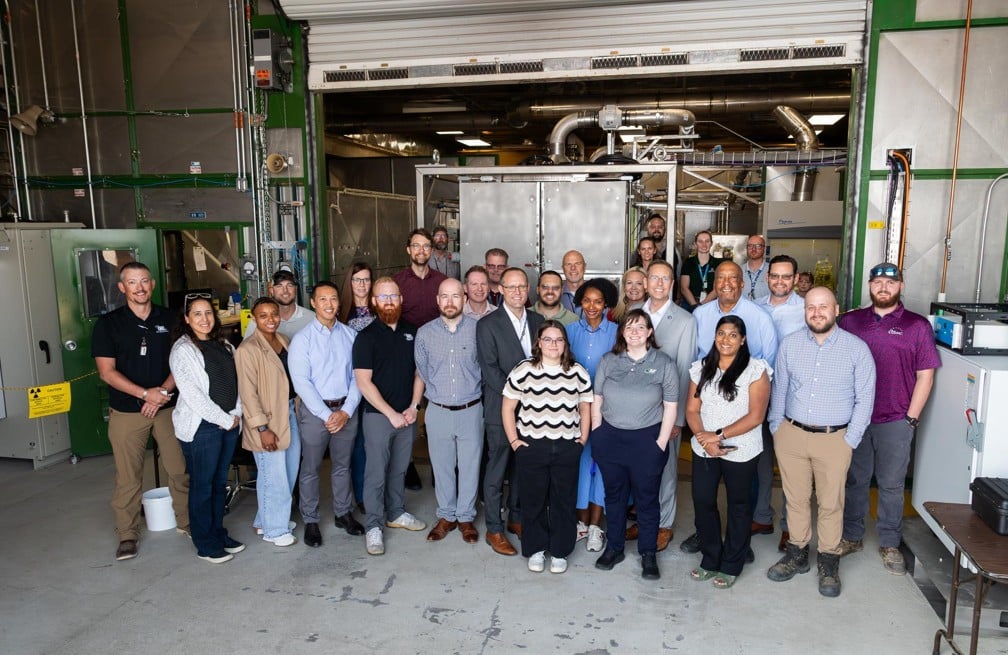
To study and process used nuclear fuel, researchers must first remove the surrounding cladding to expose the uranium core. The new modular, configurable system enables that process through a sequence of precision operations that crimp, peel and chop the fuel rod. The platform allows researchers to prepare nuclear fuel materials for analysis, experimentation and reuse.
“This new skid not only provides a much-needed source of relevant fuel for use at the Moran facility, but it also represents a new capability for innovative fuel cycle and nonproliferation research and development,” said J’Tia Hart, director of INL’s Nuclear Nonproliferation Division.
The new system expands INL’s ability to support fuel processing, nonproliferation research and advanced fuel cycle development while providing a flexible platform for future mission needs.
Designing a new capability
Delivered to INL in April, the chopper skid was designed, fabricated and installed through close collaboration with Integrated Solutions & Designs, and Campbell Technical Services over 20 months.
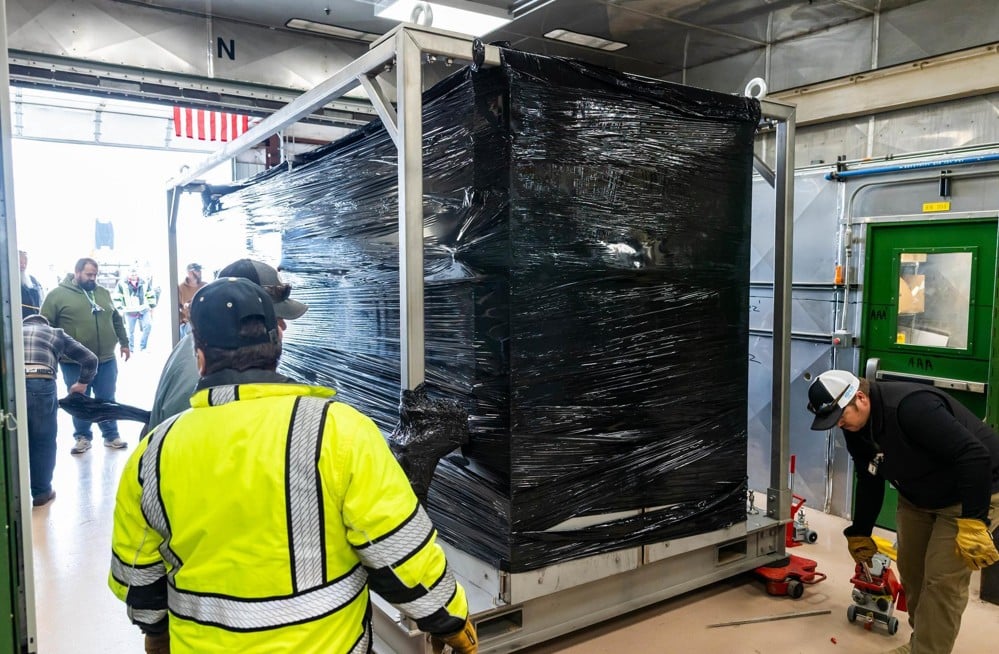
“One of the biggest successes of this project was the collaboration,” said Nathan Stevens, a portfolio manager in INL’s Nuclear Nonproliferation Division. “Campbell Technical Services worked directly with our team throughout the design process, gathering feedback from engineers, designers, electricians and operators. Our team’s approach created a system that not only meets today’s mission needs, but will also allow for future growth.”
Designed for flexible fuel processing
Magnox fuel is a legacy nuclear fuel type originally used in gas-cooled reactors in the United Kingdom. However, the fuel remains relevant today for nuclear nonproliferation. The newly built skid will begin by processing Magnox fuel received at INL in 2024, but the flexibility designed into the system will enable general mechanical processing for a wide variety of nuclear fuel and materials.
“We jokingly call it the nuclear-grade banana peeler, as the decladding step removes the cladding from the fuel in a similar fashion,” said Kevin Lyon, INL’s senior manager over Radiochemistry and Nuclear Measurements. “The skid was designed to be highly adaptable. Every major component is modular, which means its systems can be removed, adjusted, repositioned or upgraded as future mission needs evolve. This is not a one-trick pony built only for Magnox fuel.”
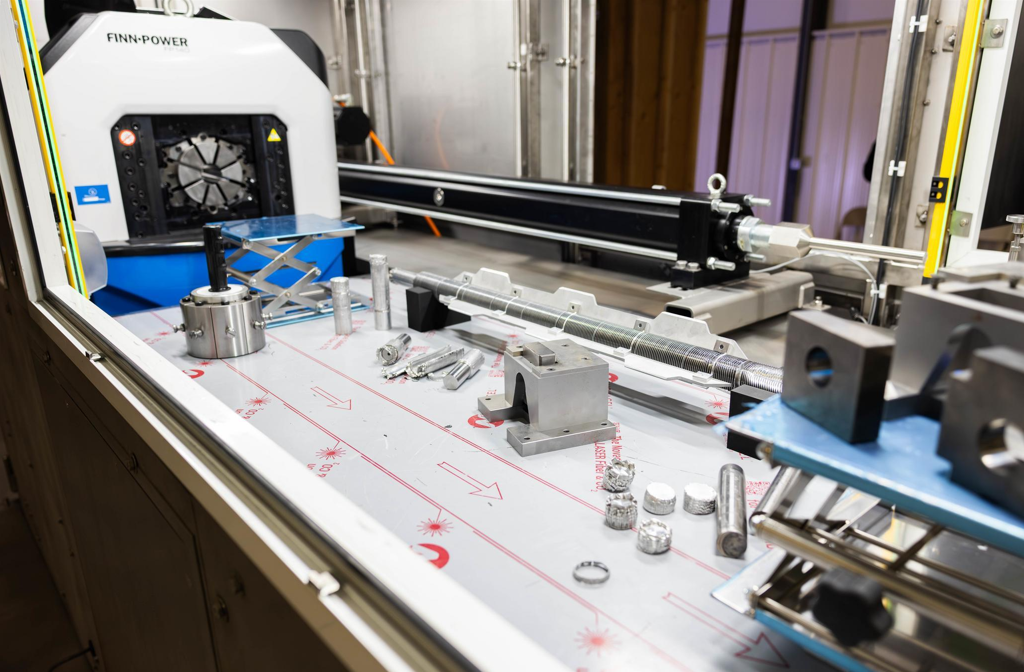
The electrically driven system uses specialized tooling and programmable operating parameters that can be tailored to different fuel types. High-speed cameras monitor the process and collect data, helping researchers optimize performance. Prior to deployment, the system underwent extensive testing using surrogate materials with similar mechanical properties to the Magnox fuel rods, ensuring the equipment could perform reliably.
Advancing future nonproliferation missions
Following installation and system integration, INL achieved a major milestone May 5 with the first crimping evolution using actual Magnox fuel rods. The demonstration validated key system functions and advanced the project toward chopping Magnox fuel rods June 2.
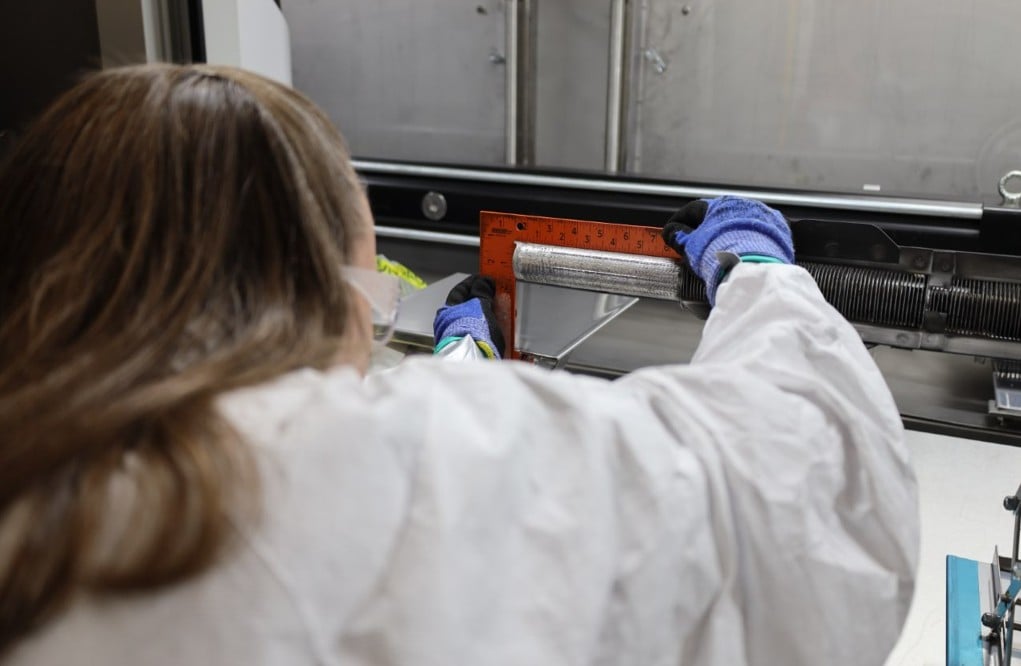
Funded through the Athena Initiative under the National Nuclear Security Administration’s Nonproliferation Stewardship Program, the project supports National and Homeland Security’s fiscal year 2026 notable outcome by enhancing Moran’s fuel processing capabilities while strengthening workforce development to prepare the next generation of nonproliferation experts.
“This is a huge win for Idaho, our partners and the missions we support,” said Stevens. “We’re already seeing strong interest in the capability and the opportunities it creates for future research and collaboration.”