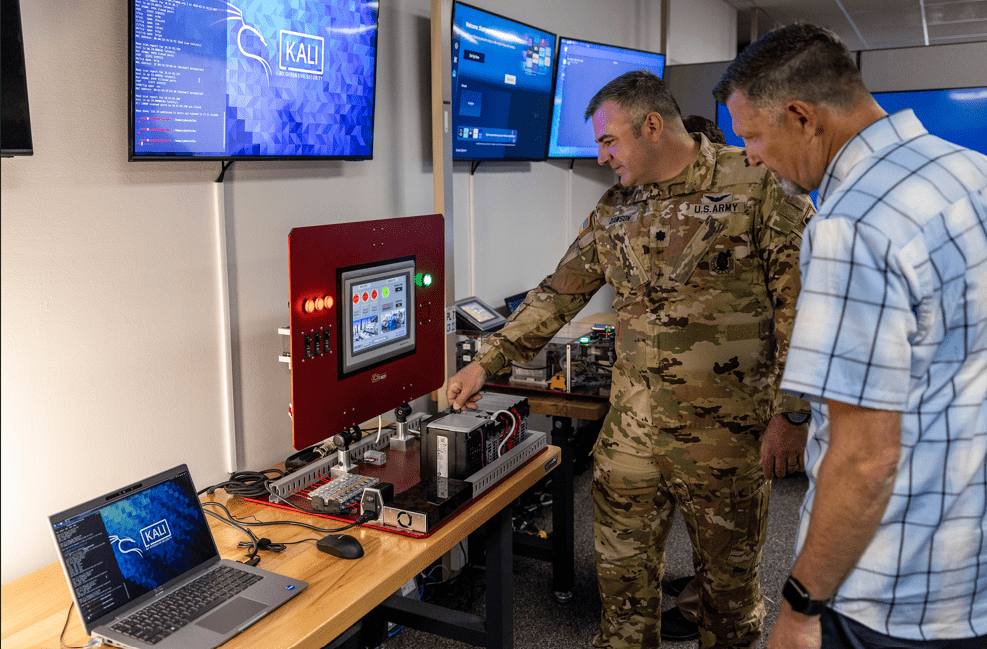
U.S. Army Lt. Col. Joshua Dawson had some idea of what the Idaho National Laboratory might have to offer when he visited the lab in December 2025.
As executive officer for the Army Cyber Institute at West Point, Dawson had read about the lab’s All Hazards Analysis (AHA) tool in a cyber institute/INL collaborative report from 2020. Since his research focuses on critical infrastructure security and resilience, he requested a tour of INL to see if there were any intersections between defense critical infrastructure (DCI) research being done at the INL and the cyber institute.
“All I was initially looking for was a tour,” he says. Six months later, Dawson is still at INL, planning to stay until the end of the year, and working on establishing a permanent Army fellow position at the lab.
Dawson has discovered an institution where energy systems research, operational technology, industrial control systems, cybersecurity and applied engineering converge under one roof. “You can find some of these elements at the other labs,” Dawson said, “but not all in one place. And they are all important topics for DCI in the Army.”
That integration is increasingly important as military planners confront the reality that future conflicts are treating domestic infrastructure as traditional battlefields. Electrical grids, transportation systems and industrial networks now represent strategic terrain the military relies on.
“Defense of critical infrastructure has become an important focus for the Army,” he said. “And I know INL has a lot to offer in this space.”
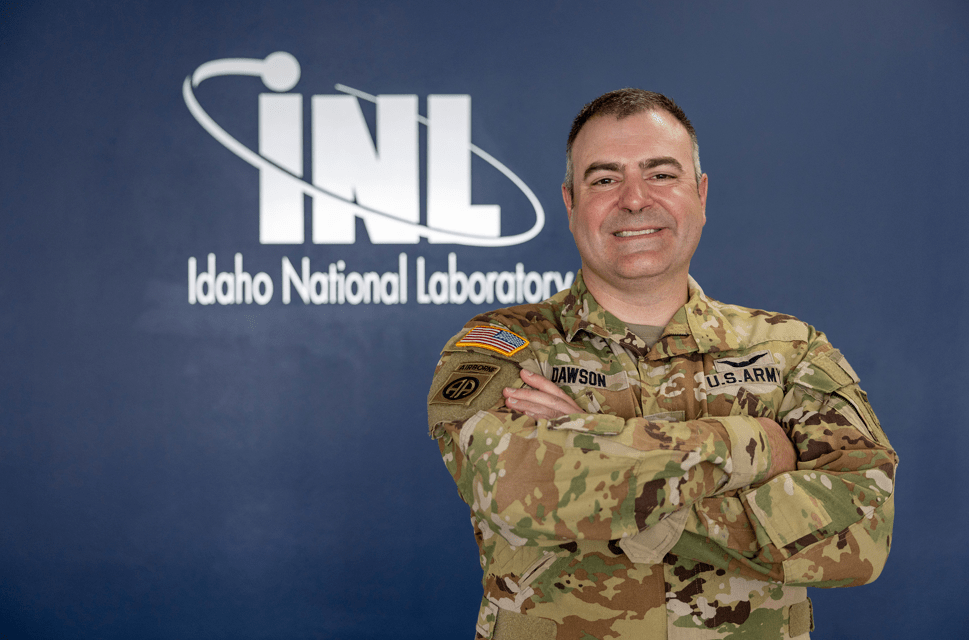
In the Army
A career in the Army was never on Dawson’s radar growing up in Sandy, Utah. After the terrorist attacks of Sept. 11, 2001, his senior year of high school, he felt called to serve and joined the Utah National Guard while attending Utah State University, where he earned a bachelor’s degree in computer science in 2006. He later became an active-duty officer and fulfilled his dream of flying the AH-64 Apache attack helicopter, the Army’s most sophisticated combat aircraft.
As a platoon leader with the 12th Combat Aviation Brigade in Germany, Dawson led teams supporting operations in Iraq and Afghanistan. He later deployed to Poland and South Korea to integrate aviation operations with multinational and interagency partners. In addition to flying skills, those assignments demanded systems thinking and the ability to coordinate aircraft, ground forces, intelligence and logistics in fast-moving environments.
Unexpected invitation
Even as his operational responsibilities grew, Dawson never lost interest in research. One day, he received an unexpected email asking whether he had considered a position at West Point. The opportunity represented a turning point, and through the Army’s Advanced Civil Schooling program Dawson pursued doctoral studies at the University of Utah while deepening his expertise in cyber operations and emerging technologies.
Dawson first read about the INL-developed AHA tool in the 2020 report in the Army Cyber Institute’s Jack Voltaic 3.0 Research Report. The AHA tool helps organizations understand how disruptions to one part of critical infrastructure — such as power, water or transportation — can create cascading effects across other systems. Dawson saw immediate potential for applying that capability to Army critical infrastructure challenges.
“As an organization, we forgot this tool existed,” Dawson said. But once he was aware there was a sprawling database and modeling capability that could map millions of critical infrastructure dependencies across the United States, he wanted to know more. “This helps solve a lot of the problems we’ve been trying to figure out,” he said.
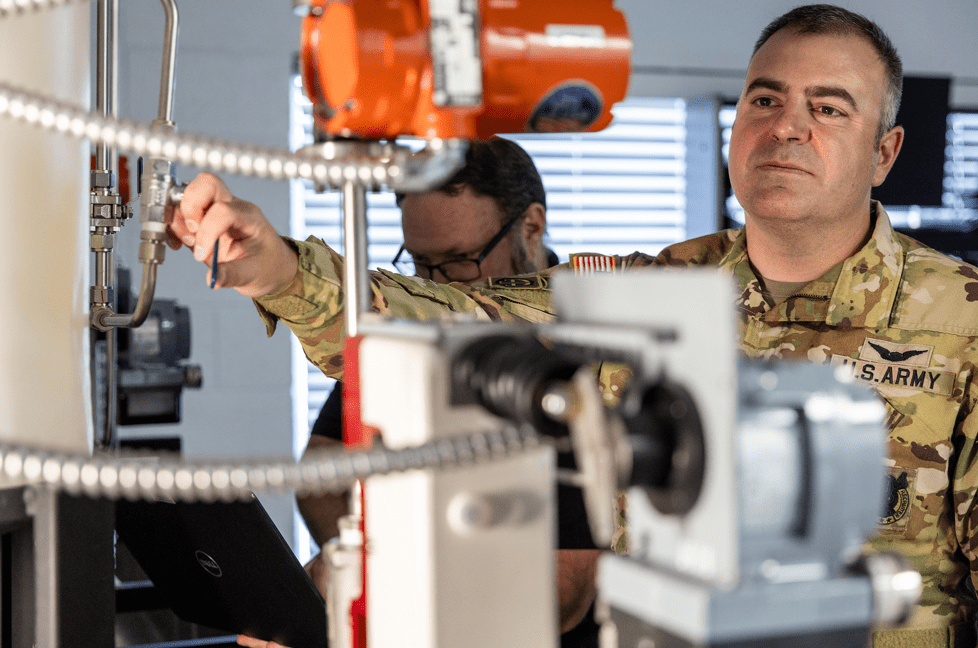
Escape room experience
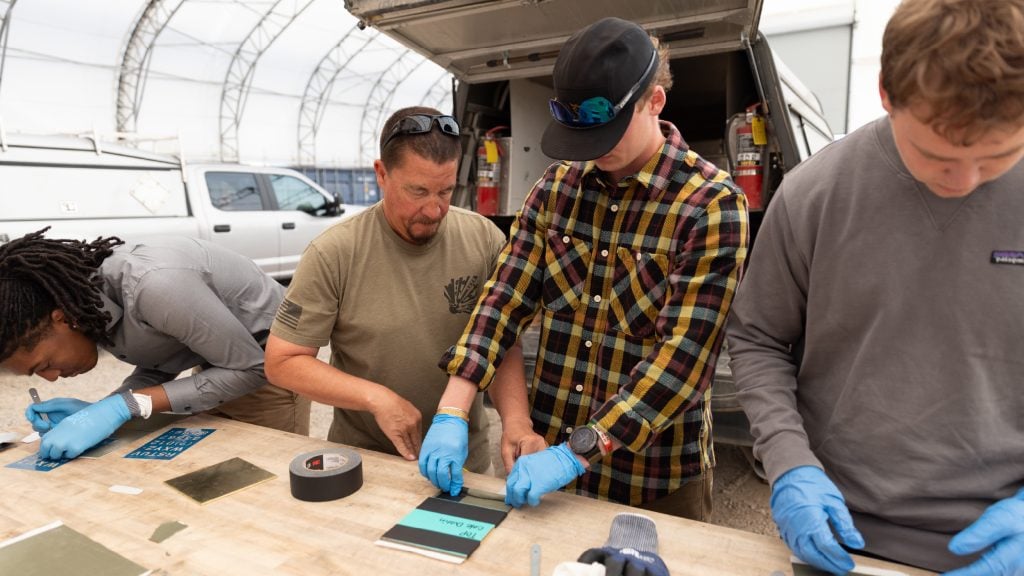
Dawson’s eyes were opened more while participating in the Industrial Control Systems (ICS) Cybersecurity 301 course, which the lab runs in collaboration with the Department of Homeland Security’s Cybersecurity and Infrastructure Security Agency. ICS Cybersecurity 301 is an instructor-led, four-day program that provides hands-on training for understanding, protecting and securing industrial control systems from cyberattacks. The course includes a competitive offense versus defense exercise called “red vs. blue” and a rotation of different cyber-themed escape rooms.
After taking the course and considering his background in user experience design, Dawson offered to help design a new transportation-themed escape room. In March, the room he helped build was taken to the Women in Cybersecurity Conference in Maryland. It was a big hit.
“Dawson’s presence at INL and access to key personnel across the cyber institute and Army organizations has opened a host of possibilities, not only for the lab’s National and Homeland Security mission but for national defense,” said Chris Bibeau, INL program manager for U.S. Army Cyber Command.
“It’s remarkable when mission focus, priorities and research align as seamlessly as they did in this fellowship,” said Cybercore Integration Center Director Sean McAraw. “Josh undoubtedly gained valuable experience at INL, but it’s equally important to recognize how much INL benefited from his contributions. We look forward to continuing this partnership with the Army.”