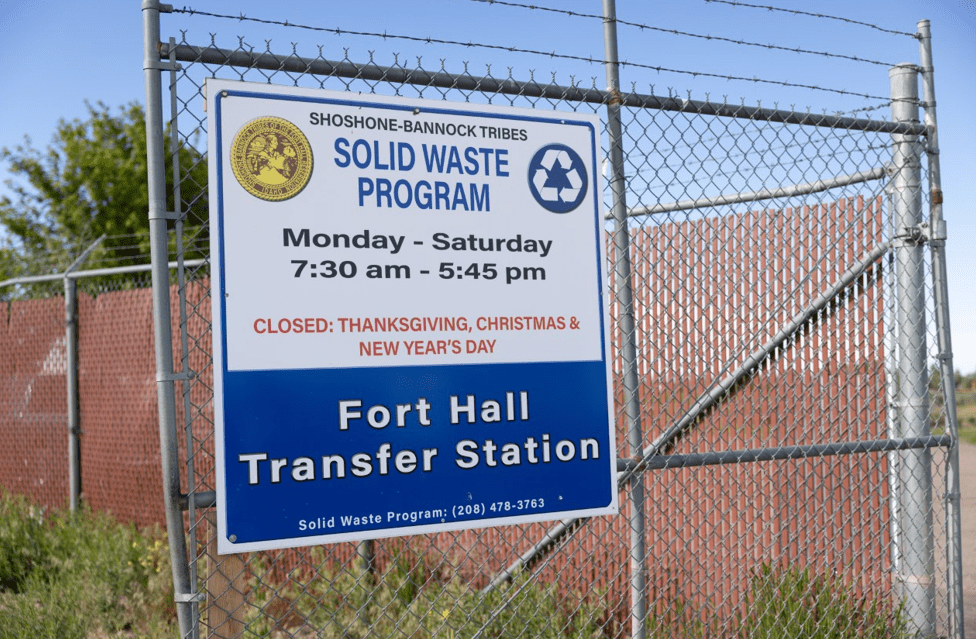
The value of recycling has been recognized for decades, but there are still significant challenges to keep waste from ending up in landfills or the ocean. The Department of Energy’s Alternative Fuels and Feedstocks Office (formerly known as the Bioenergy Technologies Office) and the Idaho National Laboratory are working to find new recycling solutions. With funding from AFFO, INL researchers collaborated with the Shoshone-Bannock Tribes on the Fort Hall Reservation to develop a process for separating and sorting solid waste, refining biogenic materials into high-quality fuels and chemicals.
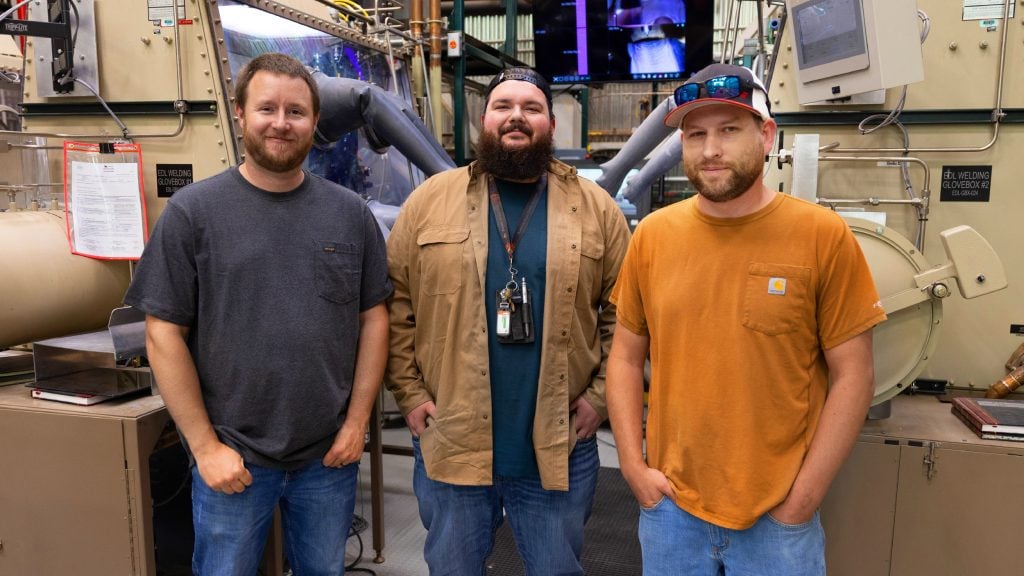
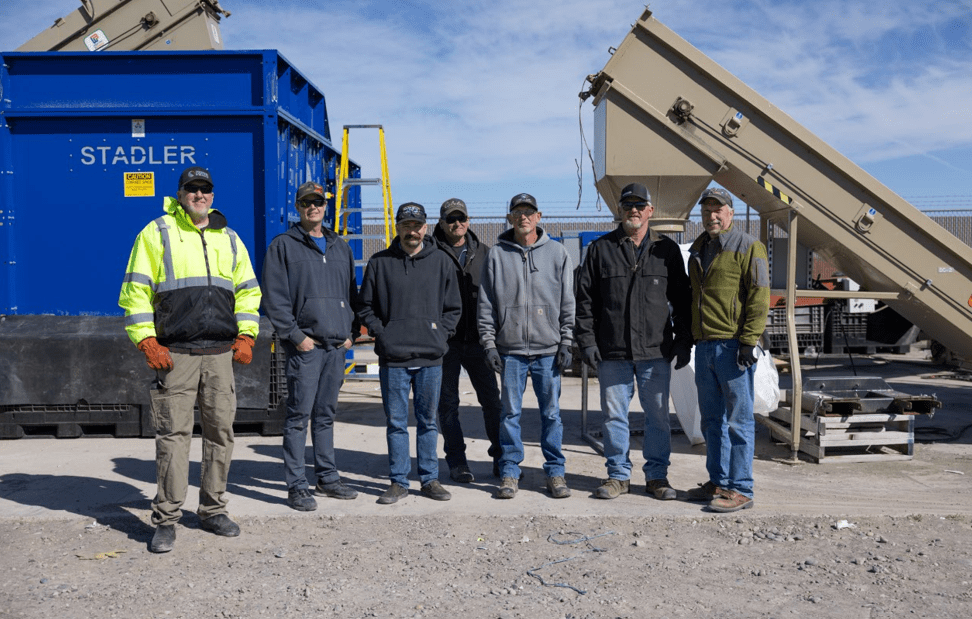
“The goal of this project was to demonstrate the ability to recover and decontaminate at least half of the unrecyclable fiber and plastic from the solid waste,” said Neal Yancey, senior research engineer at INL’s Biomass Feedstock National User Facility. “Once we identified the processes that were most promising and economically feasible, we had a better idea of how to move forward. This was a great opportunity for INL and the Shoshone-Bannock Tribes to find a solution to the local challenge of waste management, and a chance to demonstrate what this community could do creatively with waste and biomass.”
What is waste?
Municipal Solid Waste – the term for trash or garbage – includes items such as bottles and corrugated boxes, food, clothes, blankets, grass clippings, furniture, tires and refrigerators. It does not include everything that may be landfilled at the local level, such as construction and demolition debris, municipal wastewater sludge, and other non-hazardous industrial wastes.
Based on available reports for recent data periods, roughly 94 million tons of municipal solid waste were recycled and composted in the United States in 2024, representing a recycling rate of roughly 32%. This included about 69.1 million tons of recycled material and 42.6 million tons of composted organic waste. That’s an improvement over the 6% rate in 1960 but still means approximately 68% of municipal solid waste is going to landfills instead of being recycled or composted.
How is the Biomass Feedstock National User Facility managing waste?
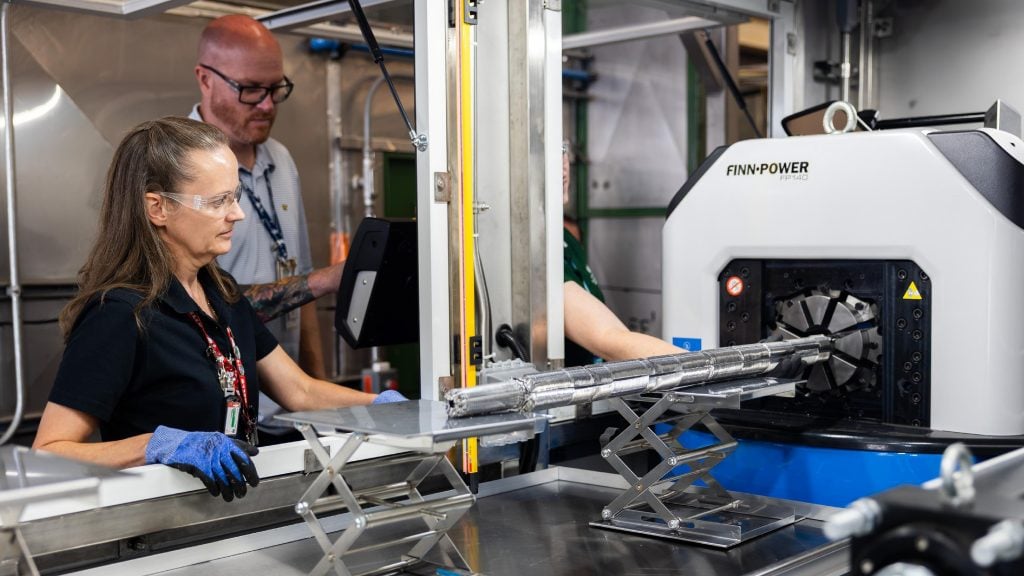
Located in INL’s Energy Systems Laboratory complex, the BFNUF is home to three standard sorting and processing equipment.
- The ballistic separator segregates material like stones, glass, metal and rubber from solid waste by agitating the material stream on a moving deck. It separates flat objects (paper and flat cardboard) from three-dimensional objects like bottles and containers and can screen out materials according to size.
- The eddy current separator uses the conductivity of metal objects and a magnetic field to separate nonferrous metals from nonconductive materials. The material passes through a rapidly rotating magnetic field, causing the nonferrous metals to change trajectory due to the repelling magnetic fields.
- The air classifier uses controlled airflow to separate materials based on their density and aerodynamic properties. It separates materials like paper and plastic film from glass and metal by blowing the lighter materials away from heavier ones. At the BFNUF, engineers modified an air separator originally built for potato harvesting to separate fabrics, wet cardboard, paper and plastic.
BFNUF engineers have also implemented a Cortex single robot system from AMP, a Colorado company. This high-speed robotic sorting system uses artificial intelligence to sort and bin materials with an accuracy rate of nearly 99%. The system can perform up to 120 picks per minute and is connected to AMP’s neural network, providing a free exchange of data that benefits both the lab and the vendor.
“The AMP Cortex machine adds sorting capabilities the BFNUF has not had until now,” said INL mechanical design and integration research engineer Kris Egan.
Collaboration with the tribes
Yancey said data from the collaboration with Fort Hall is likely to have a broader impact by offering insight into how these technologies can benefit rural communities. “We see this as something that leads to more energy security and adaptable waste management solutions in a lot of places,” he said.
”At Fort Hall, collaboration with INL is always welcome,” said Jim Cutler, the Shoshone-Bannock Tribes’ Utilities Director. “Our work together on solid waste has been beneficial in the past and we’re looking forward to seeing what more sophisticated processing can do as we move forward.”
Wyatt Petersen, Director of the Shoshone-Bannock Tribal Department of Energy, said they are eager to work with DOE and INL in all areas involving utilities, including water, sewer and trash. “We appreciate the educational outreach provided by INL and are pleased to continue developing collaborative research. We’re very happy to be considered a partner in this effort,” he said.
The impact
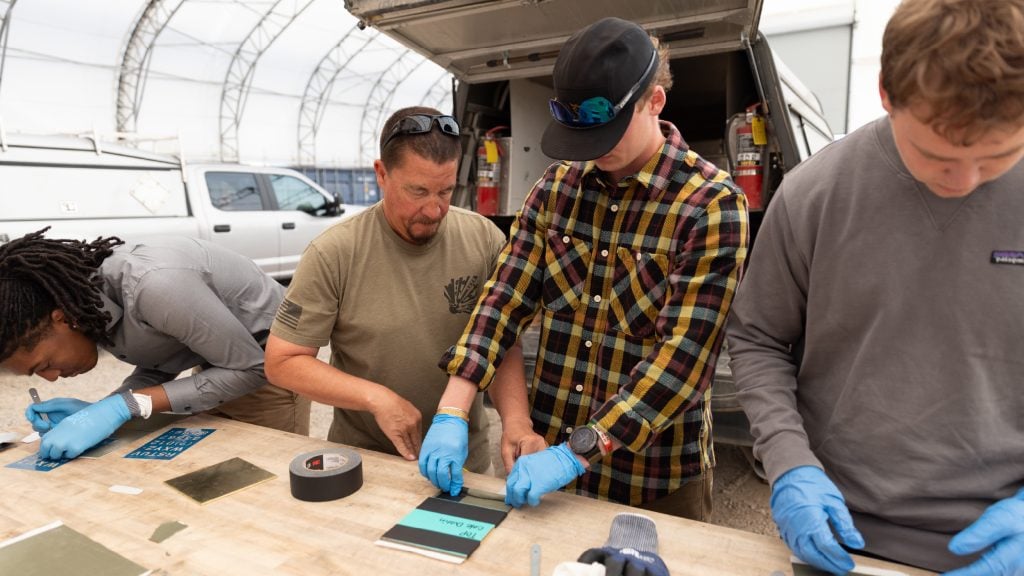
The collaboration between INL and the tribes aimed to identify at least one commercially viable product, such as ReNuFiber, a new type of cellulosic building insulation made from shredded waste. This innovative material, developed at INL and a finalist in the 2025 R&D 100 Award competition, offers better thermal resistance and requires no new training or tools for installation. By setting up production facilities closer to waste sources, the project reduces landfill waste and supports local economies through more efficient energy usage and financial benefits.
About Shoshone-Bannock Tribes
The Shoshone-Bannock Tribes, a federally recognized sovereign nation on the Fort Hall Reservation in Southeastern Idaho, adjacent to the Idaho National Laboratory. INL and DOE-ID work closely with the Tribes to preserve cultural resources and collaborate on shared goals that support INL’s and Tribal missions.