The Idaho National Laboratory (INL) attracts the world’s finest scientists and engineers to tackle the nation’s most pressing national security challenges and keep Americans safe.
Their unique qualifications sometimes generate assignments requiring them to embed in federal organizations to support national security, defense or policy missions.
These assignments take place in agencies such as National Nuclear Security Administration (NNSA), Defense Threat Reduction Agency, Office of the Under Secretary of War for Research and Engineering (OUSW-RE) or the Defense Advanced Research Projects Agency (DARPA).
These “outplants” acquire experience with federal sponsors, build relationships and contribute to national and international initiatives. These insights return to INL to help further the lab’s mission.
Carl Kutsche, Office of the Undersecretary of War for Research and Engineering
As a boy, Carl Kutsche spent countless hours building a model railroad with his dad, but it wasn’t just about laying tracks. He learned about wiring circuits, adjusting transformers and making the lights and knobs respond just right.
“I had a predilection for it,” said Kutsche. “I went from being a wandering 8-year-old to someone driven to make this thing work.”
That childhood passion for tinkering sparked a lifelong passion for electrical engineering. That passion eventually led him to one of the most influential technology offices in the U.S. government.
Today, Kutsche is on assignment with the OUSW-RE, working in the FutureG office with a team tasked with solving some of the military’s toughest challenges. His role helps integrate new commercial technologies into secure military communication assets to help keep our military members safe.
It’s a mission that matters. “Our soldiers need reliable, secure ways to communicate in the field,” said Kutsche. “Commercial technology has solved problems the military hasn’t even begun to tackle. My job is finding technologies and figuring out how to make current solutions solve problems in the field.”
Kutsche’s journey spans decades of service and innovation. After earning degrees in electrical and computer engineering, he spent 25 years in the Air Force, working on everything from laser communications to counterterrorism projects. Along the way, he earned a Ph.D., taught physics at the Air Force Academy and served as a technology liaison in Europe transitioning military technologies.
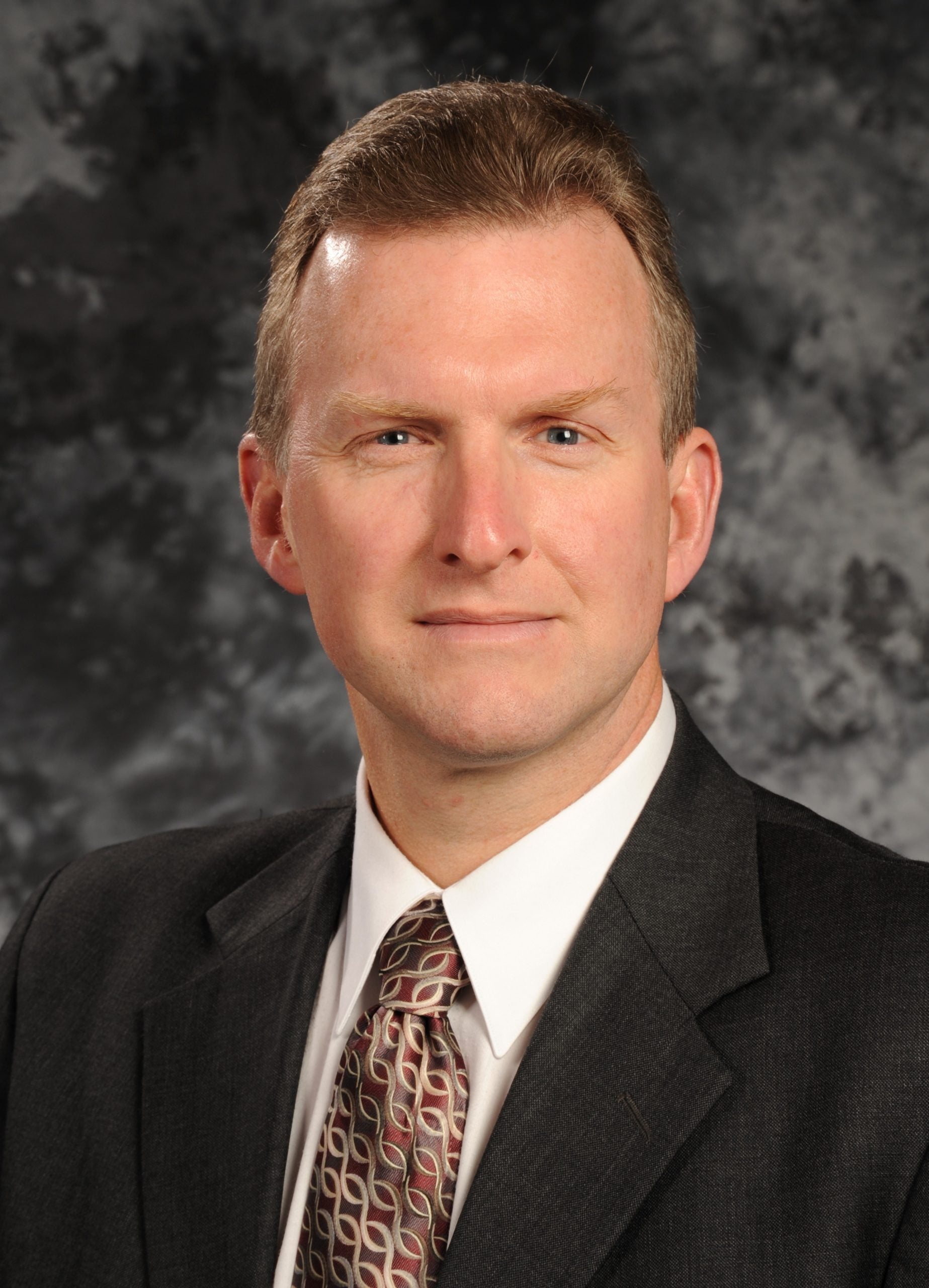
Kutsche joined INL in 2007 as a strategic hire for the Wireless Communications division. His expertise helped launch flagship programs worth millions and, as chief technologist, he guided research that shaped INL’s role in national security.
Kutsche didn’t chase status — he chased his passions. Early in his INL career, Kutsche advised OUSW-RE on cellular challenges and built strong technical relationships. When the office needed an expert to step in for a special assignment, Kutsche’s prior relationships and expertise paid off.
Kutsche’s assignment with OUSW-RE allows him to work as a U.S. government civilian while still representing INL. “It’s a win-win,” said Kutsche. “I get to solve big problems for the Department of War and bring back insights that help INL stay ahead.”
Kutsche’s work is shaping the future of military communications. As commercial networks race toward 6G, his team is ensuring the U.S. stays secure and connected in an era of global challenges.
For Kutsche, it all comes back to that childhood moment with his dad and a model train.
“Find something you love to do — and then do it,” said Kutsche.
He’s lived by that advice, from the Air Force to INL to the Pentagon. And it’s why, even after decades of service, Kutsche is still chasing the next big challenge.
Dakota Roberson, Defense Advanced Research Projects Agency
Pressure is a familiar friend to Dakota Roberson. For the past 25 years he has competed in motocross, an off-road motorcycle racing sport. His dad, who is a mechanic, taught Roberson how to fix and repair his motorcycles as a boy. He developed a strong mechanical foundation that instilled a practical mindset for diagnosing and solving problems.
When he was old enough, Roberson began competing in motocross events. Later, he helped revive motorcross racing at Noise Park in Idaho Falls.
The mindset Roberson refined on the track has steered him toward a career focused on innovation and national security.
Today, Roberson is a program manager in DARPA’s Strategic Technology Office. DARPA is known for high-risk, high-reward research that leads to breakthrough technologies, often years before they are practical or commercial. Roberson began his role in October 2025. It’s a term position — two years, maybe four — depending on the success of his projects.
“This position will utilize the combination of things I’ve spent my career honing,” said Roberson.
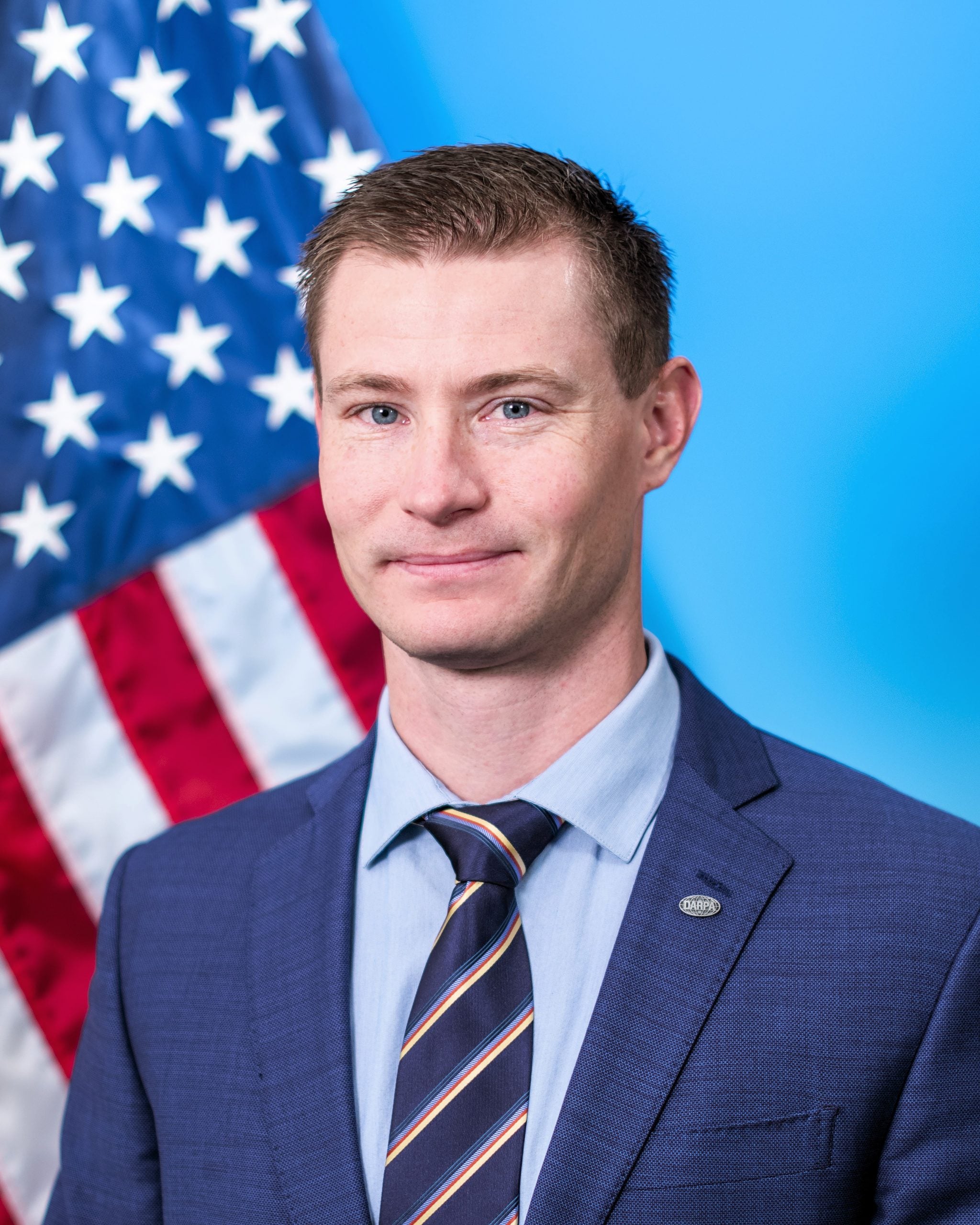
Roberson’s career includes diverse experiences that helped prepare him for the assignment with DARPA. He earned his Ph.D. in electrical engineering from the University of Wyoming, served as an associate professor at the University of Idaho and advised top defense leaders as a White House Fellow. He’s worked with Sandia National Laboratories, served on the Defense Science Board and advised the U.S. Air Force chief scientist.
Before taking the assignment with DARPA, Roberson served as a distinguished scientist and lead engineer at INL. In that job, he tackled one of the Department of War’s most pressing challenges: ensuring reliable power for military bases amid aging infrastructure and rising mission assurance requirements.
These roles gave Roberson a panoramic view of national security challenges and the connections to solve problems.
At DARPA, Roberson’s work is focused on civilian infrastructure-related work and developing clever ways to defend our nation’s technology and military vulnerabilities.
The Strategic Technology Office at DARPA isn’t tied to any single technology. It looks broadly at infrastructure — electricity, water, communications, space, fuel — and asks hard questions. How might these systems evolve? Where are the vulnerabilities? How do we defend against them before they become weapons?
For Roberson, this role builds on years spent working at the intersection of engineering and strategy. “DARPA is best-in-class,” said Roberson. “It’s an exciting opportunity to lead programs already underway and create new ones that I believe are of national importance, with a degree of autonomy you don’t get anywhere else in federal service.”
“The pace at DARPA is frenetic,” said Roberson. “You’re constantly engaging with performers, academics, military labs and transition partners. That clarity of thought —knowing you have to succeed or fail fast — is exciting.”
While Roberson’s assignment at DARPA just started, he looks forward to coming back to INL. “I want to bring back the sense that we can lead ideas, not just be responsive to them,” said Roberson.
Whether he’s rebuilding a racing community or reimagining what’s possible, he’s driven by the same instinct — to build something better.
Luis Ocampo Giraldo, National Nuclear Security Administration
While he was in middle school, Luis Ocampo Giraldo moved with his family to the U.S. from Colombia. One of his first classes in the U.S. was a woodworking class where Ocampo Giraldo designed a pinewood derby car.
“That experience really sparked my curiosity and helped me realize that in the United States anything is possible,” said Ocampo Giraldo. “To me, woodworking was about becoming a carpenter, but it had nothing to do with carpentry and everything to do with engineering.”
Ocampo Giraldo earned his Ph.D. in nuclear engineering from Pennsylvania State University as a GEM Fellow at Brookhaven National Laboratory. At INL, he was a scientist and team lead. Now, he is on a three-year assignment as a technical advisor to the NNSA Office of Defense Nuclear Nonproliferation Research and Development.
At NNSA, Ocampo Giraldo works within the safeguards and laboratory analysis enhancements portfolios as well as the nonproliferation stewardship program. His work is focused on developing technologies to detect, deter and prevent nuclear proliferation and nuclear terrorism.
“I wanted to know, at the headquarters level, how the strategy for our national nuclear research and development came about and see a fuller picture of our impact as scientists at national laboratories,” said Ocampo Giraldo.
At NNSA, he has been able to see science from another perspective through multiple projects across the entire complex.
“It’s not just a couple of labs,” said Ocampo Giraldo. “It’s across all the laboratories, plants and sites in the country, and you begin to see how everyone’s contributions start to add up toward incredible national capabilities and award-winning innovation benefiting the U.S. and the world.”
Ocampo Giraldo has provided input into the NNSA research and development road map, which details the scientific investments over the next 10 years for the office and is contributing to the construction of a new test bed that will support the nonproliferation mission and foster its next-generation workforce.
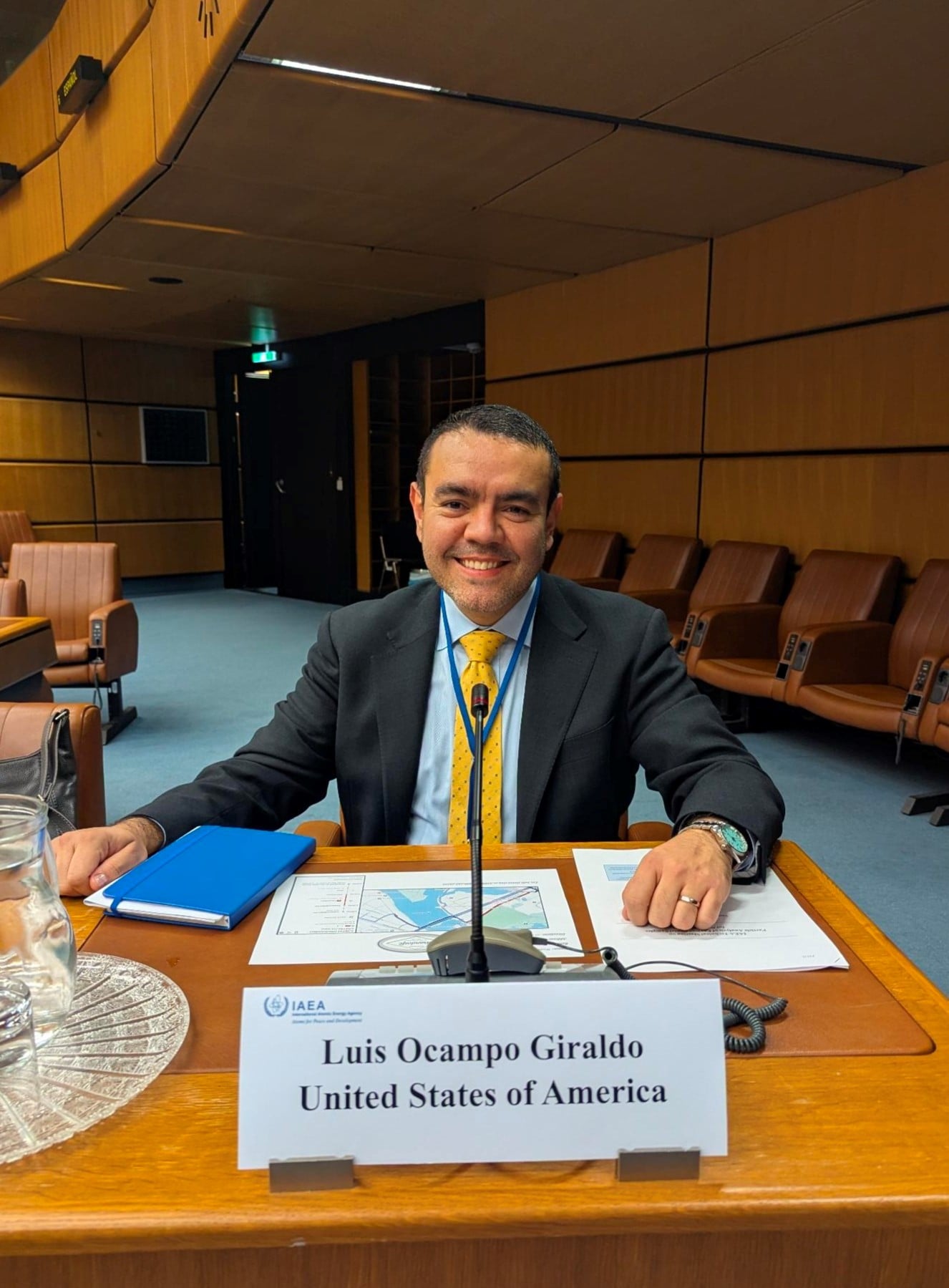
Most recently, Ocampo Giraldo was part of the U.S. delegation to the International Atomic Energy Agency 2025 Technical Meeting on Particle Analysis. “It was incredible because it was no longer Luis from INL — it was Luis from the United States, and I never expected to be in such position,” he said.
Management and operations assignments outside INL provide valuable opportunities for staff members to contribute their expertise to important national and international initiatives.
“I want to come back and contribute to INL’s nonproliferation research strategy leveraging everything I have learned during the assignment,” said Ocampo Giraldo.