How do you power a spacecraft traveling 880 million miles from Earth?
There isn’t enough sunlight for solar panels, and batteries don’t perform well in the harsh conditions of deep space, where temperatures can reach as low as minus 455 F (minus 270 C). That’s why NASA turned to a type of power system that has been reliably powering deep space missions since the 1960s: the radioisotope power system, or RPS.
The RPS is essentially a nuclear battery, converting thermal energy from the decay of plutonium-238 into electricity. This will keep the entire system warm in the cold of space and support scientific instruments, robotic arms, computers, radios and drive systems.
In July 2028, Dragonfly, a first-of-its-kind rotorcraft, will launch with an RPS assembled and tested at the Idaho National Laboratory. It will journey to Saturn’s moon Titan, where it will investigate the habitability of its environment for water- or hydrocarbon-based life.
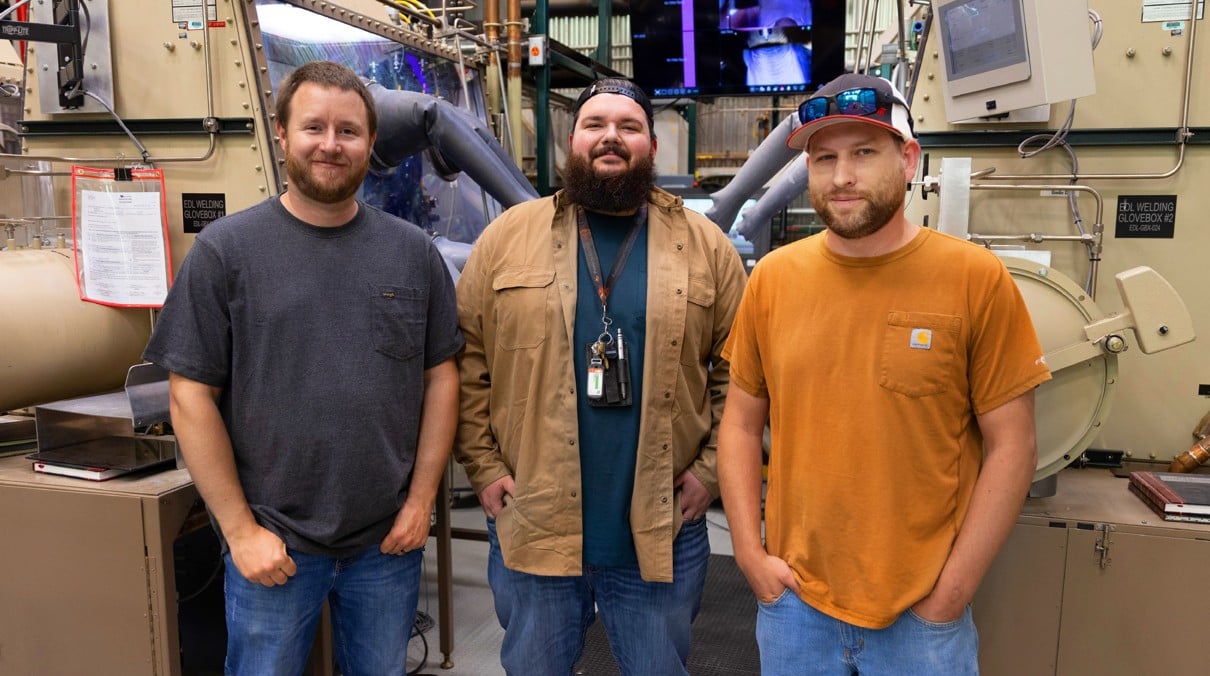
Like with New Horizons, Perseverance and Curiosity, this RPS will be the product of teamwork across multiple national laboratories. Oak Ridge National Laboratory will provide the materials, Los Alamos National Laboratory will produce the fuel, and INL will put the final pieces together.
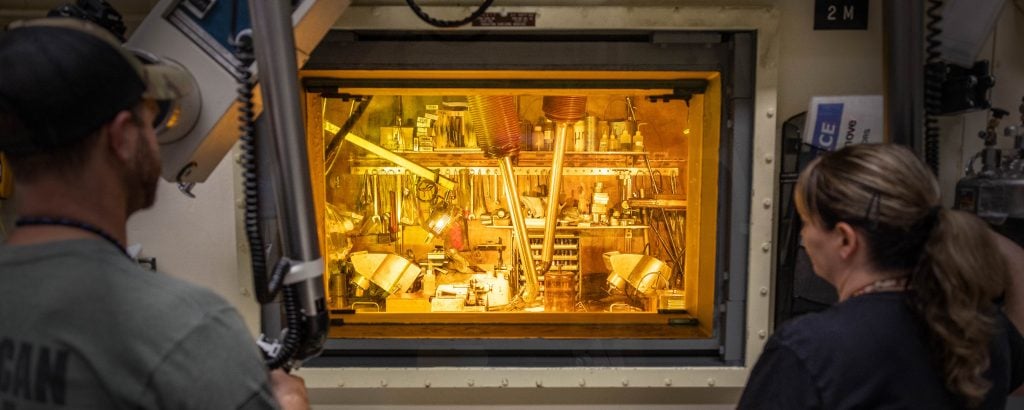
INL’s Engineering Development Laboratory is preparing for that work. Equipped with specialized furnaces, gloveboxes and welding capabilities, EDL prepares the RPS components for assembly and testing, delivers them safely to NASA, and helps integrate the RPS with the spacecraft.
Building a ‘space battery’
Located at the Materials and Fuels Complex, EDL is where the space nuclear program works with technicians to prepare the RPS for assembly.
“This is the place where dreams come true,” EDL technician Kyan Voronovich said. “We help RPS engineers put together their ideas and troubleshoot them.”
Much of that work is focused on the RPS that will be used on Dragonfly. EDL is part of the preassembly process, preparing RPS components from Oak Ridge National Laboratory and INL subcontractors. They start by preparing the graphite aeroshell that will eventually hold plutonium-238 fuel clads.
Using an extremely precise jig grinder, EDL technicians will remove a small half-circle in the aeroshell cap for a lock screw. During assembly, this will secure the fuel clads for space travel. The process requires precision and attention to detail; one wrong move can ruin an aeroshell and force the team to start over.
Once complete, the graphite is ready to be baked in a furnace at 1,500 C (2,732 F) for 36 hours to remove oils, moisture and other impurities.
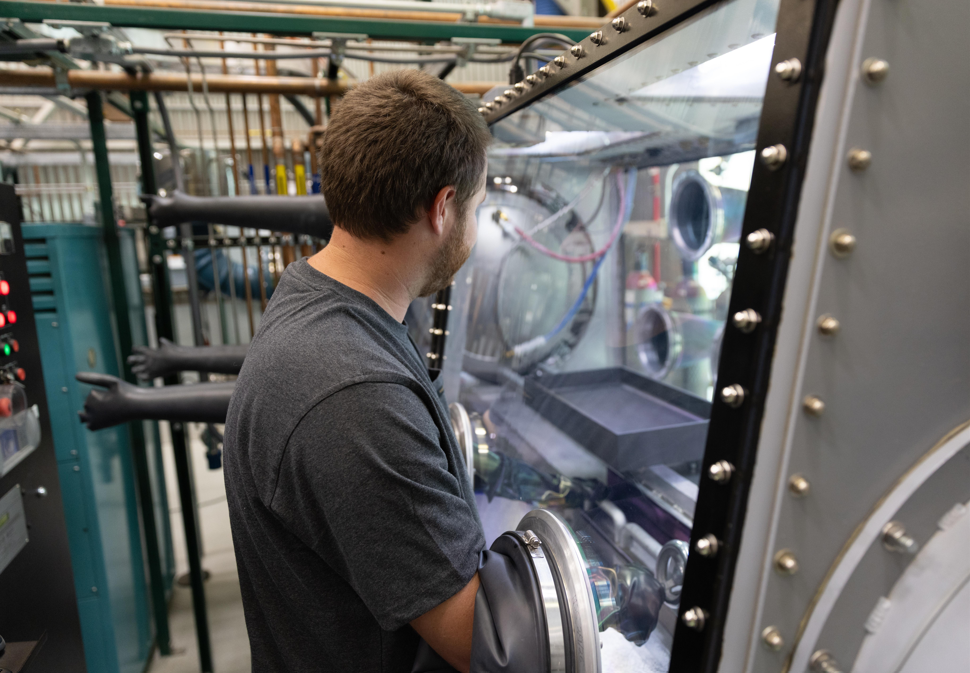
“When we take it out, it immediately goes into an argon glovebox,” said EDL technician Dallin Williams. “Maintaining a controlled environment helps prevent contamination of the graphite, so it’s placed in a completely sealed, argon-filled can.”
The final steps
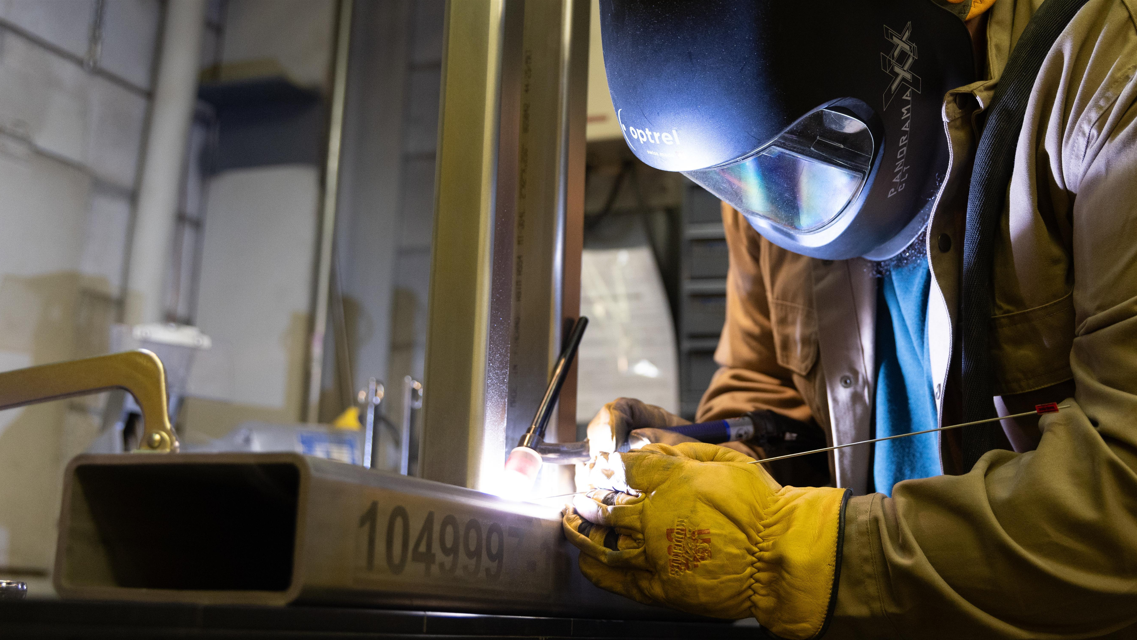
Final assembly and testing happen at the Space and Security Power Systems Facility. The process includes vibration, mass properties, magnetics and thermal vacuum testing to ensure it’s ready for the demands of launch and spaceflight. When complete, EDL technicians perform the final seal weld on top of the RPS at the facility. This particular weld is difficult, due to the small size and the level of precision needed.
The final step for the Dragonfly RPS will be transportation. Technicians will load the completed RPS into a certified shipping cask. The cask is then placed into the specially designed transportation system, which is equipped with sensors that track temperature, vibration and other conditions throughout the four-day journey to the Kennedy Space Center in Florida. EDL technicians will follow the truck throughout the trip, monitoring the sensors and responding if anything goes wrong.
Powering the final frontier
EDL plays an essential role in creating an effective and operating RPS, from preparing the first graphite aeroshell to safely delivering components to NASA. Every step reflects the precision and teamwork needed to support some of the most challenging missions in space exploration. With its new battery, Dragonfly will be able to travel to a distant moon to help us better understand our universe.
“INL is especially equipped for this kind of work,” Williams said. “We know nuclear. We have the right equipment and the right experience to make it possible.”