In a nondescript Idaho Falls warehouse, a nuclear nonproliferation researcher at the Idaho National Laboratory (INL), picks up a small, plastic bottle and pours out tiny bits of rounded black glass across a worktable.
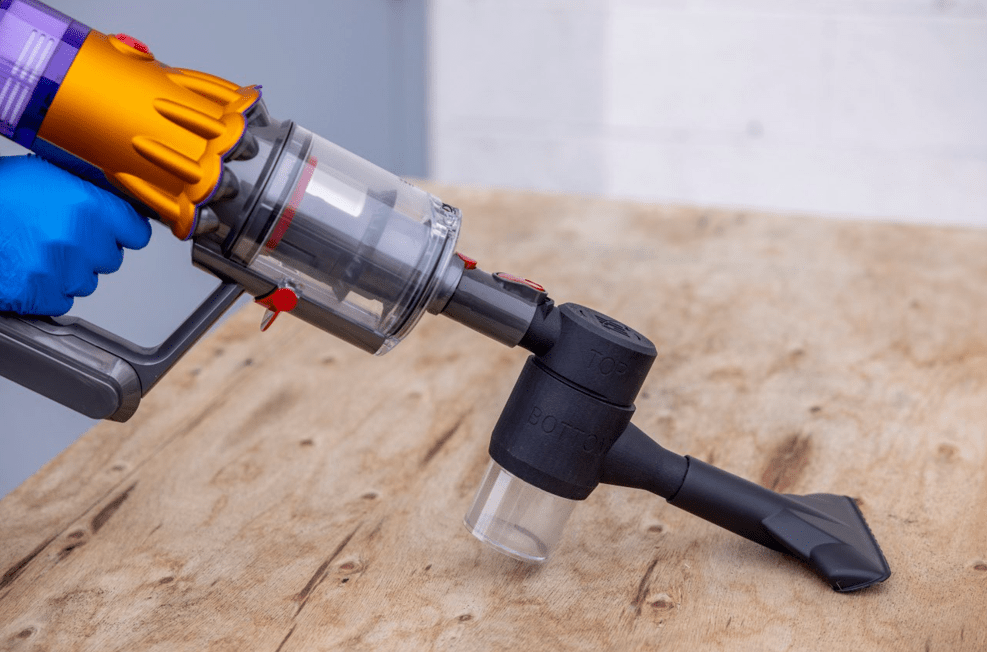
His job is simple: Collect the glass off the table using a handheld vacuum cleaner.
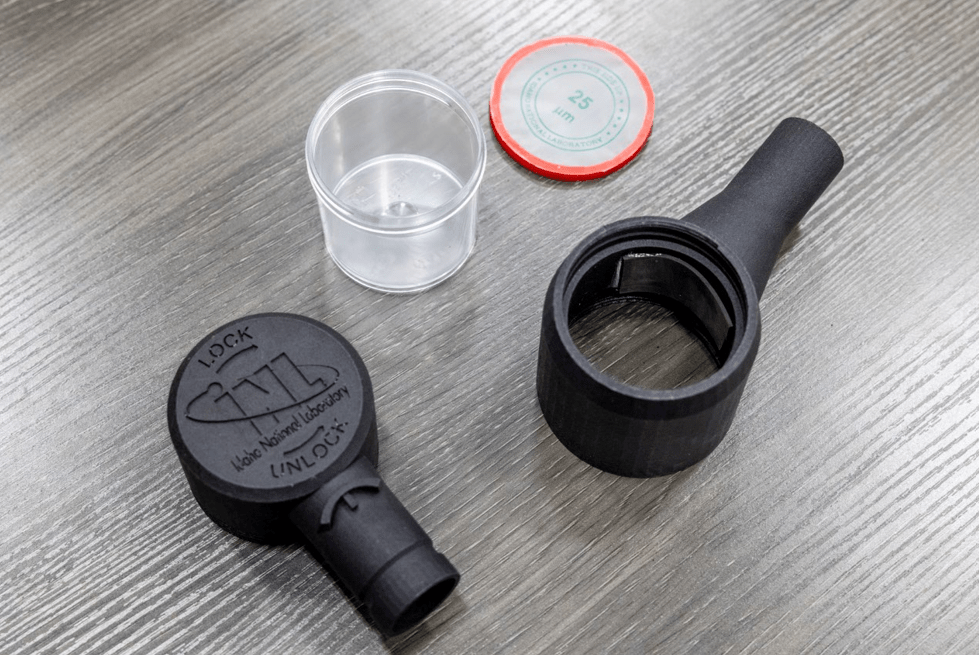
It’s like a chore millions of Americans perform at home every day, yet this feels very different. First, this vacuum has a special attachment — designed at INL — that includes a plastic specimen container and a particulate filter. Second, this vacuum/attachment combo isn’t designed to clean; it’s designed to collect fallout samples after a nuclear detonation.
While this particular demonstration uses simulated, non-radioactive materials, the vacuum/attachment combo has the potential to serve a very real national security purpose.
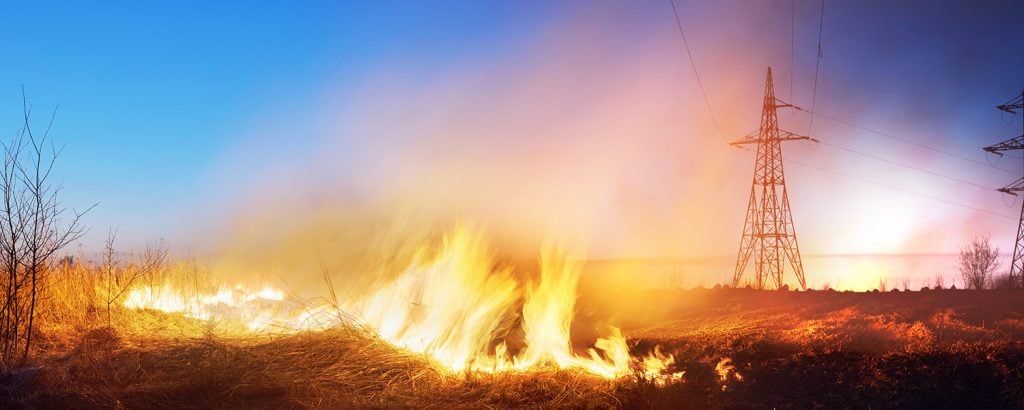
A nuclear detonation creates intense fire, heat and an atmospheric phenomenon that pulls in debris from the ground. That debris then melts, cools and falls back to earth in what are essentially radioactive glass beads of varying sizes, typically smaller than a millimeter in diameter and ranging in size from a single grain of sand to a poppy seed.
Collecting this material for forensic analysis serves as one of the nation’s most important nuclear safeguards, putting hostile foreign nations and terrorist groups on notice that the United States can identify the origin of a nuclear attack.
The INL-developed vacuum/attachment combo makes collecting samples for post-forensic analysis a much safer and more effective process.
Vacuum adapter innovation
“Up until a few short years ago, nuclear specialists were trained to collect fallout samples using a broom, dustpan and a typical household battery-powered vacuum,” said Kevin Lyon, manager of the radiochemistry and nuclear measurements team and supervisor of the team that developed the collection device at INL. “During these training exercises, participants have to package things by hand, which is challenging. They needed a better way to get the materials out of the vacuum and into a canister to be marked as evidence.”
Having a safe and efficient collection method is important.
To achieve the technical needs for forensic analysis, responders need to collect debris over areas of a few square meters. Without this tool, the collection process presents a significant safety risk. The fallout is highly radioactive.
To address this challenge, INL researchers considered multiple options. Designing a specialized vacuum from scratch would have been expensive. Instead, the team invented an adapter that would fit on an existing, commercial handheld vacuum.
In a real nuclear emergency, responders and investigators would need to quickly deploy a portable solution. The vacuum and INL attachment combined meets the need for speed, weight and efficiency.
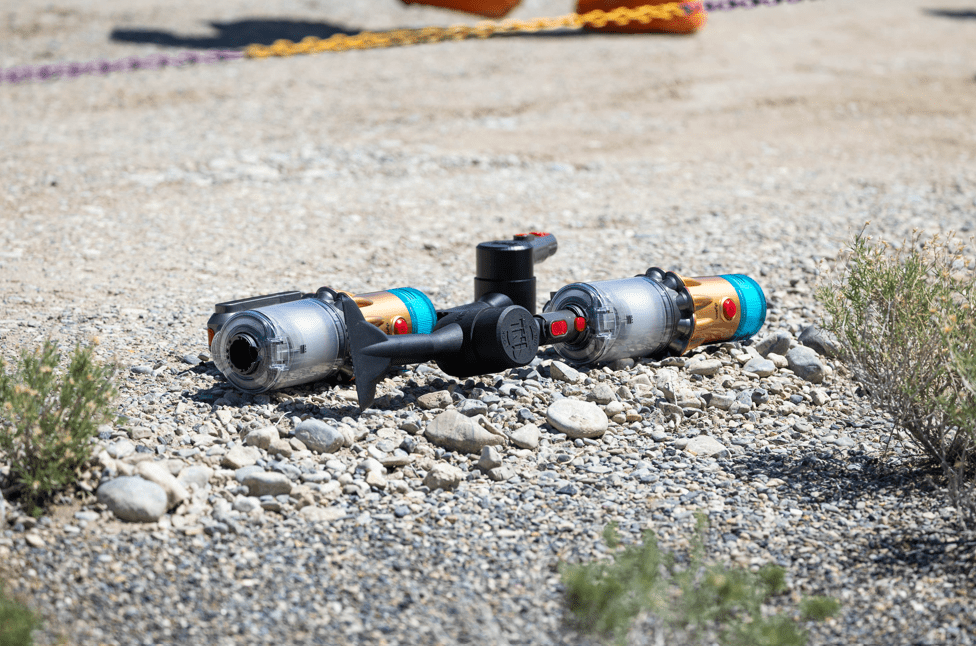
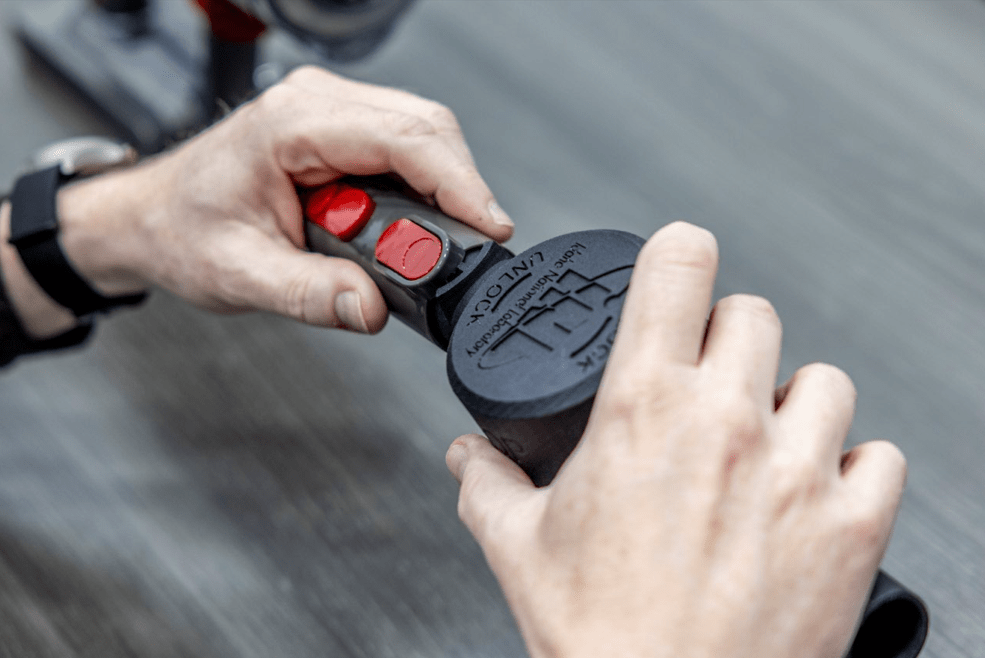
The simple invention fits certain cordless handheld vacuums. Fallout particles travel up the attachment and into a removable plastic specimen container that is easily unscrewed and secured with a cap. A particulate filter between the adapter and the vacuum allows for airflow but keeps the fallout from entering the vacuum itself. Cyclonic collection and a one-way valve minimize the loss of fine particles.
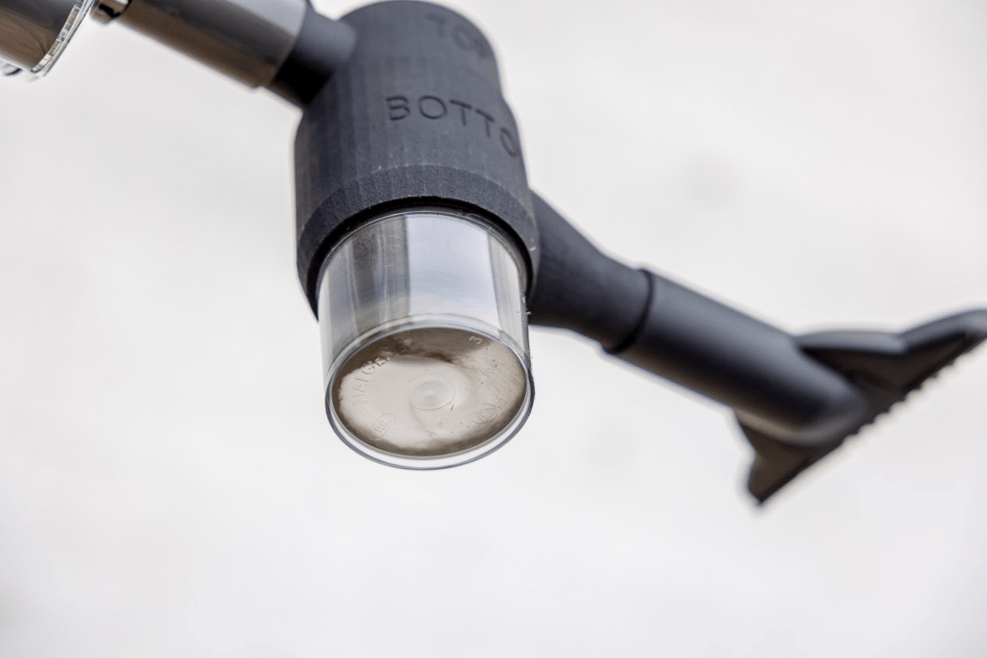
“The initial idea was developed over the course of a month,” said Lyon. “The team printed their first attachments in-house using a thermoplastic 3D printer in 2017. Since then, they’ve done a lot of refining.”
The team’s biggest challenge was designing an attachment that was strong and robust enough to withstand field use without breaking.
Once a solid design was formulated, the team outsourced production to a private company in American Falls, Idaho. The company uses a commercial-grade 3D printer to produce the device, which increased the durability of the attachment. Because 3D printing is quick and affordable, the team can train with the most current version of the attachment every time.
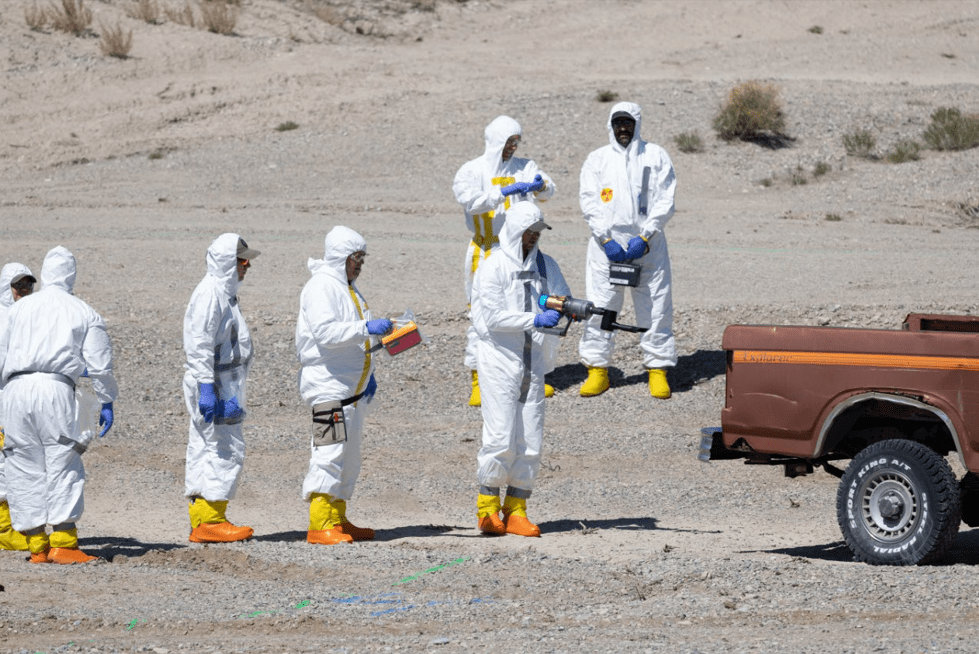
“Trainings have been a great way to get feedback and make adjustments,” said the researcher. “We’ve had to work to make the assembly easy and quick, in the case of a high-stress situation with a lot of PPE (personal protective equipment). Previously, a typical event might take 15 minutes, now we can do it in five minutes. It’s a huge improvement.”
U.S. nuclear forensics
The U.S. nuclear forensics effort includes the Department of Energy (DOE), the Department of War, the Office of the Director of National Intelligence and the FBI among other agencies. In a real event, these agencies, supported by national laboratory scientists, would work together to apply science and technology to investigate the incident and determine the origin of the threat.
“If such an event takes place, senior U.S. policy makers would demand immediate information regarding who is responsible,” said J’Tia Hart, nuclear nonproliferation division director at INL. “The ability to quickly collect, analyze and interpret data is crucial for national leaders as they make decisions and take action to prevent any subsequent attacks.”
“The attachment is a big improvement in the team’s ability to do the collection safely, quickly and efficiently,” said Lyon.
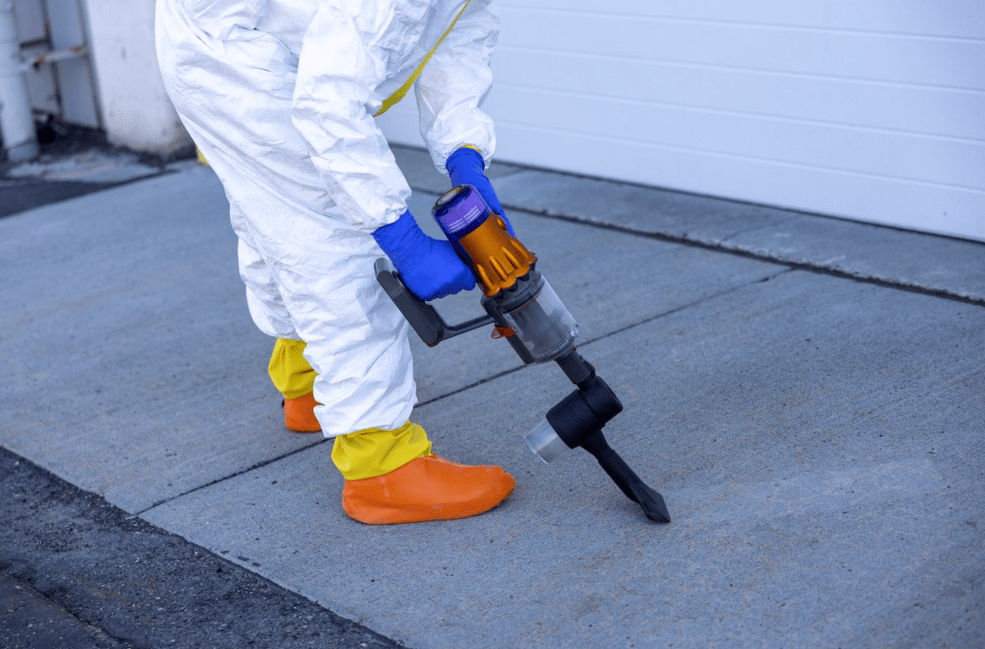
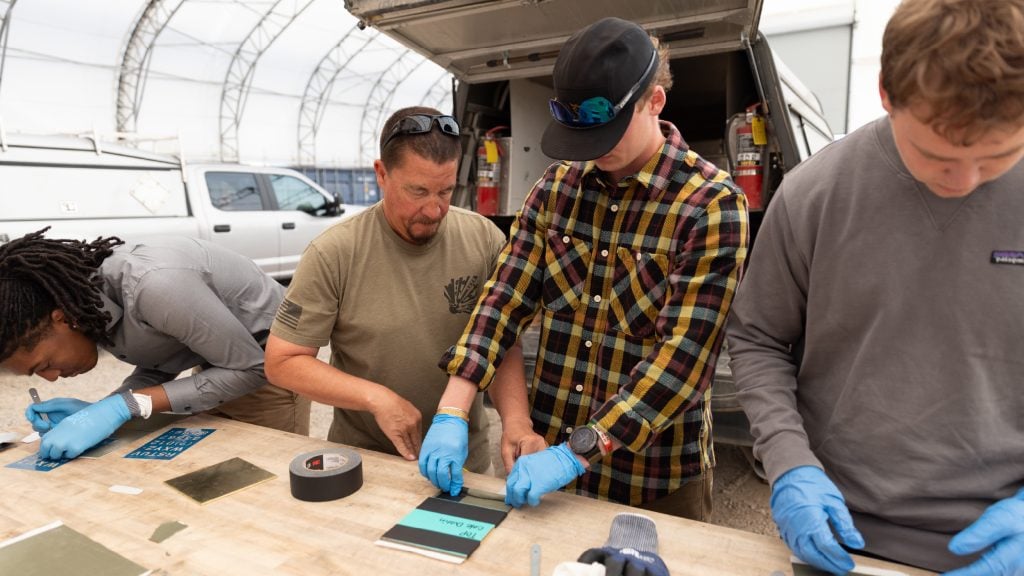
The DOE Forensics Operations team trains regularly to improve their techniques. Training exercises typically use simulated sand and glass microbeads, which are similar in size, shape and color to fallout, but without the radioactivity. At the INL Site, teams also conduct testing with radioactive surrogate glass debris using short half-life materials that provide an additional level of realism.
A final iteration
Development and testing of the vacuum attachment received funding from the Defense Threat Reduction Agency and the National Nuclear Security Administration’s Office of Nuclear Forensics. It was patented in 2024.
Now the team is fine-tuning the vacuum attachment/combo and conducting additional field testing and training. As more feedback is received, the team will finalize the invention’s design and start small-scale production ensuring this vacuum/attachment combo is ready to be deployed should it ever be needed.