
Foundational R&D
Foundational R&D establishes the core science, modeling, and experimental capabilities needed to support fusion system design, safety assessment, and licensing.
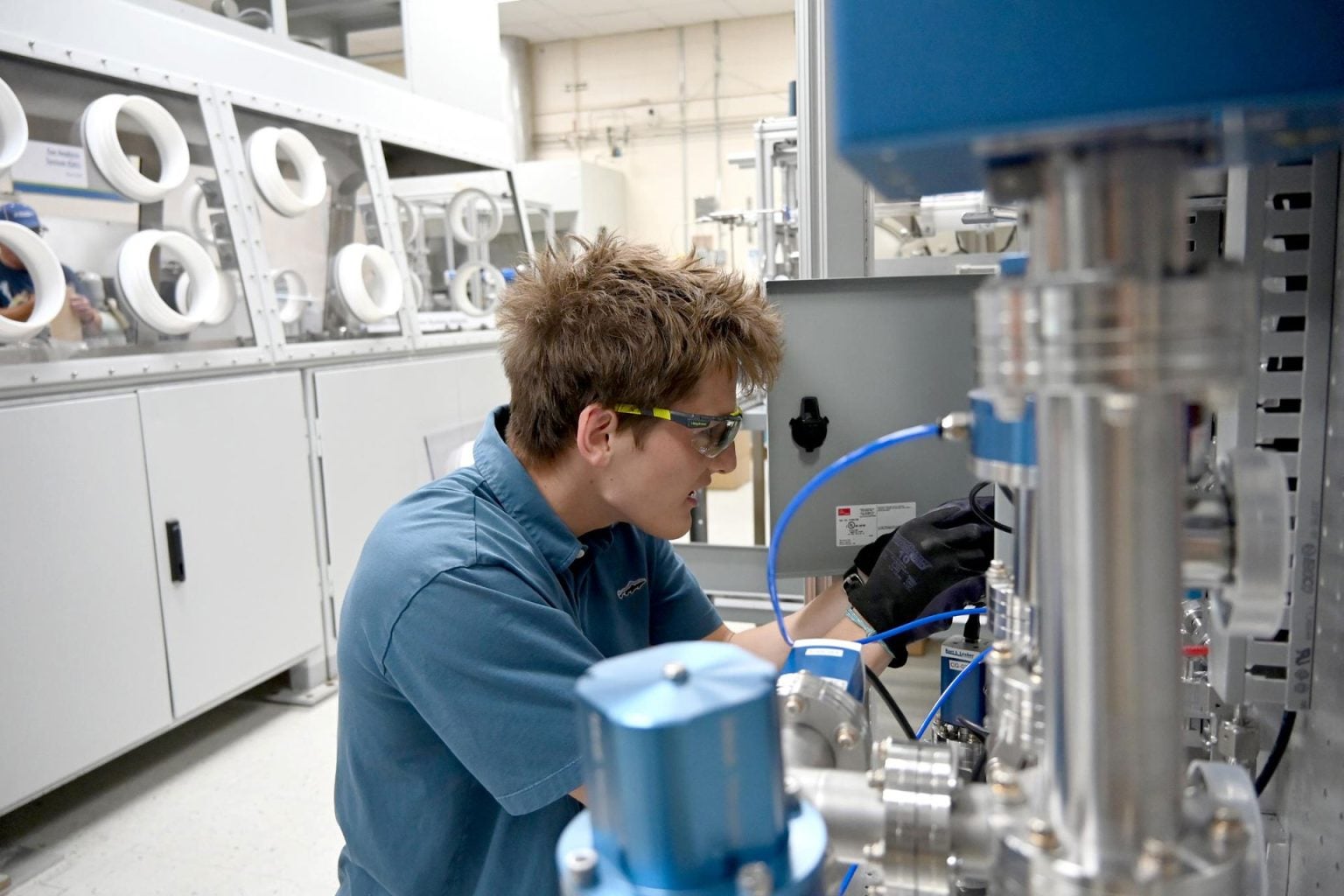

Foundational Research to Support Fusion Systems Safety Assessment
Primary Contact: Adriaan Riet
This project builds the foundation for integrated system and component-level safety analysis of fusion devices to support industrial design and licensing, as appropriate. Objectives that directly support this goal include MELCOR-TMAP development and demonstrating integration with RAVEN for tritium inventory and permeation analysis, building finite element models of fusion components, and initiating reliability, availability, maintainability, and inspection analysis and probabilistic risk assessment activities for fusion components, systems and devices. These capabilities will improve understanding of risks and failure modes, supporting licensing, design and reliable operation of fusion systems.
Explore the fusion safety document library
This project has contributed to a publicly accessible collection of historical publications and other resources documenting the fusion safety program’s research and impact.
Tritium Transport Phenomena in Liquid Breeder Blankets
Primary Contact: Tommy Fuerst
This work will develop a sound and insightful scientific and engineering foundation to understand tritium transport in breeder blankets. This work will support the DOE fusion energy road map while developing a robust workforce.
The technical focus is to leverage existing experimental capabilities at INL’s STAR and Savannah River’s Hydrogen Research Technology Laboratory and Energy Materials Research Laboratory with MOOSE multiphysics-modeling tools at INL, computational fluid dynamics and molecular dynamics expertise at the University of Massachusetts Lowell, and advanced sensors from University of California, Berkeley to deepen our knowledge on tritium-transport phenomena. The goal is to support the design of tritium-extraction systems and fundamental property measurements for liquid breeder materials — including lead-lithium, molten salts (e.g., FLiBe) and pure lithium — leading to improved understanding of safety bases for tritium transport in fusion reactor-blanket concepts that are independent of confinement strategies. We also will develop the fusion workforce by funding graduate students and providing internship opportunities to undergraduate students under the umbrella of the proposed work.
Objectives
- A coupled modeling and experimental approach to develop highly efficient tritium-extraction systems for lead-lithium.
- Improving knowledge base of molten salt chemistry and develop advanced sensors for a safer blanket system.
- Elucidate fundamental tritium properties in liquid breeder materials.
Integrating Advanced Characterization into Modeling and Simulation to Predict Irradiation and Tritium Effects in Fusion Materials
Primary Contact: Masashi Shimada
The long-term objective of this project is to develop experimental and computational platforms for predictive modeling of tritium transport and microstructure evolution in materials under 14-MeV neutron irradiation. We will achieve this by collaborating with leading experts in plasma material interaction (the USCD, University of Tennessee, Knoxville and Sandia National Laboratory), ion-beam analysis (University of California San Diego and Sandia), surface science (Sandia), advanced characterization (ORNL and INL), and computational material science (Tennessee and INL).
Objectives
- Build a platform for rapid microstructural characterization in plasma-exposed samples.
- Develop a multiscale model for microstructural evolution and tritium behavior in material.
- Benchmark the multiscale model with microstructural observations from ion- and neutron-irradiated materials.
Transformational Research to Reduce Tritium Inventory
Primary Contact: Chase Taylor
Establish the foundational science, engineering, and technology development to dramatically reduce tritium inventory in the fuel cycle by enabling direct internal recycling, efficient tritium-extraction from blankets, and hydrogen-isotope extraction, compression, and separation in a single-unit processing step.
- Test and control the fundamental characteristics of metal-foil pumps for direct internal recycling.
- Develop a computationally informed design for a reticulated capillary foam using advanced manufacturing for commercially viable tritium extraction.