
Fusion Innovation Research Engine (FIRE) Collaboratives
The Fusion Innovation Research Engine, or FIRE, collaboratives are partnerships to speed up nuclear fusion research.
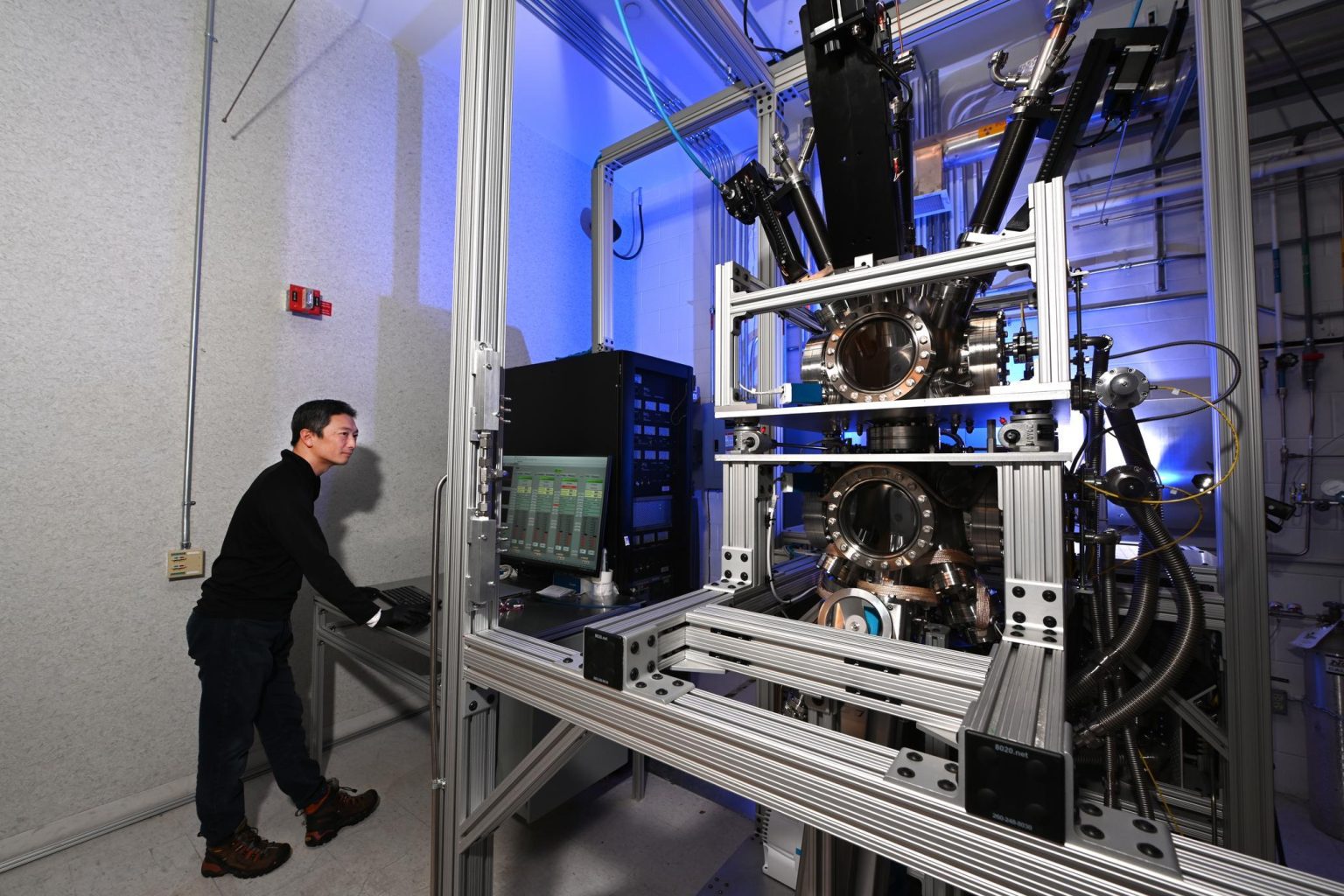

The Fusion Innovation Research Engine, or FIRE, collaboratives are partnerships to speed up nuclear fusion research. These collaborations bring together experts and resources from around the world to make fusion energy a reality. The goal is to foster innovation and overcome challenges to develop practical fusion energy systems. INL leads and supports several of these FIRE collaborative efforts.
Collaboration Focus Areas
Research focused on blanket development, irradiation facilities and future component test capability.
Projects that integrate data repositories, multiphysics workflows and validation approaches across the fusion ecosystem.
Programs that address tritium systems, integrated modeling and structural materials needed for fusion systems.
Explore the Collaboratives
Fusion Innovation Research Engine Collaborative Blanket Nuclear Testing
Primary Contact: Chase Taylor
What is a fusion blanket?
A nuclear fusion blanket is a key part of a fusion reactor. It absorbs high-energy neutrons from the fusion reaction, turning them into heat that can generate electricity. It also helps breed tritium — a fuel for the fusion process — and provides radiation shielding. Developing an efficient fusion blanket is crucial for making fusion energy practical.
INL’s role
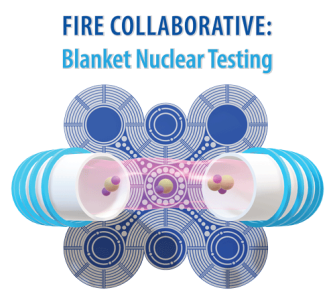
INL leads the Blanket Nuclear Testing Fusion Innovation Research Engine (BNT-FIRE) collaborative. INL has extensive experience in nuclear research and top-notch facilities, making it ideal for this project. INL has advanced materials testing labs, high-performance computing resources and specialized fusion research environments.
Objectives
The BNT FIRE collaborative has three main goals:
- Accelerate blanket development: Provide nuclear testing and data on blanket technologies using existing fission irradiation facilities
- Demonstrate suitability of existing nuclear infrastructure: Establish workflow processes to design, build and operate irradiation test rigs and develop the necessary technical expertise and workforce
- Design a Nuclear Blanket Component Test Facility (n-BCTF): Use INL facilities to create a high-flux/fluence nuclear testing infrastructure that supports DOE Office of Fusion Energy Science (FES) strategy for fusion power plants demonstration.
Fusion Energy Data Ecosystem and Repository
Primary Contact: Casey Icenhour
The Fusion Energy Data Ecosystem and Repository (FEDER), led by General Atomics, aims to accelerate fusion energy development by creating a centralized, community-driven data infrastructure to efficiently share information between FIRE collaboratives, private industry and the broader fusion community. By serving as a “community commons” for fusion data and resources, FEDER seeks to break down information silos and create a self-sustaining ecosystem that can rapidly disseminate research products and accelerate progress toward fusion energy solutions.
INL’s role
INL is responsible for integrating nuclear materials data and analysis tools with multiphysics workflows; integrating FEDER-project use cases and examples with such engineering, simulation and analysis tools as MOOSE; and providing technical leadership and coordination for the FIRE collaboratives focused on the fusion blanket and fuel cycle.
Objectives
The BNT FIRE collaborative has three main goals:
Develop a scalable data repository and ecosystem that integrates diverse fusion-related datasets, models and workflows
Establish community-driven data and metadata standards to ensure interoperability
Provide advanced tools for data discovery, analysis and visualization
Foster collaboration and knowledge transfer across the fusion energy landscape.
Blanket Collaborative on Test Facilities FIRE Collaborative
Primary Contact: Casey Icenhour
The Blanket Collaborative on Test Facilities FIRE (BCTF FIRE) Collaborative, led by Oak Ridge National Laboratory (ORNL), addresses key priority research objectives identified by the fusion research community through a collaborative program of blanket prototype testing. Focused on new and existing test stands, BCTF will target objectives uniquely suited to closing fusion material and technology research gaps, including fluid flow and heat transfer in the first wall — liquid metal, molten salt and helium — material compatibility and corrosion in liquid metals and molten salts, and developing prototype tritium-extraction systems.
INL’s role
INL is responsible for contributing a permeator-based tritium extraction system design as part of the development of a research plan ready for production and execution. INL also oversees code-validation efforts focused on the INL MOOSE framework as well as Oak Ridge National Laboratory’s FERMI software tool, to develop requirements and necessary deliverables for the prototype testing performed under BCTF to make experimental output useful to validate multiphysics simulation codes.
Objectives
BCTF’s overarching objective is to address blanket research and development (R&D) needs through testing non-nuclear prototypes. BCTF’s key objectives can be broken down as follows:
- Demonstrate operation of first wall and blanket subcomponent mockups in a relevant environment
- Demonstrate compatible material solutions for liquid-metal and molten-salt blankets through fundamental and prototype testing
- Demonstrate scale-up of tritium extraction systems
- Initiate computer code validation
Fuel Cycle FIRE Collaborative
Primary Contact: Casey Icenhour
The Fuel Cycle FIRE Collaborative (FC FIRE), led by Savannah River National Laboratory, focuses on solving challenges related to the fusion fuel cycle and integrating those solutions to the rest of the plant. FC FIRE is also focused on training scientists and engineers to work on tritium fuel cycle technologies and understand the challenges and technical solutions needed to create effective fusion fuel cycles. FC FIRE’s R&D activities target challenges applicable to both magnetic confinement fusion energy as well as inertial confinement fusion energy, ensuring maximum commonality across both design types.
INL’s role
INL is developing integrated or communication-enabled modeling frameworks for the fusion fuel cycle. Specifically, this involves bringing together INL-developed multiphysics capabilities — MOOSE and TMAP8 — relevant to the fusion fuel cycle with Savannah River National Laboratory (SRNL)-developed process modeling and fuel-cycle codes and modules RHINO and ASPEN. INL’s expertise in multi-fidelity integrated modeling, software ecosystems and scientific software-community development are well-suited for the goals of this project.

Objectives
FC Fire’s key objectives are fuel cycle design and operation. They include:
- Improve system designs, models, integration and controls
- Reduce in-process tritium inventory
- Understand and mitigate the risks of tritium interactions with materials
- Reducing tritium release to the environment
- Develop the workforce for fuel cycle technologies and engage the fusion research community.
Integrated Materials Program to Accelerate Chamber Technologies
Primary Contact: Grace Burke
Integrated Materials Program to Accelerate Chamber Technologies (IMPACT), led by the University of Tennessee, Knoxville, aims to transform the design and manufacture of high-performance materials for fusion systems. Specifically, this project will develop processes and a database for high-temperature structural materials that meet nuclear codes under the American Society of Mechanical Engineers Boiler and Pressure Vessel code — a first for fusion. Ultimately, IMPACT will demonstrate how new fusion-relevant materials can move quickly from code qualification to application in system engineering.
INL’s role
INL leverages its expertise in steel, the microstructural aspects of irradiation damage and material degradation.