
Geothermal Energy and Storage
INL develops technologies that use Earth’s natural heat to produce reliable power, store thermal energy and expand access to geothermal resources.

What Is Geothermal Energy?
Geothermal energy technologies use natural heat beneath Earth’s surface to produce reliable, around-the-clock power.
Earth’s core reaches temperatures of approximately 6,000 C (10,832 F), which is similar to the surface of the sun. This heat comes from two main sources: residual energy from the planet’s formation and the slow decay of radioactive minerals in the mantle and core. Some of this heat escapes through cracks in the crust, forming hot springs, volcanos or geysers. Until now, efforts to harness this energy have only scratched the surface.
INL is at the forefront of geothermal energy research and testing, using expertise and advanced technology to advance the field.
How Do Geothermal Power Plants Work?
Geothermal energy technologies use natural heat beneath Earth’s surface to produce reliable, around-the-clock power.
Earth’s core reaches temperatures of approximately 6,000 C (10,832 F), which is similar to the surface of the sun. This heat comes from two main sources: residual energy from the planet’s formation and the slow decay of radioactive minerals in the mantle and core. Some of this heat escapes through cracks in the crust, forming hot springs, volcanos or geysers. Until now, efforts to harness this energy have only scratched the surface.
INL is at the forefront of geothermal energy research and testing, using expertise and advanced technology to advance the field.
Why use geothermal power?
- Stable energy costs: Geothermal power is insulated from fuel price fluctuations and offers long-term cost stability.
- Local economic growth: Projects create jobs, stimulate local economies and enhance energy independence.
- Reliable: Geothermal plants operate 24/7 and are not affected by weather conditions.
- Inexhaustible resource: Earth continually produces heat that is constantly replenished.
Innovation In Harnessing the Earth's Heat
INL scientists leverage deep geological expertise to responsibly manage natural resources while minimizing environmental impacts. By combining this knowledge with INL’s unique technical capabilities, the laboratory delivers innovative solutions that support environmental stewardship and strengthen national security.
Enhanced Geothermal Systems (EGS)
Enhanced geothermal systems (EGS) are engineered reservoirs where hot rock exists but lacks natural fluid pathways. Development involves drilling wells into the hot rock and injecting fluid to open or reopen fractures, allowing water to circulate and carry heat to the surface.
EGS could potentially power more than 100 million American homes.
INL leads the Snake River Geothermal Consortium, one of five groups advancing EGS for the U.S. Department of Energy.
For more information about this work and potential partnership opportunities, please contact Robert.Podgorney@inl.gov.
Geothermal Energy Storage (GeoTES)
GeoTES uses underground formations like a thermal battery, storing heat during periods of excess energy generation and releasing it during peak demand.
By storing surplus energy, GeoTES can help manage peak loads, reduce transmission stress and stabilize the grid. It can also cut building energy use by 30% to 80% through heating and cooling applications.
For more information about this work and potential partnership opportunities, please contact Trevor.Atkinson@inl.gov.
Additional information can be found here:
A review of Geological Thermal Energy Storage for seasonal, grid-scale dispatching – ScienceDirect
Hybrid Geothermal
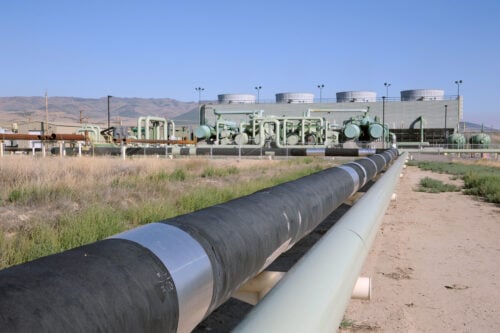
Hybrid systems combine geothermal with other energy sources to reduce energy cost variability and improve reliability.
INL and the National Renewable Energy Laboratory partnered with Enel Green Power to demonstrate the first triple-hybrid energy plant in Stillwater, Nevada.
For more information about this work and potential partnership opportunities, please contact Ghanashyam.Neupane@inl.gov.
Mineral Production
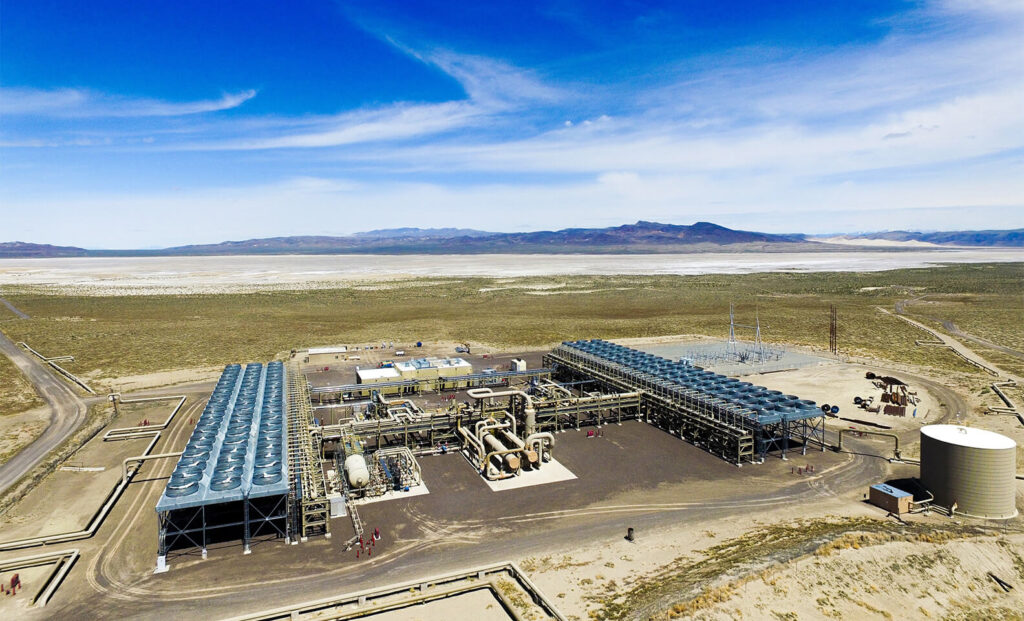
Geothermal brines often contain critical elements, such as lithium, which is important in various industries. With battery-grade lithium extraction from geothermal brines, geothermal plants like those near California’s Salton Sea could meet U.S. demand.
INL has received funding for two projects to characterize lithium and other critical materials in the Smackover Formation (Louisiana) and the Paradox Basin (Utah).
For more information, please contact Ghanashyam.Neupane@inl.gov or Ram.Kumar@inl.gov.
Discovery and Exploration
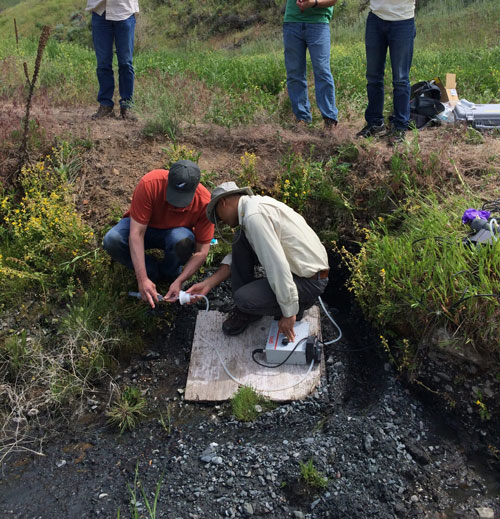
In 2022, the Department of Energy launched the Enhanced Geothermal Systems Energy Earthshot, which aims to reduce geothermal energy costs to $45 megawatt hours by 2035. A 2023 report from the National Renewable Energy Laboratory projected a tenfold increase in U.S. geothermal capacity by that year.
The Department of Energy’s Geothermal Technologies Office awarded $74 million for seven pilot projects exploring various geological settings, including:
- Sites with existing infrastructure.
- Untapped “greenfield” (new, undeveloped) locations.
- Super-hot EGS resources (>375 C/739 F).
- Well-characterized eastern U.S. sites.
For more information and partnership opportunities, please contact Travis.McLing@inl.gov.
Connect with our Team
Questions about our research, capabilities or collaboration opportunities?
Our team is ready to connect you with the right experts and resources at INL.
Travis McLing