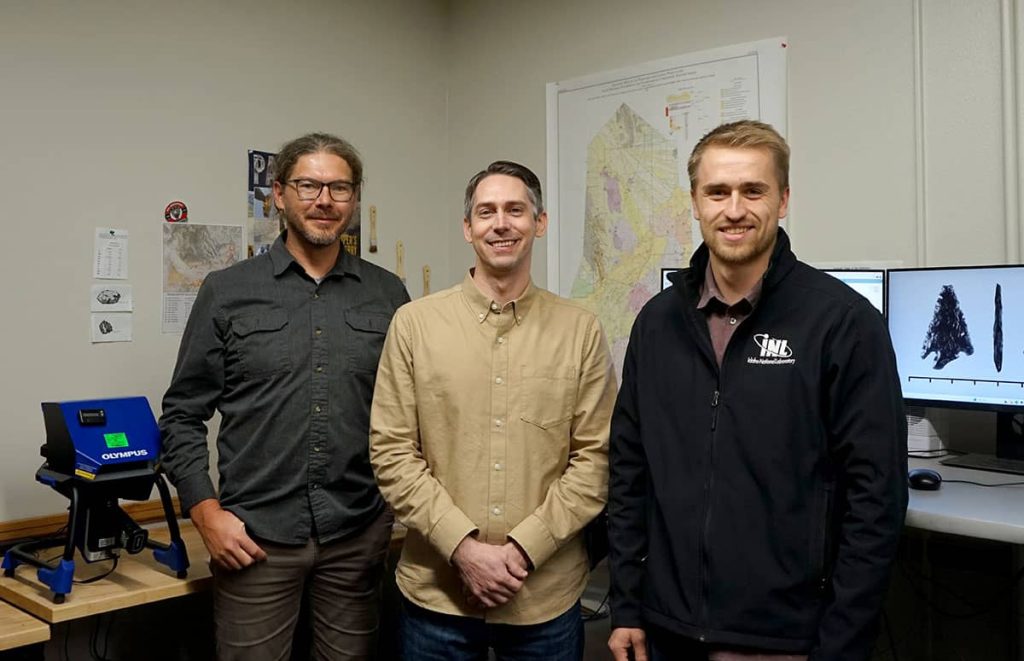
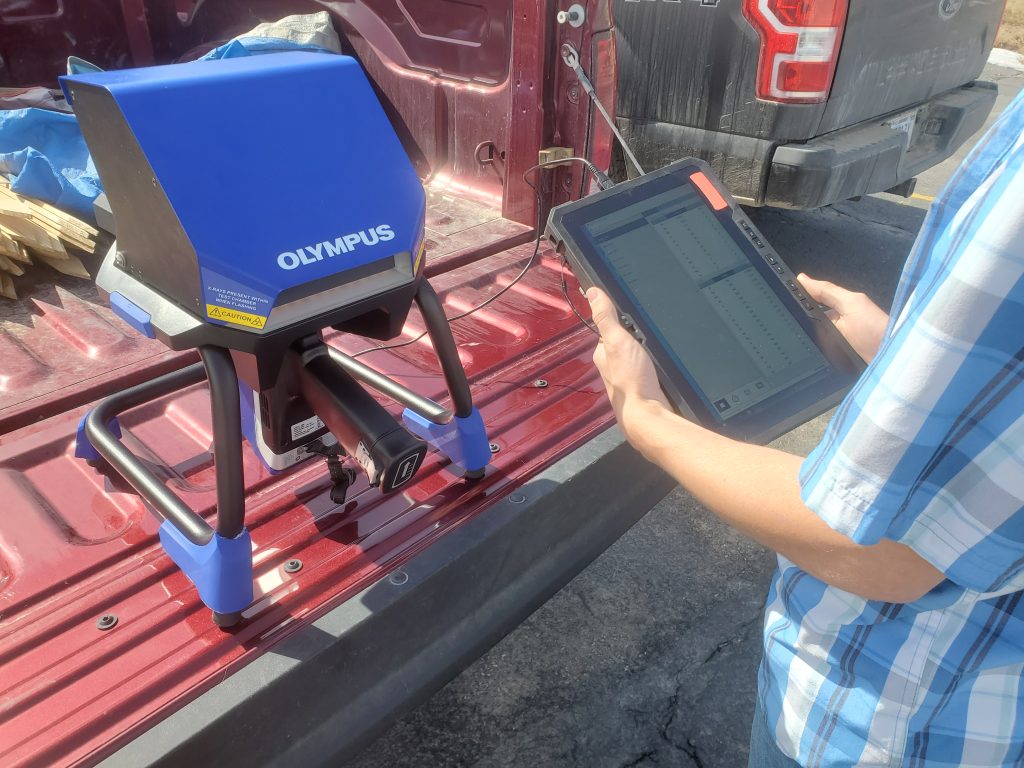
The Idaho National Laboratory’s Cultural Resource Management Office (CRMO) XRF Laboratory specializes in analyzing archaeological and geological materials using energy-dispersive X-ray fluorescence spectrometry (ED-XRF). Materials analyzed at the lab include obsidian and other fine-grained volcanics (FGV), soils, ceramics, and brick. XRF equipment includes two Olympus Vanta M Series portable XRF spectrometers equipped with 4-watt X-ray tubes, rhodium anodes, and 40 mm2 silicon drift detectors. Further details about analytical methods can be found in the reports attached below.
Jeremias Mittermaier Pink, Kyle Freund, and Josh Clements
What is XRF?
XRF is a non-destructive technique used by archaeologists to elemental characterize artifacts or other materials of cultural relevance. At the heart of XRF technology is the principle that primary X-rays shot at a sample create vacancies in the atoms on the surface of the material that produce secondary, or fluorescent, X-rays characteristic of the elements of which it is composed.
For obsidian and fine-grained volcanics, this typically involves matching artifacts found at archaeological sites to the geological deposits from which they were produced. In contrast, the use of XRF for the analysis of ceramic artifacts has typically centered on identifying distinct geochemical groups within an assemblage, although the matching of ceramic artifacts to geological clay sources is also possible.
Geologic Reference Library
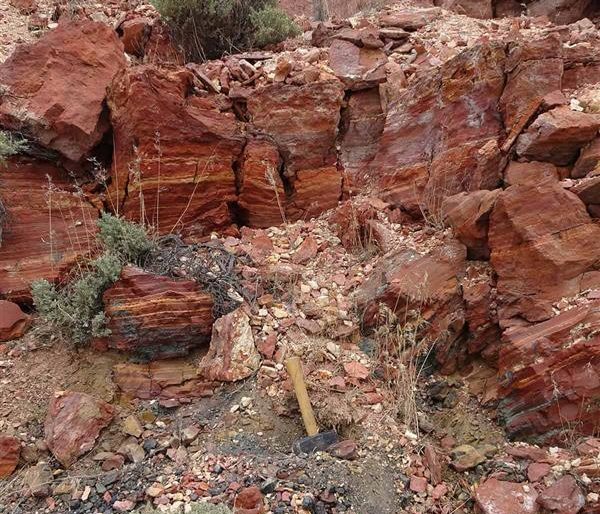
The lab houses a comprehensive reference library of Idaho obsidian and FGV that is used as a comparative collection for sourcing studies. The CRMO XRF reference database contains 30 compositional reference groups (sources) of obsidian and five reference groups of FGV defined through XRF analysis of over 2,700 geologic samples from 226 sampling locations (Pink 2025). This collection is available for analysis by interested researchers. Contact Dr. Kyle Freund at [email protected] for further details.
XRF research on precontact artifacts at INL is conducted in cooperation with Shoshone-Bannock Tribes Cultural Resources. The lab is also open to collaboration with outside parties on research projects that further INL’s mission. If interested, contact Dr. Kyle Freund at [email protected].