Nuclear Energy 101

What is nuclear energy?

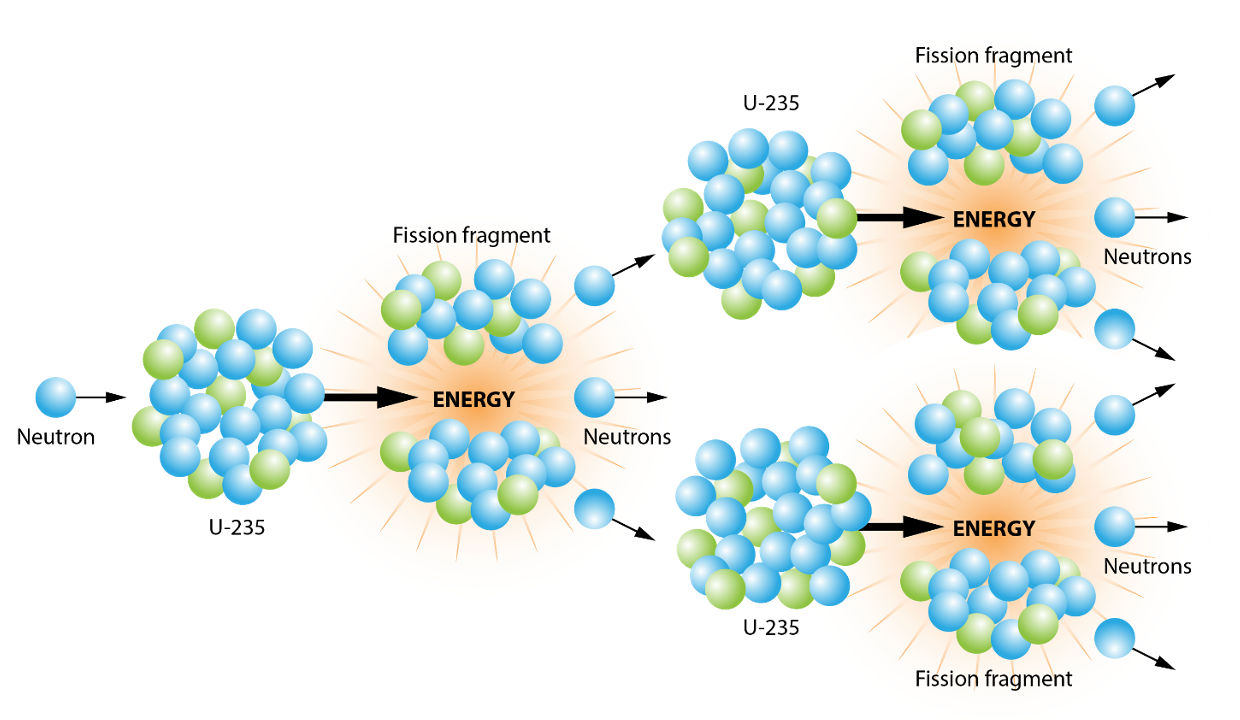
Nuclear energy begins with a natural process called fission. Fission occurs when a neutron splits an unstable atom, like uranium, into two smaller atoms. This process releases heat and neutrons that can split other atoms. In a nuclear reactor this process is carefully controlled to produce steady energy.

Understanding nuclear fission

Fission requires the right material, and the form of uranium known as U-235 (with an atomic mass of 235 the sum of 92 protons and 143 neutrons) is a common fuel in nuclear reactors. Most natural uranium (99.7%) is the isotope U-238. A process called enrichment increases the amount of U-235 in nuclear fuel. This is primarily done by converting uranium into a gas called uranium hexafluoride, which is spun in high-speed centrifuges that separate the lighter U-235 from the heavier U-238 molecules.

One uranium fuel pellet like the one shown is roughly the size of a gummy bear and contains enough usable energy to power a 2,000-square-foot home for roughly 70 days.

How nuclear fuel works inside a reactor

Nuclear fuel is usually formed into pellets that are stacked inside tubes to create fuel rods. The rods are bundled into what is known as a fuel assembly and placed into the reactor core. Reactor operators use “control rods” made from materials that absorb neutrons. By inserting or removing these rods, operators can slow down or speed up the fission reaction.

Watch fuel rod animation

Photo to the left: Uranium pellets stacked into a fuel rod, bundled into an assembly and placed into a pressurized water reactor.

How does fission create electricity?

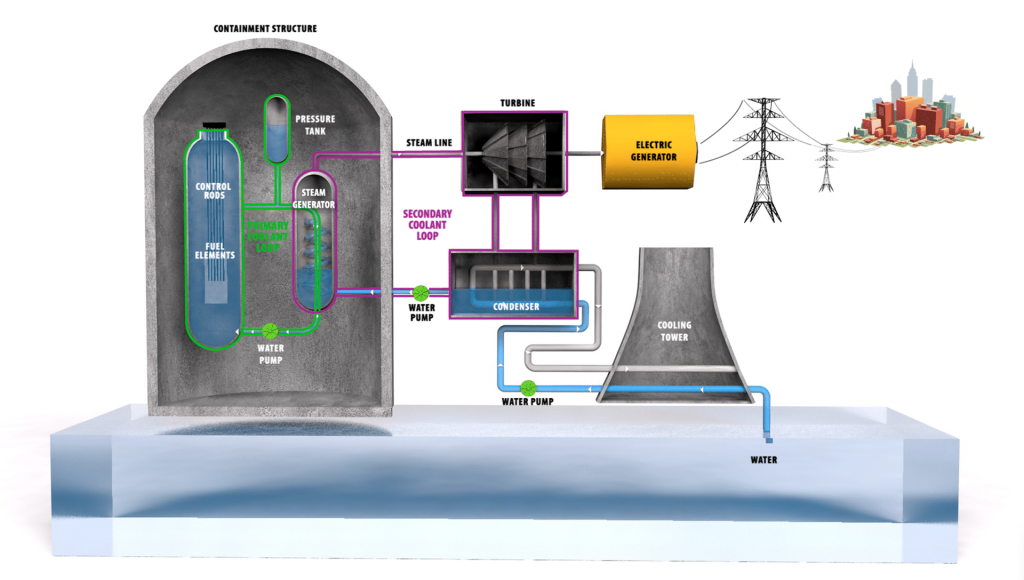
The fuel assembly is surrounded by a coolant that also helps control the fission reaction and maintain the proper temperature. Today’s nuclear power plants use water as a coolant. The heat from fission turns water into steam, which turns a turbine that generates electricity. Some of the advanced reactors in development are designed to use other coolants such as liquid metal that will be even more efficient at transferring heat.

Watch electricity animation

Nuclear reactors produce reliable energy

Nuclear power plants can run 24 hours a day, 352 days per year, making them one of the most reliable and resilient energy sources. In fact, nuclear power has the highest capacity factor, the percentage of time a plant is running at full power, of any electricity generator. Nuclear is an ideal complement to other energy sources as the nation seeks to ensure American energy independence.

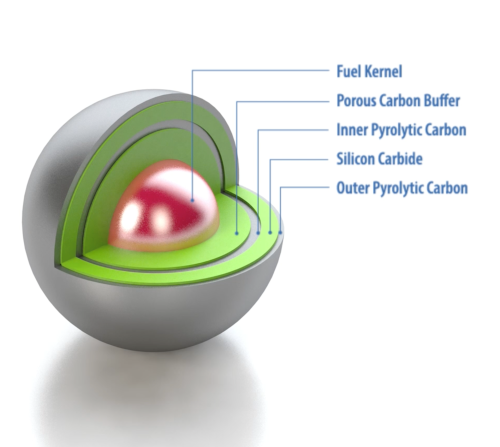
TRISO fuels are encased in layers of ceramic and carbon to prevent the release of radioactive fission products. The fuel’s extreme heat-resistant, accident-resistant characteristics make it ideal for the high temperatures of advanced reactors.

Is nuclear power safe?

Nuclear power ranks among the safest ways to produce electricity. Today’s nuclear reactors include multiple safety systems that can automatically detect a problem and safely shut down fission. Advanced reactors in development will have even more automated safety features, and some will be able to use new fuels with exceptional safety margins.

Photo to the left: TRISO fuels are encased in layers of ceramic and carbon to prevent the release of radioactive fission products. The fuel’s extreme heat-resistant, accident-resistant characteristics make it ideal for the high temperatures of advanced reactors.

What happens to waste from nuclear energy?

After fuel rods can no longer sustain the fission reaction, they are removed from reactors and stored in carefully maintained pools of water to cool them off. The used nuclear fuel is then moved into steel and concrete containers and stored at secure facilities that are fortified against extreme events such as earthquakes and severe storms.

Photo to the right: The containers used to store used nuclear fuel are carefully  guarded and maintained.

Quick facts about nuclear power

52

nuclear reactors  developed at the Idaho National Laboratory desert Site

18

percentage of the nation’s electricity that comes from 94 nuclear reactors

Dec. 20, 1951

scientists at Experimental Breeder Reactor-I harnessed nuclear fission to create the first usable amount of electricity

1

nuclear reactor plant provides as much electricity as

3.1

million solar panels

92

percentage of the time the nation’s nuclear reactors were operating at full power in 2024.