From first reaction to full power: the science of reactor startup and the American-led effort to bring the next generation of nuclear technology online.
Understanding Criticality in Reactor Development
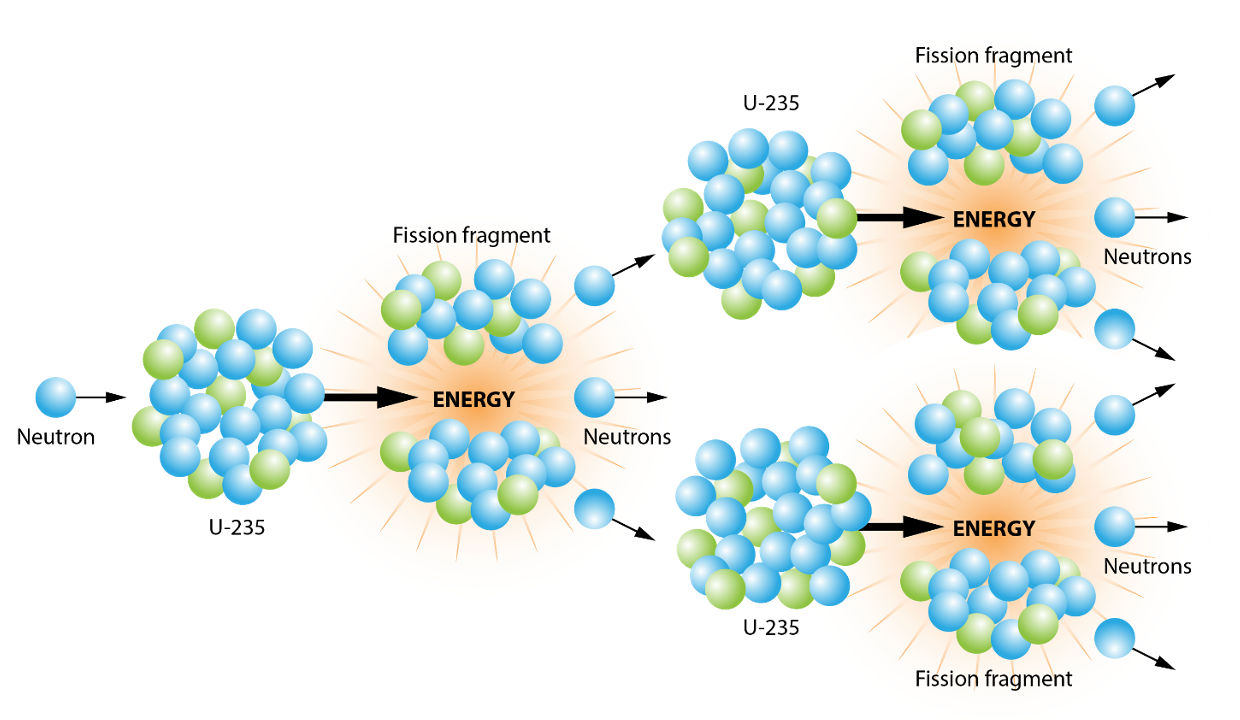
Criticality is the point at which a nuclear reactor achieves a self-sustaining chain reaction. In other words, it’s when the atoms splitting in the reactor core produce enough neutrons to sustain subsequent reactions. This state is fundamental to reactor operation and safety.
Achieving criticality is not a single event, but a series of carefully controlled steps during reactor commissioning.
Nuclear fission occurs when a heavy nucleus splits into two lighter nuclei, releasing energy and neutrons.
From Startup to Full Power Operation
The stages below show how a reactor moves from completely shut down to generating full-rated power. Each stage mirrors a step most people are already familiar with: starting a car.
Stage 1
Subcritical
Not yet self-sustaining.
Below steady-state operation. Fission events are not maintained at a constant rate. Control rods are fully inserted.
Like a car:
Parked with the parking brake fully engaged.
Stage 2
Approaching Critical
Carefully controlled withdrawal.
Control rods are withdrawn to move the reactor toward steady-state operation. Fission reaction is triggered.
Like a car:
Brake pedal released and ignition turned — but the engine hasn’t started yet.
Stage 3
Zero-Power Criticality
Critical, but generating minimal heat.
A critical condition achieved without coolant. Near-zero power is generated — no coolant is present or needed.
Like a car:
Idling with a cold engine — running, but not yet up to temperature.
Stage 4
Low-Power Criticality
Coolant online, temperatures normalizing.
A critical condition at low power. Coolant systems are active and the reactor reaches normal or near-normal operating temperatures.
Like a car:
Idling with the engine fully warmed up.
Stage 5
Full Power
Rated power, verified and sustained.
Rated thermal power is achieved under controlled conditions. Startup verification is complete.
Like a car:
Moving at full speed on a highway, performing as designed.
A History of Safe Startups
History shows that a deliberate, step-by-step approach to reaching criticality and increasing power is essential to the reactor startup process.
Homogeneous Reactor Experiment
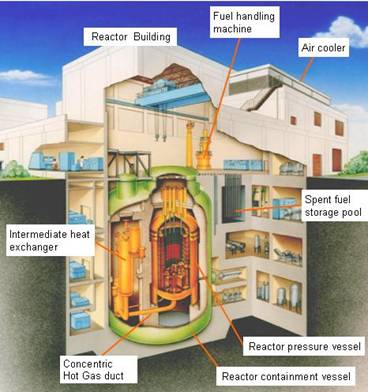
1953, the Homogeneous Reactor Experiment (HRE-1) at Oak Ridge National Laboratory conducted low-power testing to better understand fluid-fueled reactor behavior. These early phased experiments provided insight into reactivity control and system chemistry, informing future reactor development.
Experimental Breeder Reactor II
In the mid-1960s, the Experimental Breeder Reactor-II (EBR-II) at Argonne National Laboratory’s site in Idaho conducted low-energy tests before moving to higher levels. These tests confirmed that the reactor worked as expected before increasing power levels. This method ensured the reactor’s safe startup and long-term operation.
Systems for Nuclear Auxiliary Power
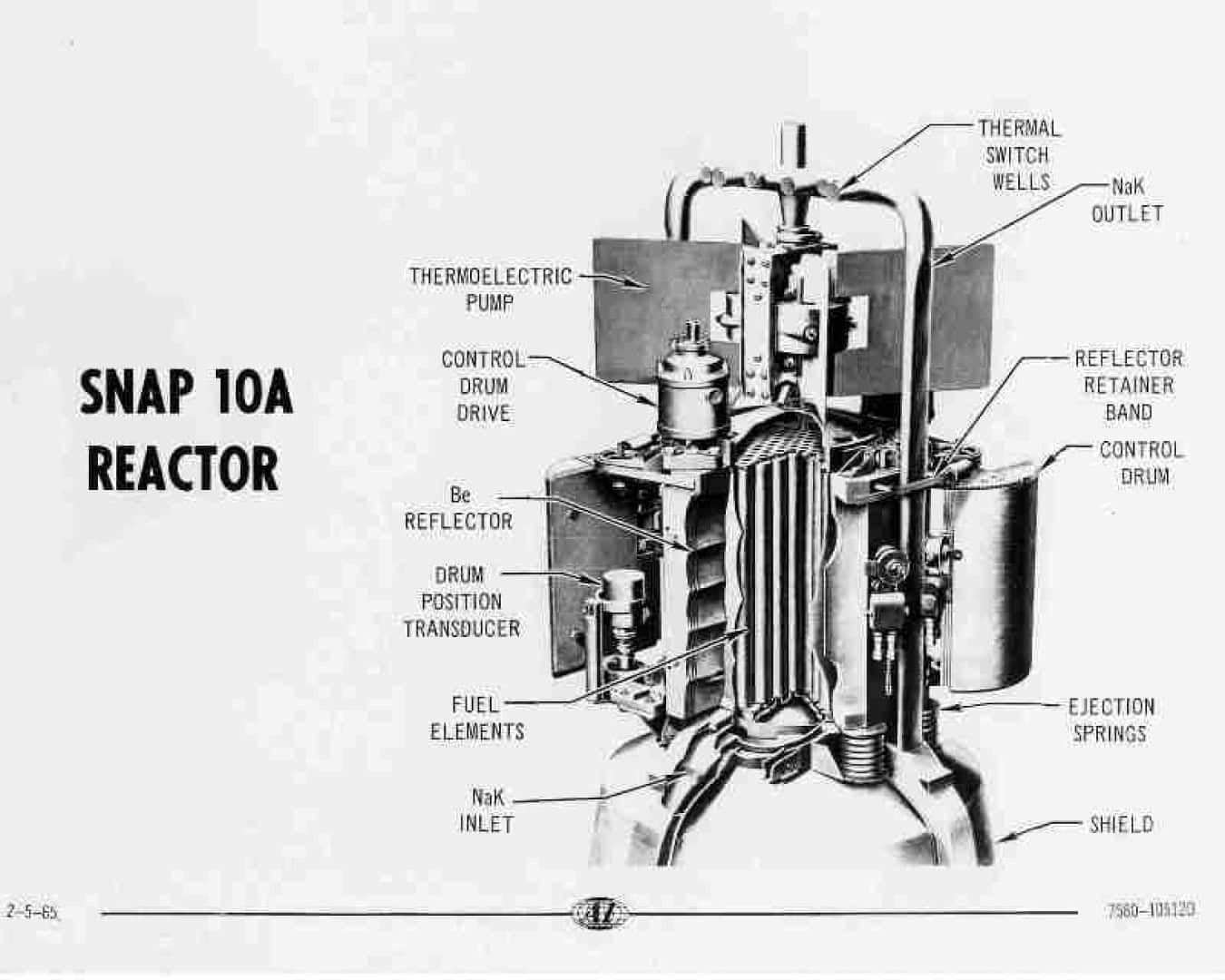
The Systems for Nuclear Auxiliary Power (SNAP-10A) reactor program also relied on staged testing before its 1965 space launch. Engineers conducted incremental low-power experiments to verify reactivity behavior, shielding performance and system stability. This structured startup process provided confidence that the reactor would perform predictably in space.
High-Temperature Engineering Test Reactor
Similarly, Japan’s High-Temperature Engineering Test Reactor (HTTR) followed a gradual power increase program. It underwent low-power testing and validation prior to high-temperature operation, generating critical data that confirmed thermal performance and system behavior.
Kilopower Reactor Using Stirling Technology
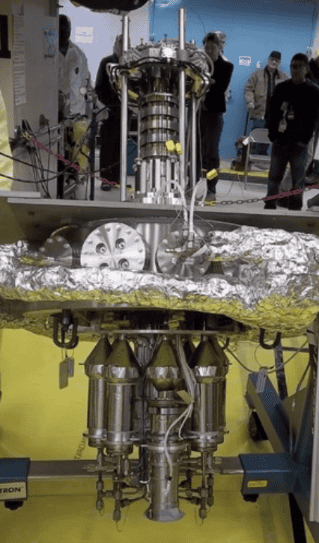
NASA and the U.S. Department of Energy (DOE) collaborated on the Kilopower Reactor Using Stirling Technology (KRUSTY) test at the Nevada National Security Site. KRUSTY was a full‑scale space‑fission system with flight‑prototypic materials. The reactor ran through steady and changing operating conditions, showing it could keep a stable power level, regulate its temperature on its own, and adjust smoothly as the power demand changed. By advancing through these controlled phases, it demonstrated predictable behavior at each step. The project was completed in 2018.
Across reactor types and decades, these examples demonstrate that successful reactor operation requires careful verification at each stage.
The U.S. DOE has set an ambitious target to have at least three advanced test reactors achieve criticality by July 4, 2026, under a streamlined DOE authorization process. This initiative accelerates timelines for:
Microreactors & Advanced Designs
Testing and validating the reactor concepts that will define the next era of nuclear energy.
Fuel Qualification & Safety
Demonstrating that advanced fuels meet the safety standards required for deployment.
Commercial Readiness
Building the technical foundation for next-generation nuclear technologies to reach the market.
Safety remains the highest priority throughout every phase of reactor development, from initial design and licensing to demonstration and eventual deployment. Achieving criticality is just one milestone.
This effort represents a pivot toward rapid deployment of advanced reactors to meet energy and national security goals, but a reactor must also meet safety standards and operational requirements before it can reliably supply continuous energy to industry or the grid.
Questions about our research, capabilities or collaboration opportunities? Our team is ready to connect you with the right experts and resources at INL.