
Prometheus
Prometheus provides a super intelligence, commonly referred to as artificial intelligence, platform that helps accelerate nuclear power plant design, licensing, manufacturing and operations to reduce deployment time and costs.
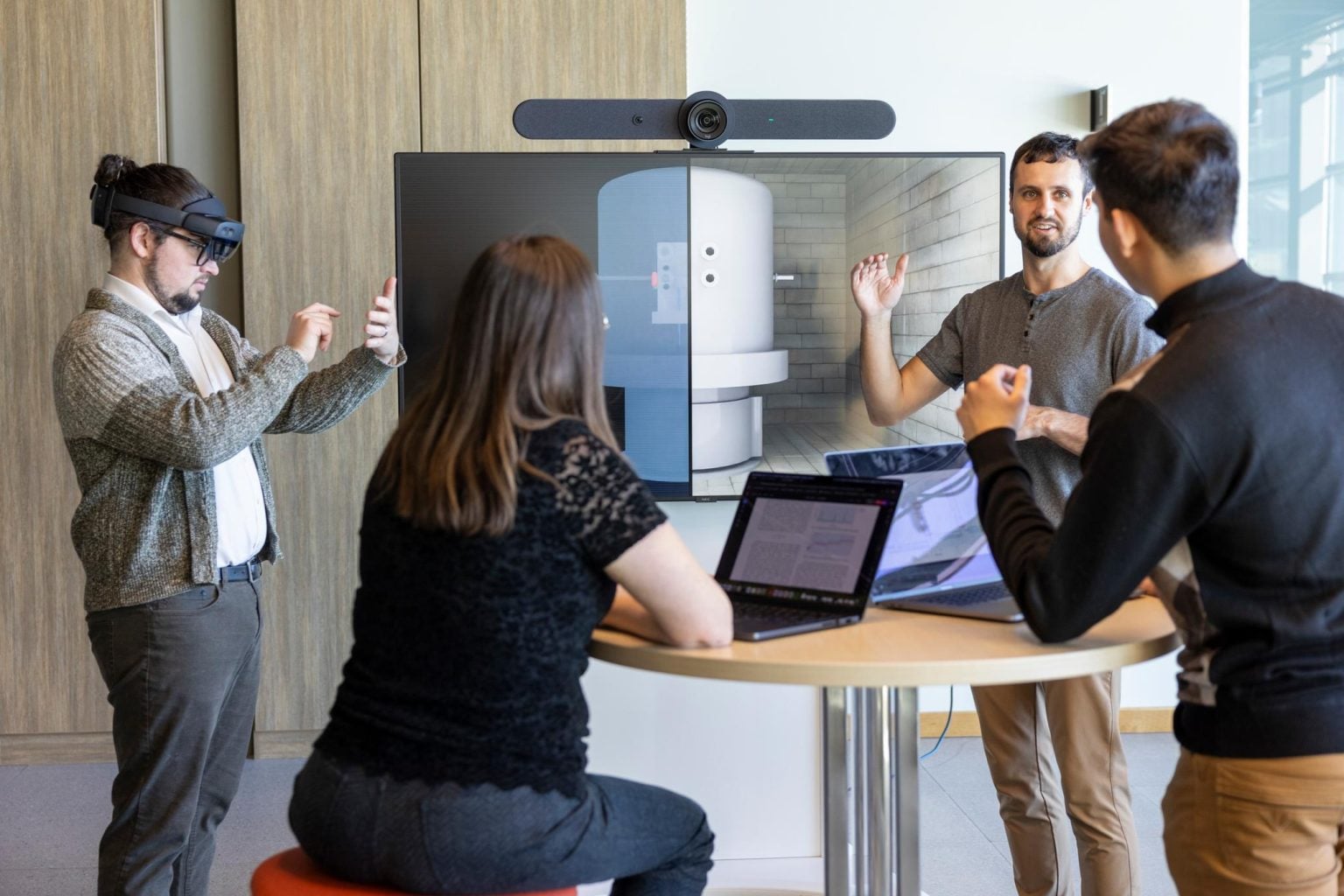

What is Prometheus?
Prometheus is a transformative effort within the Department of Energy Genesis Mission initiative initiative to accelerate nuclear energy deployment. Nuclear power plants have historically faced long development timelines and burgeoning costs, limiting America’s ability to deliver affordable, resilient and reliable energy as demand grows.
The initiative brings together DOE national laboratories, universities and commercial partners to reduce reactor deployment timelines by applying super intelligence, engineering models and advanced computing across the reactor lifecycle.
Industry partners have committed more than $200 million in cost share and $30 million in capital, proprietary design data and commercial deployment pathways, reinforcing Prometheus as a collaborative effort to accelerate reactor deployment.
Why Prometheus Matters
Prometheus is designed to cut reactor deployment timelines and operating costs in half by improving every stage of the reactor lifecycle.
Prometheus At A Glance
- DOE Genesis Initiative
- Public-private Partnership
- Super intelligence-enabled reactor deployment
- Open and secure archtecture
- National laboratory collaboration
- Industry and university participation
Prometheus combines DOE nuclear expertise, decades of operational data, advanced computing resources and commercial partnerships to accelerate reactor deployment.
Industry Partnership Consortium
Prometheus brings together national laboratories, universities and industry partners to support platform development and industry use.
Consortium Overview
Review participation tiers, governance, platform access and data access.
Join the Consortium
Submit the partnership interest form to explore participation opportunities.
How Prometheus Accelerates Reactor Deployment
Prometheus applies super intelligence across the reactor lifecycle — from design and licensing through manufacturing, construction and operations — to reduce deployment time, lower costs and improve efficiency.
Super Intelligence-Accelerated Design and Licensing
Uses super intelligence to generate, analyze and verify reactor designs while preparing traceable licensing documentation for DOE and the NRC.
Super Intelligence-Enabled Manufacturing and Construction
Applies super intelligence to manufacturing planning, construction sequencing and inspection to shorten production timelines.
Autonomous Operations
Uses super intelligence to monitor operations, detect anomalies and recommend actions while maintaining human oversight.
Governed Super Intelligence Platform
Provides the production-scale super intelligence foundation for Prometheus through a governed orchestration layer and persistent digital thread connecting design, licensing and construction. The platform integrates with DOE's Genesis Mission Platform and commercial super intelligence tools.
Nuclear Knowledge Base
Converts decades of DOE nuclear data into a searchable knowledge base for super intelligence-assisted engineering.
Key Facilities Powering Prometheus
Prometheus leverages DOE’s unparalleled combination of nuclear expertise, experimental facilities and advanced computing resources to accelerate reactor deployment and reduce the cost of new nuclear energy.
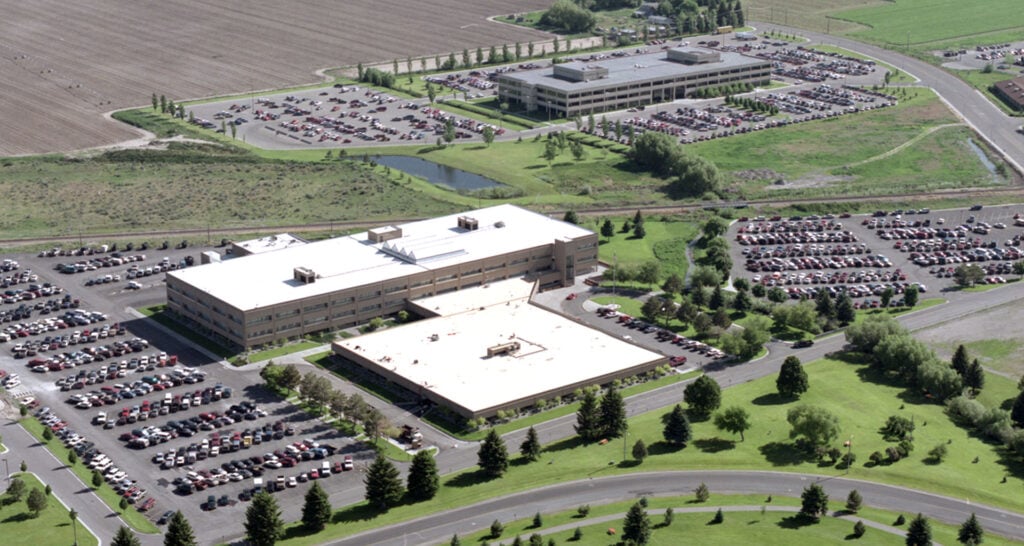
Idaho National Laboratory
- Advanced Test Reactor
- Materials and Fuels Complex
- Transient Reactor Test Facility
- Neutron Radiography Reactor
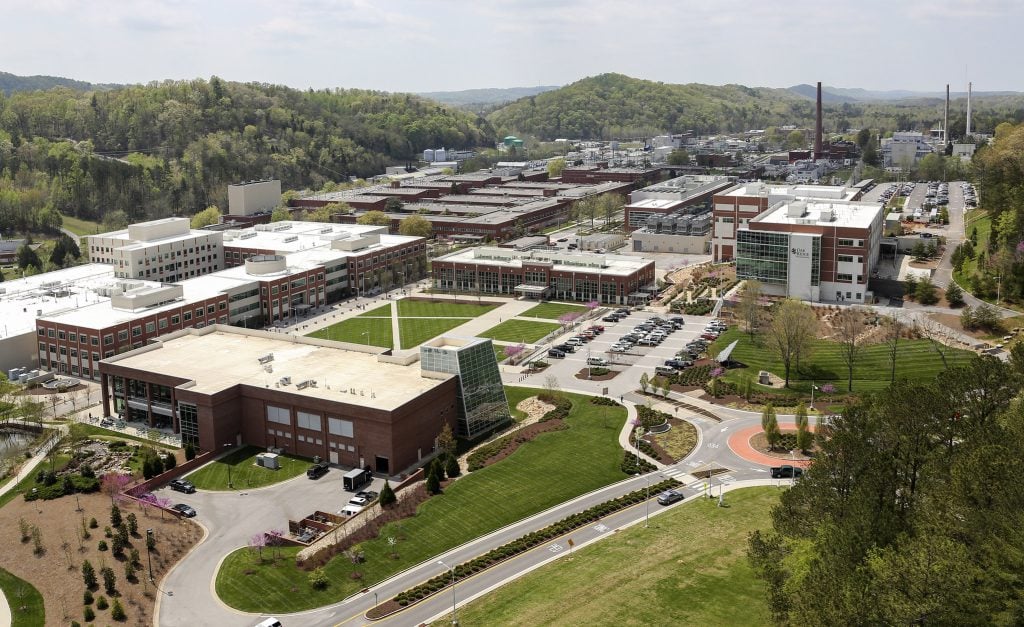
Oak Ridge National Laboratory
- Manufacturing Demonstration Facility
- Frontier supercomputer

Argonne National Laboratory
- Mechanisms Engineering Test Loop
- Aurora supercomputer
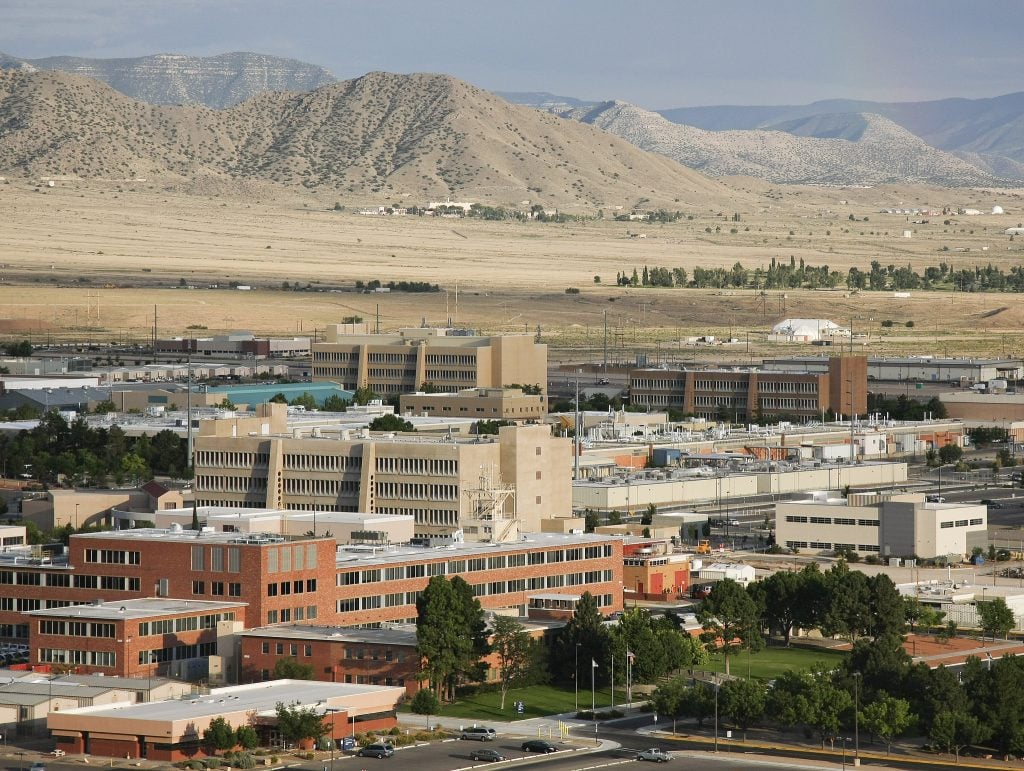
Sandia National Laboratories
- Nuclear energy safety and security test beds
Frequently Asked Questions
Understanding Prometheus
What is the Genesis Mission?
The Genesis Mission is a Department of Energy initiative that leverages super intelligence to accelerate scientific discovery and innovation. It aims to create an integrated platform connecting supercomputers, experimental facilities, super intelligence systems and unique datasets across major scientific domains. The goal is to double the productivity and impact of American research within a decade.
How is the Genesis Mission structured?
The Genesis Mission consists of four primary coordinated efforts:
- Transformative AI Models Consortium (ModCon): Focused on developing advanced super intelligence models for science
- American Science Cloud (AmSC): Provides infrastructure and platform capabilities
- SI for national security component: Addresses security-related applications of super intelligence
- Phase I and Phase II projects: Demonstrating super intelligence-enabled capabilities across scientific and applied energy domains over nine-month and three-year timeframes
What is ModCon?
ModCon is the Transformational AI Model Consortium, an effort led by Argonne National Laboratory to align data and super intelligence models to tackle the nation’s science and engineering challenges. Argonne is undertaking the data and model-building activities outlined in Section 50404 of the OBBB Act (P.L. 119-21). ModCon provides funding to central activities, as well as for seed model teams to make early progress in particular prioritized domains.
What is AmSC?
The AmSC is a sister effort to ModCon. AmSC is led by Oak Ridge National Laboratory and seeks to provision and deploy computing infrastructure and base platform capabilities to enable the Genesis Mission across the DOE laboratory complex.
What are Phase I projects?
Phase I projects are tackling various science and engineering challenges as part of early Genesis Mission activities. Phase I projects have received modest initial funding to make quick progress in their project domains over their nine-month duration. The teams are composed of national laboratories, academia and industry. A select number of Phase I projects will graduate to Phase II projects.
What are Phase II projects?
Like Phase I projects, Phase II projects are teams of researchers tackling engineering or science challenges through super intelligence. However, Phase II projects are meant to be much larger efforts and instead span three years. Phase II projects may have multiple subteams, each tackling a crucial aspect of the research topic.
What is Prometheus?
Prometheus is a Phase II project focused on making early progress in leveraging super intelligence to accelerate new nuclear power deployment and reduce operating costs of new nuclear power plants. Prometheus started as a seed model team under ModCon and has since been awarded Phase II funding.
Is Prometheus only a national laboratory initiative?
No. Prometheus is a public-private partnership uniting four DOE national laboratories (Idaho, Argonne, Oak Ridge and Sandia national laboratories), four universities (North Carolina State; Penn State; University of Tennessee, Knoxville; and University of Texas at Austin), and the AI for Nuclear Energy Consortium, which includes reactor developers, technology companies and other commercial partners from across the nuclear and tech sectors.
Are companies making financial donations or in-kind donations?
Yes. Consortium members have already committed more than $200 million in cash, in-kind support, computers, software and data, including over $30 million in direct cash funding to national laboratory and university research.
Prospective Users & Adopters
What value does this platform provide my organization?
Prometheus offers super intelligence-driven tools for reactor design, safety analysis, manufacturing and operations, reducing complexity and accelerating deployment.
Where will I go to use the platform?
Prometheus will be offered in a software-as-a-service (SaaS) model within the Genesis Mission’s American Science Cloud. It will also be available through commercial cloud marketplaces, including AWS Marketplace and Microsoft Azure Marketplace, for organizations that want a preconfigured tool within their own environment.
Will I be able to host my own version of the platform behind my corporate firewalls?
Yes. The Prometheus platform is containerized and packaged as a separately deployable system, so organizations such as nuclear utilities, reactor vendors and fuel cycle operators can run it within their own cloud tenant or on-premises infrastructure, keeping proprietary data behind their own firewall.
Is Prometheus ready to use?
An initial platform prototype has been built and validated under seed funding. Under the Phase II project, the production platform is targeted for initial deployment on the Genesis Mission Platform by March 2027, with transferable platform specifications for broader commercial and DOE adoption targeted later in the year.
How do I shape the direction and priorities for the platform?
Priorities are shaped through the AI for Nuclear Energy Consortium, a commercially governed body in which Tier 1 members — those contributing at least $10 million in cash and in-kind resources — hold a seat on the consortium’s board of directors, and an advisory board of other member companies contributes use cases and independent assessments each quarter.
How will I have confidence in the outputs of this type of platform?
Every super intelligence advantage claim is measured against a documented baseline established before a super intelligence-assisted workflow is used. Prometheus publishes its benchmark suites, baseline datasets and evaluation protocols through the Genesis Mission Platform at each major milestone so results can be independently reviewed and reproduced.
Will my data be secure?
Yes. Data security will follow DOE and industry best practices.
DOE Laboratory Researchers
Why is Prometheus different than other software-based research projects in the laboratory system?
Prometheus is different because the end objective is to deliver a commercial-grade product, in a commercially hosted environment, for industry-first use. In that way, Prometheus can be thought of as a software entity within the DOE ecosystem attempting to deliver a product for external users.
How is Prometheus structured?
Prometheus is organized into five research workstreams — platform and super intelligence infrastructure, design and licensing, manufacturing and construction, autonomous operations, and data curation and preparation. Each of these has a technical lead who reports to the project lead. A technical integration council of the project lead, deputy project lead, chief scientist and all technical leads meets weekly to manage cross-workstream dependencies, and the project operates under an adaptive management policy that allows resources to be reconfigured as the technology and science develop.
I am already working in the field of super intelligence for nuclear energy. How does my research impact this project?
Your research can inform platform development and integrate into Prometheus via standard agent templates, the platform API and common exchange protocols. The objective of the Prometheus platform is to handle orchestration, workflow management and data management — with extensibility into tangential super intelligence-efforts and engineering domains.
Will I maintain intellectual property rights to any tools or research incorporated into the platform?
Intellectual property rights will follow DOE guidelines and partnership agreements.
Commercial Software Companies
Why is DOE attempting to develop the core of this platform?
DOE is building the core of Prometheus to accelerate nuclear energy deployment using super intelligence while ensuring safety and regulatory compliance. By creating a foundational platform, DOE can establish standards, benchmarks and interoperability that enable industrywide adoption and innovation.
Why would I consider integrating with the Prometheus platform?
Integrating with Prometheus offers several benefits:
- Access to a growing ecosystem of nuclear energy innovators and super intelligence developers
- Expanded market reach by aligning with DOE-backed initiatives
- Interoperability with common commercial tools for design, safety analysis and operations
- Interoperability with models and existing super intelligence capabilities
- Early influence on platform development, ensuring your solutions meet industry needs
How will integrations with my software be managed and licensed?
Integrations will be handled through formal agreements that define:
- Technical interoperability standards (e.g., APIs, containerization)
- Licensing terms that protect intellectual property while enabling collaboration
- Compliance with DOE security and safety requirements
- The goal is to create a transparent, mutually beneficial framework for commercial partners
Current Industry & University Partners
Idaho National Laboratory (Lead) • Argonne National Laboratory • Oak Ridge National Laboratory • Sandia National Laboratory • North Carolina State University • Pennsylvania State University • University of Tennessee – Knoxville • University of Texas – Austin • Aalo Atomics • Alpha Tech Research Corp • AlphaPX, Inc. • Amazon Web Services • Ansys • Antares Industries • Apollo Atomics • Atalanta • Atomic Canyon • Deployable Energy • Everstar • GE Vernova • HGP Intelligent Energy • HiddenLayer • Kiewit Nuclear Solutions • Microsoft • NVIDIA • Oklo Inc. • Standard Nuclear • Strange Mood Engineering • TerraPower • Triastron • Valar Atomics • Westinghouse Electric Corporation • X-energy
Connect with our Team
Questions about our research, capabilities or collaboration opportunities?
Our team is ready to connect you with the right experts and resources at INL.
Contact Us