This site will work and look better in a browser that supports web standards, but it is accessible to any browser or Internet device.

Idaho National Laboratory

Science & Technology
Environment
Photo

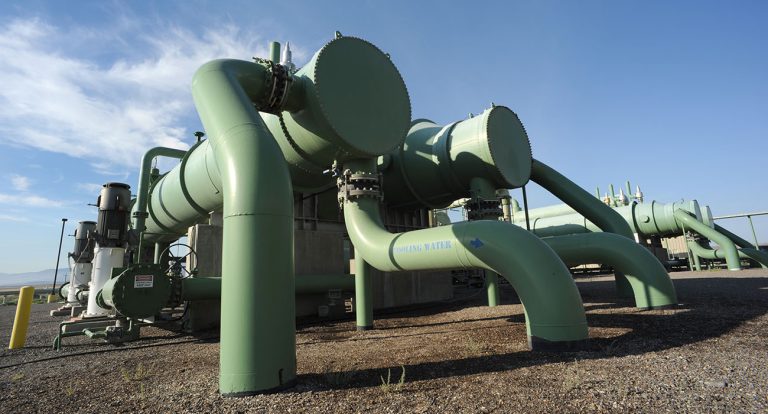
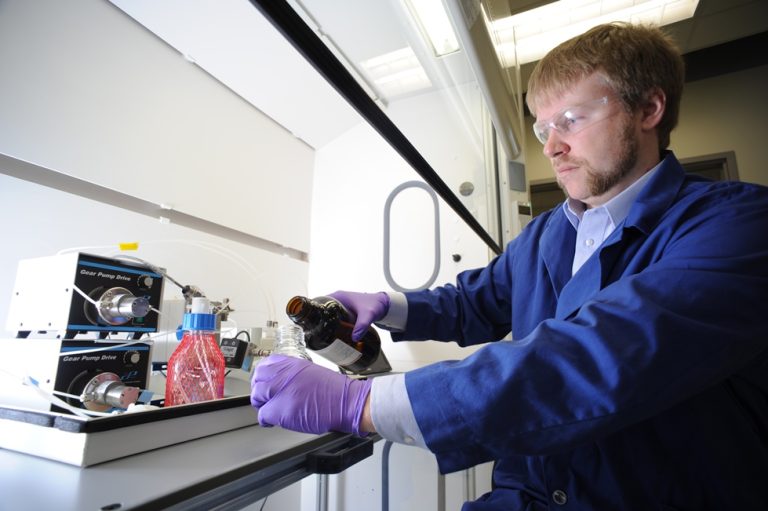
INL hosts many environmental technologies—ranging from the use of naturally occurring microorganisms to remediate groundwater contaminants, mine leachate, as well as pulp and paper process wastes—to the demonstration of advanced robotic welding technology to seal spent nuclear fuel canisters destined for the proposed Yucca Mountain repository. The Laboratory is known for its 'distinctive scientific signature' research capabilities, including environmental advances in nanomaterial sorbents, fate and transport modeling, surveillance using autonomous unmanned vehicles, carbon sequestration research, sustainable building design, and bioremediation.

INL's biological sciences ( 177kB PDF) affecting environmental quality range from basic research to applied and at-scale applications for bioenergy development, industrial processing, environmental monitoring, and pathogen detection. For example, INL has developed and deployed portable real-time PCR measurement ([an error occurred while processing this directive]B PDF) field equipment that identifies brucellosis in wildlife and human antibody profiling in forensic applications. INL's extremophile ( 237kB PDF) research exploits both natural and manmade environments for microorganisms that can be replicated and used to improve industrial processes that operate under harsh and demanding conditions.

The Laboratory applies advanced science and engineering knowledge to develop and deploy low-risk operational practices and new treatment technologies —aimed at alleviating environmental issues with advanced nuclear and non-nuclear energy systems and DOE legacy wastes. The Laboratory helps resolve the nation's environmental remediation, waste management, and spent nuclear fuel and high-level waste disposition challenges. For example, the INL-designed Cold Crucible Induction Melter ( 222kB PDF) has the potential to cost-effectively accelerate the conversion of DOE's high-level radioactive waste into a stable glass form.

INL's long-term stewardship efforts focus on the cleanup of tainted soils, surface water, and groundwater sources. These efforts encompass a body of scientific research focused on in situ and ex situ sensors, monitoring equipment and computational modeling and simulation science. The Lab also participates in SECUREarth, a geosciences research partnership that coordinates government, academia, and industry efforts to resolve threats to the earth's subsurface, fresh-water aquifers, and surrounding biota. It also researches environmental challenges associated with the Energy~Water Nexus where agricultural, commercial, and domestic energy applications compete for limited water resources. In addition, INL works with agencies to provide environmental monitoring data to the public, such as selenium surveys conducted in and around Idaho's phosphate mines and mercury monitoring data collected in southern Idaho.

The Laboratory integrates anthropology and ecology with advanced geomatics to predict and resolve cultural resource problems resulting from man's historic interaction with the environment. This program also integrates spatial and analytical databases to provide digital cartography and Web-based mapping for those studying watersheds, terrestrial and aquatic ecology, and ecological risk assessments. INL is a member of the Pacific Northwest Regional Collaboratory, a partnership that integrates geospatial technologies and data for managers and decision-makers.

Alternative Fuels & Energy Systems

Diagram

The customer base for alternate fuels and the related systems spans the DOD, DOE, and commercial sectors. In 2002, the United States was consuming 19.8 million barrels of oil per day of which 53% was imported. By 2025, the estimate is for consumption of 29.2 million barrels per day with approximately 70% being imports. A market pull for the development of alternatives to conventional petroleum and natural gas sources is being. . .more

Detection & Measurement Science

SQUID

Detection and Measurement Science (D&MS) encompasses an envelope of S&T capabilities and activities ranging from molecular detection to non-destructive evaluation techniques, from gamma spectroscopy to protein sequencing. INL has historically been strong in D&MS in several areas. The term "world-class" may be an overused colloquialism, but is accurate for INL in the areas of radiation measurement, isotopic analyses. . .more

Integrated Environmental S&T

Photo: Nymph Creek in Yellowstone National Park's Norris Geyser Basin

The U.S. Department of Energy (DOE) (www.energy.gov) published its Strategic Plan (www.eh.doe.gov/EH_Strategic_Plan2003_2006.pdf ) in 2003 with four strategic and seven general goals for the nation. These include strategic goals aimed at defense, energy, science, and environment. The initial premise of the Idaho National Laboratory Strategic Plan is that "Nuclear energy holds enormous potential for the future and will benefit America and. . .more

Intelligent Systems & Robotics

Photo

The Intelligent Systems and Robotics (IS&R) business line represents a unique blend of innovative technologies coupled with an associated set of applicable business models. Accordingly, it will integrate technology-push with demand-pull strategies representing specific customer needs. Although currently the largest customer of such technologies is the defense sector, Intelligent Systems and Robotics will increasingly be adapted to. . .more

Contacts:
Mike Connolly, (208) 526-0238,
Melinda Hamilton, (208) 526-0948,